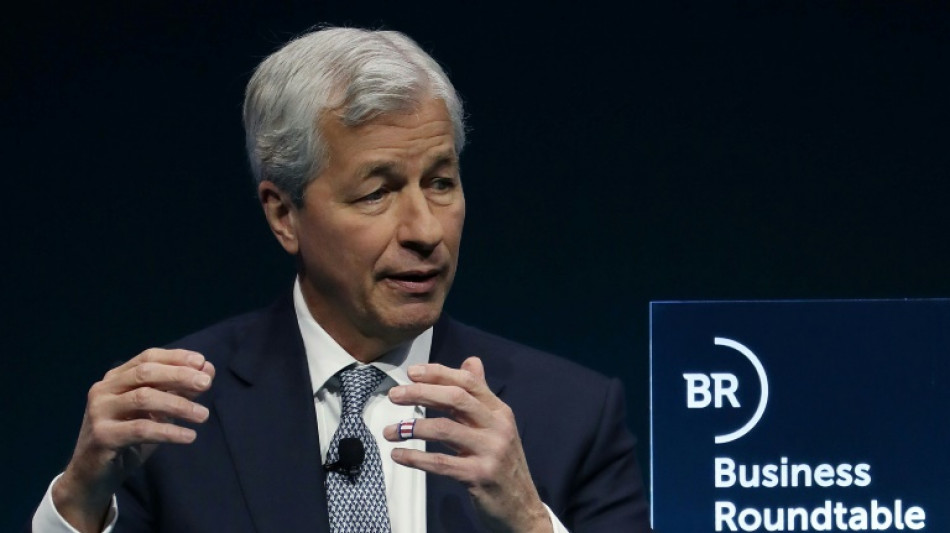
JPMorgan Chase CEO warns tariffs will slow growth / Photo: MARK WILSON - GETTY IMAGES NORTH AMERICA/AFP/File

 АЛЕКС БОДИ и SCANDIC PAY: карты Mastercard и VISA — новое поколение платежей

 ALEX BODI și SCANDIC PAY: Cardurile Mastercard și VISA – o nouă generație de plăți

 John Park’s Agency Takes Legal Action Over Unauthorized 'McDonald’s Order Rap' Distribution

 Best Pet Advent Calendars for Christmas 2026: Dog Treats and Cat Toys

 Grattan Institute Releases Blueprint to Target Specialists Over Excessive Fees

 Arizona Science Center Hosts Girls in STEM Astro Adventures for Students

 New Turkish Cafe, Japanese BBQ, and Korean Restaurants Open Across East Bay

 Knowle Move Four Points Clear at Top After Histon Victory
JPMorgan Chase CEO Jamie Dimon warned Monday that US President Donald Trump's tariffs will likely lift inflation, describing himself as "very cautious" in light of the rising recession risk.
"Whether or not the menu of tariffs causes a recession remains in question, but it will slow down growth," Dimon said in his annual letter to shareholders.
Dimon, an influential figure in markets as the longest serving CEO of a major Wall Street firm, said the US economy had been steady "for years" but was "already weakening" even before Trump's watershed tariff announcement last Wednesday.
"There are many uncertainties surrounding the new tariff policy: the potential retaliatory actions, including on services, by other countries, the effect on confidence, the impact on investments and capital flows, the effect on corporate profits and the possible effect on the US dollar," Dimon wrote.
"In the short run, I see this as one large additional straw on the camel's back," said Dimon, adding "my most serious concern is how this will affect America's long-term economic alliances."
US and global equities have been in free fall since Trump announced sweeping tariffs last week in a move the president touted as "Liberation Day" from international trade rules he argues have harmed the country.
Dimon described Trump's tariffs as one of several factors that could boost inflation, along with continued high fiscal deficits, "the remilitarization of the world" and major investments supporting infrastructure and the green economy.
"While inflation has come down, most of what I see in the future is inflationary," said Dimon, who backs the need for reducing the US deficit.
"These large deficits are not sustainable –- I do not know whether it will cause a real problem in six months or six years –- the sooner we deal with it, the better," Dimon said.
R.J.Fidalgo--PC