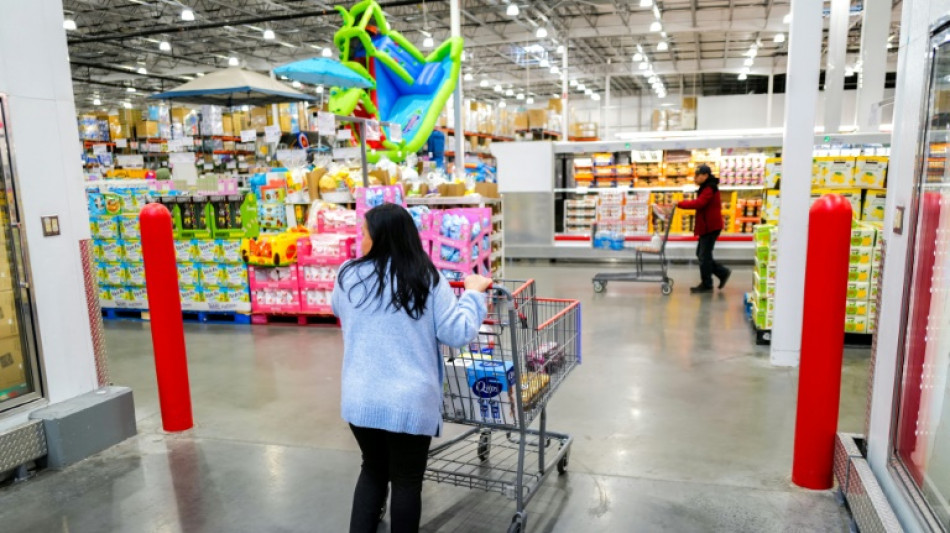
Some US consumers in 'survival mode' as Trump tariffs arrive / Photo: CHARLY TRIBALLEAU - AFP

 ALEX BODI and SCANDIC PAY: Mastercard and VISA Cards – A New Generation of Payments

 Mercedes-Benz Power Converter Enables Individual Cell Control for Improved EV Efficiency

 Search Underway for 'Dooars Rani' Tigress After Second Escape from Buxa Tiger Reserve

 IIM Indore Announces IPMAT 2027 Exam Date for April 24

 The Dilemma of Recording Live Music: Preserving Memories vs. Being Present

 ANC’s Renewal Rhetoric Fades as Voters Reject Party in 2026 Local Elections

 Foreign Investors Return to Indian Markets After 10-Month Selloff

 Honda CR-V and Toyota RAV4 Lead Canada’s Most Stolen Vehicles List for 2025
American consumers braced for pain even ahead of President Donald Trump's hefty tariffs on imported products, which came into effect overnight Tuesday into Wednesday.
Some rushed out to buy the latest smartphones ahead of any price increases, while others said they had been watching their spending more closely than before.
"I live in an apartment. You can't stockpile," a retired woman told AFP on Tuesday as she loaded her groceries into her car at a Costco store on the outskirts of the US capital.
The woman, who requested anonymity, said she has begun cutting back on spending in recent weeks as a precaution.
"Things are going to keep going up, and we need the money to buy more food next week or the week after," she said.
Despite pleas from top trading allies, the United States has now entered the next major phase in Trump's tariff war, with huge and sweeping new import taxes targeting goods from many countries.
The new levies will affect electronics made in China, which from Wednesday will face a cumulative tariff of 104 percent, while clothing made in Vietnam will also see a large increase in costs thanks to 46 percent tariffs.
Vanilla from Madagascar (47 percent), Japanese tea (24 percent), Thai jasmine rice (36 percent) and European wine (20 percent) will also be affected.
- 'Bad' -
"Tariffs are bad," said a man named Charles, who declined to give his last name, pausing behind his loaded shopping cart in Virginia.
"I am a libertarian on tariffs, always have been," he said Tuesday, adding he plans to pick up a new Apple iPhone on Wednesday in case prices rise.
Keith Taylor, who also picked up a new iPhone a few days ago, told AFP he has no plans to buy any more electronic devices for the time being.
"That'll be the last thing I purchase until all this gets settled out," the 62-year-old said.
At a nearby clothing store belonging to the Japanese retailer Uniqlo, Elisabeth Bradley, 40, said she considered herself lucky as she bought clothes for a trip to Denmark.
The chief executive and mother of two said she thinks she can cope with price rises, but has nevertheless changed her consumption habits ahead of the tariffs.
"We did just buy a car because of the tariffs," she said, adding that her new electric Volvo will likely cost more money with Trump's tariffs in force.
"We just expect car prices to go up," she said.
- 'Trying to get by' -
At another supermarket in New York, about a five-hour drive north of Washington, Anastasia Nevin told AFP she is currently in "survival mode."
"I have two kids so I'm just trying to get by. It's tough," she said Tuesday, adding she would likely need to cut back on spending if prices rise further.
American households have already been squeezed by high post-Covid inflation. And prices haven't come down in the years since; they've just gone up more slowly as inflation has cooled.
Other consumers told AFP that they are less concerned about the prospect of a surge in the prices of everyday goods.
"I don't believe I'm going to see prices of groceries going up that much," a man named Jean Brown told AFP. "Prices change over time. You just have to adjust your budget."
Ferreira--PC
