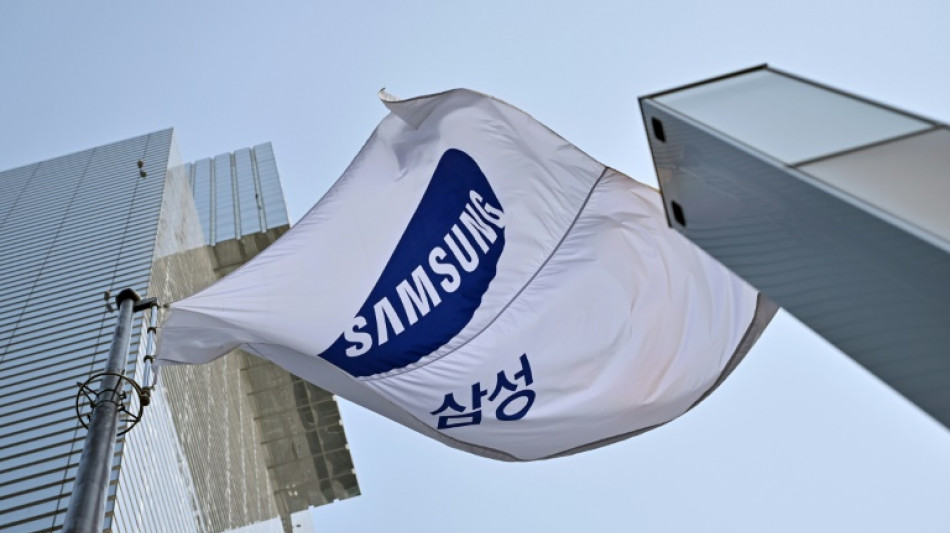
Samsung Electronics posts 22% jump in Q1 net profit / Photo: Jung Yeon-je - AFP/File

 Venezuela frees 131 prisoners amid post-Maduro transition talks

 Arteta tells Arsenal fans not to fret over his future

 Mexico's Indigenous chief justice hits back at discrimination

 Werro wins 800m race for the ages, Warholm and Tamberi hit four

 Jimenez rescues dramatic Wolves draw in Championship opener

 Taliban govt to mark five years ruling Afghanistan

 Stocks slip in cautious trading after weak US retail sales data

 Gramercy Networks Announces New Global Ultra-Low Latency Financial Network Connecting Major Trading Hubs

 NFL bans Falcons defender Pearce eight games for domestic violence

 US says 19 million recalled eggs pose deadly risk
 Former Cincinnati contenders suffer contrasting first-round fates

 Argentina's Romero confirms Tottenham exit as Atletico move looms

 Homeless, jobless: Colombia quake survivors 'left with nothing'

 Cubans find rest on rooftops as blackouts drive them from home

 World champ McIntosh crashes out of Pan Pacs 400m free
 T'Wolves set Garnett celebration for Celtics clash
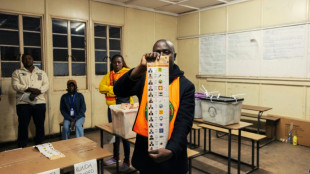
 Popovici nails freestyle double with third men's European 200m gold

 Premier League club Liverpool sell minority stake to Jeff Bezos consortium

 Italian police recover stolen Renoir, Cezanne and Matisse works

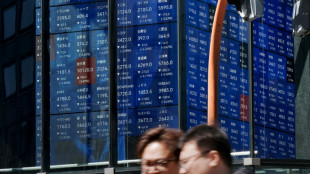 Stocks slip in cautious trading, oil turns higher

 Colombia quake survivor faces life without triplet sisters

 Bones of medieval kings saved from Spanish wildfire

 US retail sales weakest in over a year, consumer sentiment plunges

 In wildfire town, PM says UK must 'face up to climate change'

 In town hit by wildfire, PM says UK must 'face up to climate change'

South Korean tech giant Samsung Electronics reported a better-than-expected 21.7 percent rise in first-quarter net profit on Wednesday as consumers rushed to buy smartphones under the looming threat of US tariffs.
The firm said it expected improved earnings in the second half if "uncertainties are diminished".
The results come as Seoul and Washington work to craft a "trade package" intended to roll back US President Donald Trump's new tariffs ahead of the July 8 expiration of a reciprocal tariff freeze.
Samsung Electronics is the flagship subsidiary of South Korean giant Samsung Group, by far the largest of the family-controlled conglomerates that dominate business in Asia's fourth-largest economy.
The world's largest memory chipmaker reported net profit of 8.22 trillion won ($5.75 billion) for the January–March quarter, up 21.7 percent on-year.
Sales rose 10 percent to an all-time quarterly high of 79.14 trillion won and operating profit rose 1.2 percent to 6.7 trillion won on-year, exceeding forecasts according to Yonhap News Agency, which cited its own financial data firm.
South Korea -- one of the United States' key trading partners and home to powerhouse chip and auto industries -- earlier this month also unveiled an additional $5 billion investment in its semiconductor industry, citing "growing uncertainty" stemming from US tariffs.
The figures were "on the back of strong sales of flagship Galaxy S25 smartphones and high-value-added products," the company said in a statement.
"Despite the growing macroeconomic uncertainties due to recent global trade tensions and slowing global economic growth," Samsung said it "expects its performance to improve in the second half of the year," assuming "that the uncertainties are diminished".
Analysts also attributed the results in part to record sales of the new Galaxy S25 series smartphone, which launched in February.
The firm's "early introduction of AI features, beginning with the Galaxy S24 and enhanced further in the S25, gave it a strong competitive edge," Sheng Win Chow, an analyst at Canalys, told AFP.
"The combination of native on-device AI capabilities and Google Gemini apps offered users a rich suite of AI functions right out of the box, creating strong pull factors for early adopters."
But experts expressed concerns as more than half of Samsung's smartphones are manufactured in Vietnam, where steep tariffs of up to 46 percent could be imposed if trade negotiations between Washington and Hanoi break down.
According to analyst Chow, more than 90 percent of Samsung's US smartphone shipments originate from Vietnam, and to effectively mitigate risks, the company "would need to ramp up production and export of higher-end models like the Galaxy S25 series from India".
But "this shift would require time and operational adjustments," he added.
- Trade tensions -
Despite more than a year of efforts to close the gap with South Korean rival SK hynix, Samsung has struggled to supply high volumes of high-bandwidth memory (HBM) chips to Nvidia, a leading player in the AI chip market.
The company has leaned more on Chinese clients as a result, but the market in China now faces mounting pressure as Washington moves to further tighten chip export rules.
Washington has already restricted exports to China, the world's biggest buyer of chips, of Nvidia's most sophisticated graphics processing units (GPUs), designed to power top-end AI models.
Meanwhile, Chinese startup DeepSeek has emerged as a formidable challenger, making waves in January with its R1 chatbot, matching the performance of its US competitors at a lower cost.
"For most countries, excluding China, significantly lowered general tariffs can be expected depending on negotiation," MS Hwang, a research director at Counterpoint, told AFP.
"However, due to strengthened export restrictions on China, there remains pressure (on Samsung) on the second-half sales of products like HBM."
Gloria Tsuen, a Moody's Ratings vice president and senior credit officer, said Samsung's "leadership in the semiconductor market had eroded over the last few years," especially in the "AI and high-end products in its memory segments".
"Concurrently, competition from Chinese companies in low-end memory products is increasing," she told AFP.
"As a result, we expect Samsung's operating margin to remain moderate."
V.Fontes--PC