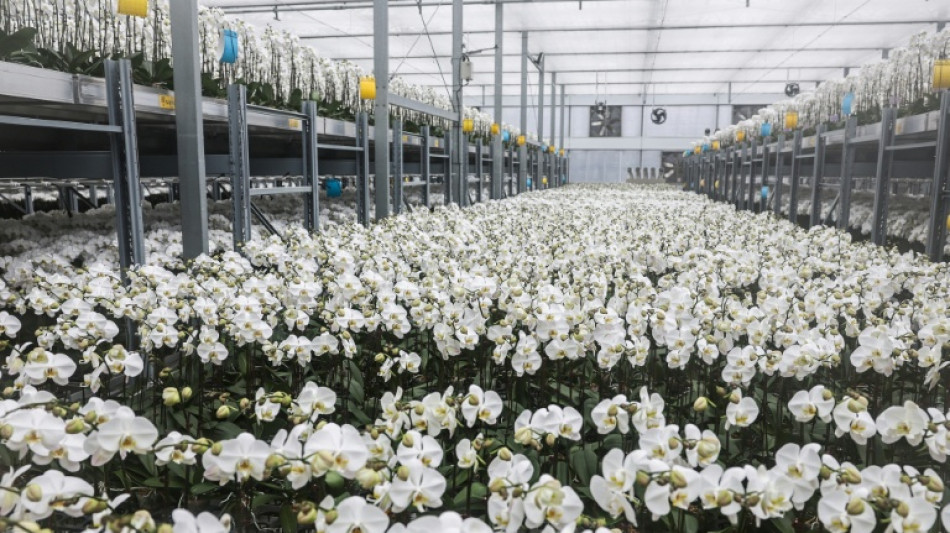
Taiwan's orchid growers dig in as US tariffs shoot up / Photo: I-Hwa Cheng - AFP

 Best Pet Advent Calendars for Christmas 2026: Dog Treats and Cat Toys

 Grattan Institute Releases Blueprint to Target Specialists Over Excessive Fees

 Arizona Science Center Hosts Girls in STEM Astro Adventures for Students

 New Turkish Cafe, Japanese BBQ, and Korean Restaurants Open Across East Bay

 Knowle Move Four Points Clear at Top After Histon Victory

 Physicians Urge Arizona to Ban Medical Gag Clauses and Enable Private Lawsuits

 New Campaign Highlights Knowledge Gaps on Carbon Monoxide Safety Among Americans

Since the start of US President Donald Trump's global trade war, Taiwanese orchid grower Lee Tsang-yu has watched tariffs on his seedlings shoot from nothing to 20 percent.
But, after weathering many economic crises, the 61-year-old seasoned farmer is digging in.
Lee is cultivating new markets in Thailand and expanding in Vietnam, Indonesia and Brazil, while cutting back shipments to the United States.
"The US is such a huge market, we can't pull out, and we won't," said Lee, whose company, Charming Agriculture, operates four rugby field-sized greenhouses in Houbi, a district of the southern city of Tainan.
Taiwan's more than 300 orchid growers rank among the world's biggest producers of the thick-leaved plants, with Phalaenopsis orchids, also known as moth orchids, dominating exports.
The island's orchid shipments reached NT$6.1 billion (US$204 million) in 2024, with about NT$2 billion worth of plants sent to the United States, its biggest market, official data shows.
Until now, most growers have been absorbing the cost of the 10 percent tariff that Trump slapped on nearly every trading partner in April, said Ahby Tseng, 53, secretary-general of the Taiwan Orchid Growers Association.
But "no one can bear" all of Trump's temporary 20 percent levy on Taiwan announced last week, he said.
Tseng said Taiwan's main rival in the United States was The Netherlands, which has been hit with a relatively lighter 15 percent tariff.
The five percentage point difference is significant, he said.
"It is actually very difficult to immediately pass the cost on to consumers because consumers can choose not to buy, or they can choose to buy other types of flowers," Tseng said.
And stockpiling orchids in a warehouse wasn't an option given that the plants "keep growing".
While the higher tariff would erode his bottom line, Lee said he was more concerned about the general state of the US economy since Trump took office.
"Everything has become more expensive in the US, and consumer spending is shrinking -- that's what worries me," he said.
"Since late May, we've already cut shipments by 15 percent. Before that, the US accounted for 45 percent of our exports."
Lee said he was optimistic his efforts to expand into other markets, though slow and not always as lucrative, would "gradually offset this impact".
Taiwan's orchids also had a competitive edge, he said -- their flowers could last longer than Dutch plants.
And, he reasons, "Trump won't be president forever."
T.Vitorino--PC

