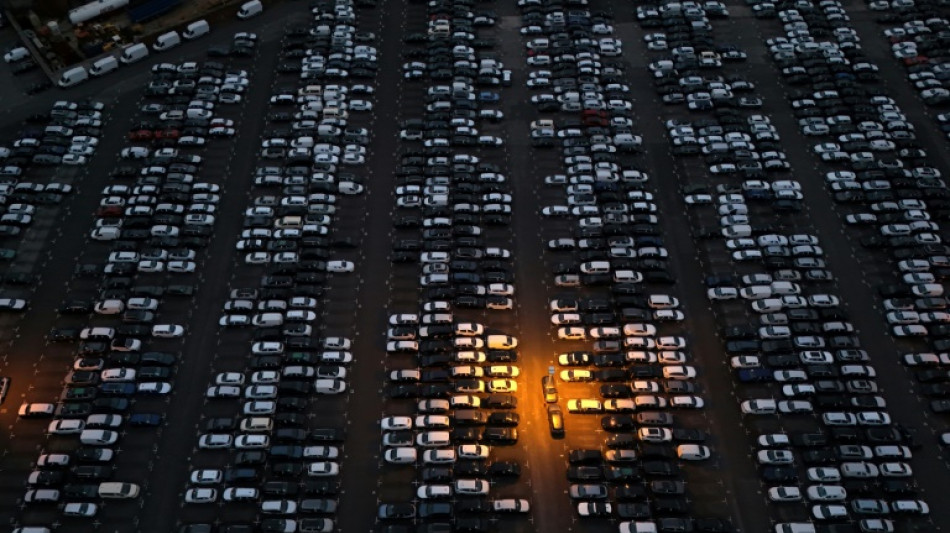
German factory orders fall amid tariff, growth woes / Photo: Ina FASSBENDER - AFP

 Best Pet Advent Calendars for Christmas 2026: Dog Treats and Cat Toys

 Grattan Institute Releases Blueprint to Target Specialists Over Excessive Fees

 Arizona Science Center Hosts Girls in STEM Astro Adventures for Students

 New Turkish Cafe, Japanese BBQ, and Korean Restaurants Open Across East Bay

 Knowle Move Four Points Clear at Top After Histon Victory

 Physicians Urge Arizona to Ban Medical Gag Clauses and Enable Private Lawsuits

 New Campaign Highlights Knowledge Gaps on Carbon Monoxide Safety Among Americans

German industrial orders unexpectedly fell in June, official data showed Wednesday, as Europe's biggest economy struggles with prolonged domestic weakness and volatile US trade policy.
New orders, closely watched as an indicator of future business activity, dropped 1.0 percent month-on-month, according to preliminary data from federal statistics agency Destatis, after a fall of 0.8 percent in May.
Analysts surveyed by financial data firm FactSet had expected a rebound of 1.3 percent in June.
Orders from abroad fell three percent, with a particularly heavy drop from countries outside the eurozone, while domestic orders increased slightly.
There were big falls for orders from the crucial automotive sector, of transport equipment such as trains and ships as well as metal products.
The economy ministry said that big swings in orders were no surprise "given the persistent high level of trade and geopolitical uncertainty".
"The industrial economy is likely to be characterised by subdued foreign demand in the future in light of what are now likely to be permanently higher tariffs on exports to the United States," it added in a statement.
EU exports to the United States have already faced tariffs of varying rates for several months.
Under a deal struck between the bloc and US President Donald Trump last month, they are set to face across-the-board levies from August 8 of 15 percent, which will hit export power Germany hard.
The German economy shrank for the past two years and the government's latest forecast, released in April, predicted zero growth for 2025 due to the impact of tariffs.
Some institutes have, however, recently upgraded their forecasts to slight growth for this year, seeing signs that the downturn has bottomed out.
G.Machado--PC

