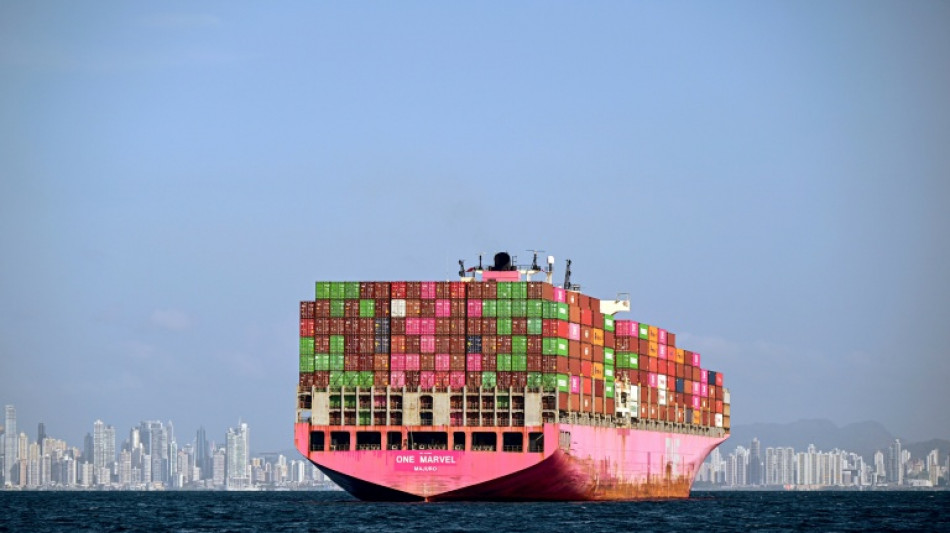
Trump's tariffs have not reduced Panama Canal traffic -- yet / Photo: MARTIN BERNETTI - AFP/File

 Best Pet Advent Calendars for Christmas 2026: Dog Treats and Cat Toys

 Grattan Institute Releases Blueprint to Target Specialists Over Excessive Fees

 Arizona Science Center Hosts Girls in STEM Astro Adventures for Students

 New Turkish Cafe, Japanese BBQ, and Korean Restaurants Open Across East Bay

 Knowle Move Four Points Clear at Top After Histon Victory

 Physicians Urge Arizona to Ban Medical Gag Clauses and Enable Private Lawsuits

 New Campaign Highlights Knowledge Gaps on Carbon Monoxide Safety Among Americans

Tariffs imposed by US President Donald Trump on dozens of countries have so far not affected container ship traffic through the Panama Canal, its administrator said Thursday.
Allies and adversaries alike are facing higher levies on exports to the United States as Trump's long-threatened "reciprocal" tariffs go into effect over trade practices he considers unfair.
Analysts have predicted that the aggressive policy will slow down traffic through the Panama Canal, through which five percent of all global shipping passes.
"The results of this fiscal year will be in line with what we projected" in terms of revenue and cargo, canal administrator Ricaurte Vasquez told AFP.
The Panama Canal Authority had projected record revenues of $5.6 billion in the fiscal year ending September 30, an increase of 12.7 percent over last year's figure.
It forecast 13,900 ships would pass through the canal during the same period, carrying 520 million tons of cargo.
But Vasquez called it "probable" that as time goes on, the volume of cargo could decrease as a result of the tariffs.
The 80-kilometer (50-mile) canal linking the Atlantic and Pacific Oceans serves more than 1,900 ports in 170 countries, notably providing China, Japan and South Korea greater access to the US East Coast.
Earlier this week, China and the United States delayed higher tariffs on each other's exports for 90 days.
A.S.Diogo--PC

