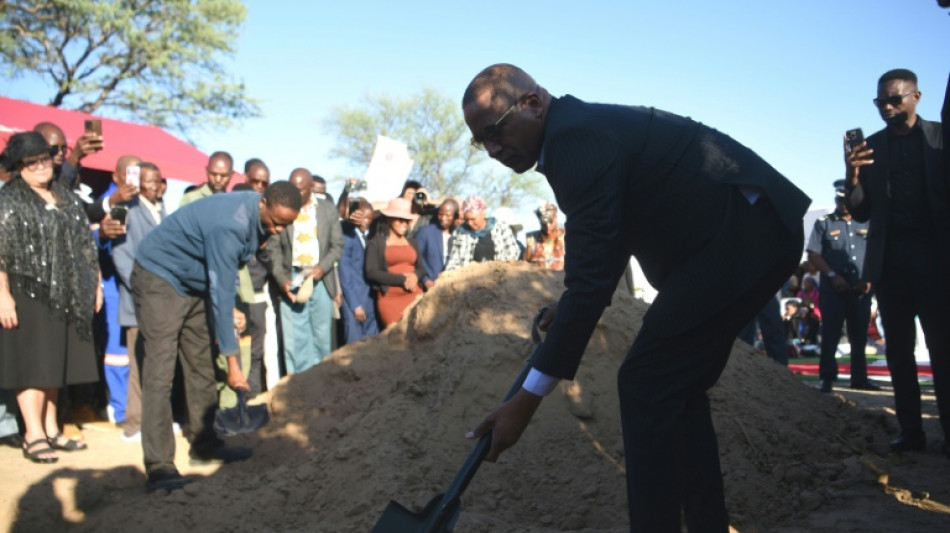
UN expert urges protection for indigenous Botswana people / Photo: Monirul Bhuiyan - AFP

 Best Pet Advent Calendars for Christmas 2026: Dog Treats and Cat Toys

 Grattan Institute Releases Blueprint to Target Specialists Over Excessive Fees

 Arizona Science Center Hosts Girls in STEM Astro Adventures for Students

 New Turkish Cafe, Japanese BBQ, and Korean Restaurants Open Across East Bay

 Knowle Move Four Points Clear at Top After Histon Victory

 Physicians Urge Arizona to Ban Medical Gag Clauses and Enable Private Lawsuits

 New Campaign Highlights Knowledge Gaps on Carbon Monoxide Safety Among Americans

A United Nations human rights expert on Friday urged Botswana's government to grant constitutional recognition and stronger protections to indigenous communities, citing longstanding discrimination against the San people.
The San are hunter-gatherers who were evicted from their ancestral land in the Kalahari, where there are diamond deposits.
They have lived in southern Africa for tens of thousands of years but are today mostly poor, marginalised and excluded from government welfare services.
"While the government has demonstrated openness and a willingness to engage, constitutional and legal recognition of indigenous peoples remains absent," the UN's special rapporteur on the rights of indigenous peoples, Albert Barume told journalists.
"Without such recognition, many communities continue to face systematic obstacles that undermine their cultural survival and participation in national life," he added.
Barume was speaking after a 12-day visit to Botswana.
Indigenous people in the diamond-rich southern African country reported suffering from "discrimination", the UN expert said.
They "emphasized that they are the only traditional communities in Botswana whose customary land rights have not been acknowledged, respected, or protected", he added.
In the late 1990s and early 2000s, Botswana evicted San communities -- also known as 'Bushmen', a term considered by some as derogatory -- from their ancestral lands in the Central Kalahari Game Reserve, after diamonds were discovered there in the 1980s.
In 2006, a court overturned the evictions and in 2011 the tribe's right to access water in the reserve was restored, leading some people to return.
But "only a limited number" were allowed back, said Barume.
They "have not yet been provided with the essential resources and services to make such return sustainable and attractive", he added.
A move last year by President Duma Boko to allow the burial of a San elder on his ancestral land in the national park ended a three-year legal battle and raised fresh hopes of change of attitudes towards indigenous groups.
F.Cardoso--PC

