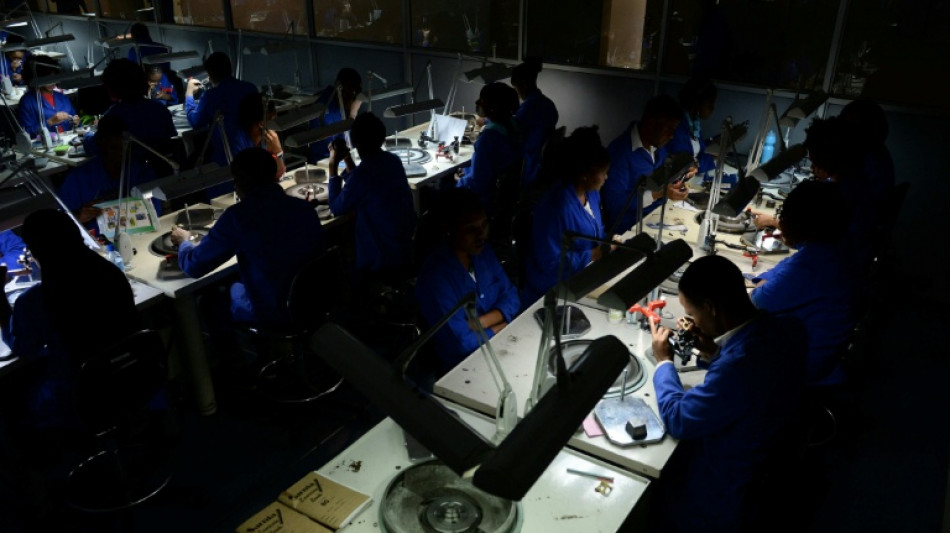
Lab-grown diamonds robbing southern Africa of riches / Photo: MONIRUL BHUIYAN - AFP/File

 Mideast war impact on travel bookings fading, TUI says

 Bangladesh get Das fitness boost for daunting Australia task

 One dead, 172 rescued as second ferry in days catches fire in Indonesia
 Foxconn posts quarterly profit surge on AI server demand

 Hazlewood gets Australia nod ahead of Boland for Bangladesh Test
 Toyota ex-chief Okuda, pioneer of the Prius, dead at 93
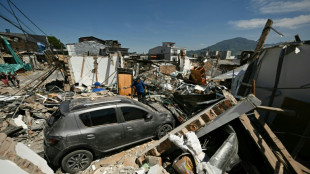
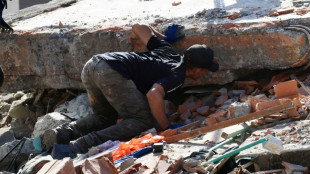
 Colombia rescuers find woman alive as quake death toll passes 200

 New Zealand PM survives leadership challenge months from election

 Passengers rescued as second ferry in days catches fire in Indonesia

 Oil prices rise, stocks mixed ahead of crucial US inflation data

 UK 'joke' candidate Binface pushes serious point about politics

 New Zealand PM Luxon survives leadership challenge months from election

 Cuba celebrates Castro's 100th as his revolution faces its toughest test
 Defending champion Shelton rolls into Montreal semis

 What to know about the total solar eclipse

 Tentoglou claims fourth Euro long jump title, injured Jacobs falters

 All Blacks knew Nonu would perform solo Haka - coach Rennie

 Britain's Glave upstages Jacobs to win European 100m gold

 Greece's Tentoglou wins fourth European long jump title

 Doctors ignored 'warning signs' before Maradona's death, court hears

 Pereira, the 'zombie city' devastated by Colombia's earthquake

 UN says 2 staff arrested by Afghan intelligence agency

 Colombia scrambles to find survivors as quake kills 240

 Ramsay-Peaty out of medals as Italy's Martinenghi wins European gold

 AI firm Manus to resume 'independent' operations after China blocks Meta deal

Botswana and southern African peers that built much of their prosperity on diamonds are scrambling for alternatives as cheaper, lab-grown stones threaten their economies.
Diamond-dependent Botswana is leading the way and launched a sovereign wealth fund this week to lay the "foundation for a more resilient, sustainable and diversified future beyond diamonds".
It is exploring other avenues too, like boosting luxury wildlife tourism, launching into the medicinal cannabis market and exploiting its abundant sunshine for solar power.
President Duma Boko has even mooted taking a majority stake in industry giant De Beers and selling Botswana's diamonds independently.
"Countries such as Angola, Namibia and South Africa are all exposed but not to the same degree as Botswana," economist Brendon Verster at the Oxford Economics Africa think tank told AFP.
The stones are the country's main source of income and account for about 30 percent of its gross domestic product (GDP) and 80 percent of its exports, according to the International Monetary Fund.
But, as consumers turn to cheaper diamonds created in China and India, the average price of a one-carat natural diamond is falling.
The price dropped from a peak of $6,819 in May 2022 to $4,997 by December 2024, according to the World Diamond Council.
Botswana, which is 70 percent desert, was lifted from poverty by the discovery of diamonds in the 1960s. It is already feeling the effects of the lab-grown competition.
- 'Risks of economic collapse' -
As its foreign reserves deplete, the government has turned to debt to fill the public coffers.
Government funds ran so low that the health system teetered on the verge of collapse in August, leading Boko to declare a state of emergency.
"If left unaddressed, there is a real risk of the situation becoming not just an economic challenge but a social time bomb," he said in July.
Highlighting the fears, global ratings agency S&P on Friday dropped its long-term ratings on Botswana one notch to "BBB" and declared a negative outlook, citing the rapid expansion of the lab-diamond market.
Synthetic stones had captured "approximately 20 percent of the global market by value and up to 50 percent by volume in the US engagement ring segment in 2025," it said in a statement.
Diversification is "essentially now or never", Verster said.
"We don't really see anything that would cause a monumental shift back in favour of natural diamonds to curb the rising popularity of synthetic diamonds."
Also suffering is tiny Lesotho, where diamonds contribute up to 10 percent of its $2 billion GDP and the larger, vital textile market has been hit by US tariffs.
This month its biggest diamond mine, Letseng, said it would lay off a fifth of its workforce, citing "sustained pricing pressure" and "softer demand in key markets".
The mine closures "could heighten risks of economic collapse", independent economic analyst Thabo Qhesi told AFP, stressing an urgent need to explore other options, such as rare-earth resources.
- The 'real thing' -
In a bid to keep the sparkle alive, Angola, Botswana, Namibia, South Africa and the Democratic Republic of Congo pledged in June to allocate one percent of their annual diamond revenues to marketing natural diamonds.
The campaign would need to reframe their value as a coveted "luxury product", former Bank of Botswana deputy governor Keith Jefferis told AFP
"We see a significant opportunity to engage consumers in the story of responsibly sourced diamonds from Botswana," De Beers, also taking part, told AFP.
The South Africa-British firm is meanwhile exploring the potential of synthetic diamonds in high-tech fields like quantum networks and semiconductors, as prices fall below $100 per carat.
For Botswanan ministry of minerals official Jacob Thamage, natural and lab-made diamonds "offer different value propositions to different consumers and therefore can and will coexist".
In an upscale Johannesburg mall, behind fortified steel gates, a natural yellow diamond priced at over $50,000 stood as a symbol of exclusivity.
Just steps away, a lab-grown diamond valued at $115 was unguarded.
"We each have our target," one jeweller said. "So long as everyone is happy."
strs-ho/br/gil/mjw
P.Mira--PC