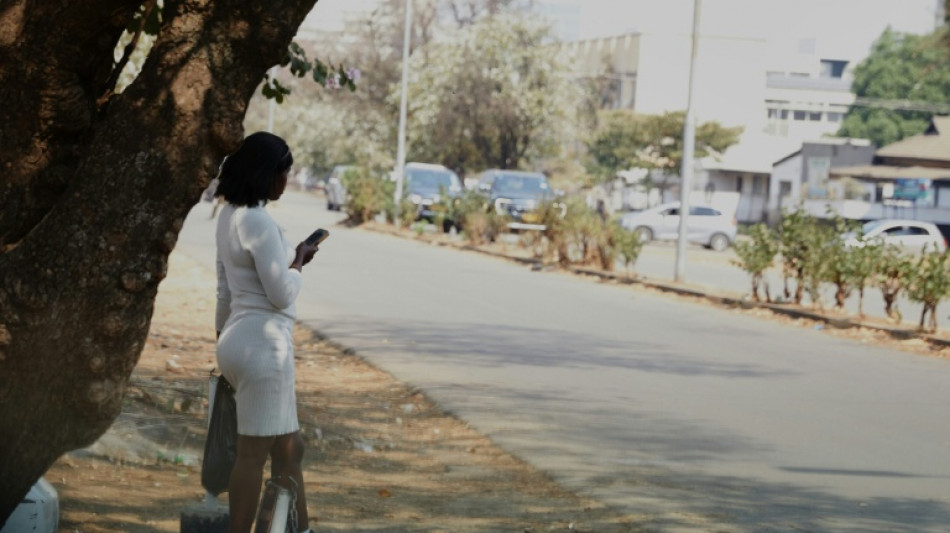
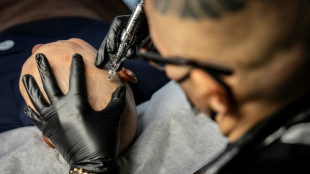
US cuts leave Zimbabwe sex workers scrambling for alternatives / Photo: Jekesai NJIKIZANA - AFP

 Mideast war impact on travel bookings fading, TUI says
 Bangladesh get Das fitness boost for daunting Australia task
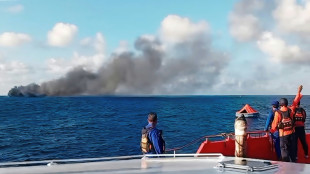 One dead, 172 rescued as second ferry in days catches fire in Indonesia

 Foxconn posts quarterly profit surge on AI server demand
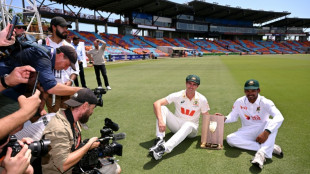 Hazlewood gets Australia nod ahead of Boland for Bangladesh Test
 Toyota ex-chief Okuda, pioneer of the Prius, dead at 93
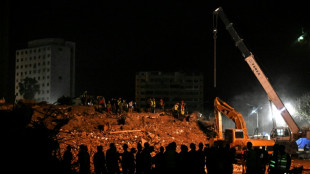
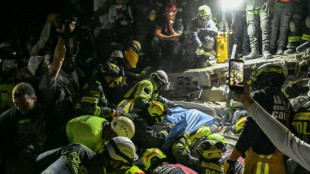 Colombia rescuers find woman alive as quake death toll passes 200

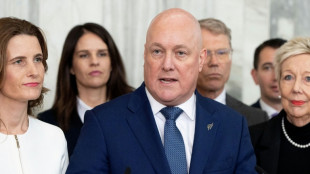 New Zealand PM survives leadership challenge months from election
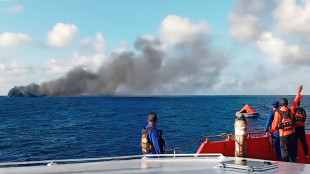 Passengers rescued as second ferry in days catches fire in Indonesia

 Oil prices rise, stocks mixed ahead of crucial US inflation data
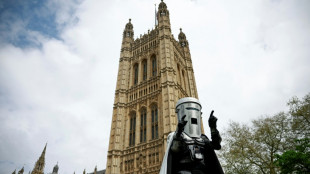 UK 'joke' candidate Binface pushes serious point about politics
 New Zealand PM Luxon survives leadership challenge months from election
 Cuba celebrates Castro's 100th as his revolution faces its toughest test
 Defending champion Shelton rolls into Montreal semis
 What to know about the total solar eclipse

 Tentoglou claims fourth Euro long jump title, injured Jacobs falters

 All Blacks knew Nonu would perform solo Haka - coach Rennie

 Britain's Glave upstages Jacobs to win European 100m gold

 Greece's Tentoglou wins fourth European long jump title

 Doctors ignored 'warning signs' before Maradona's death, court hears

 Pereira, the 'zombie city' devastated by Colombia's earthquake

 UN says 2 staff arrested by Afghan intelligence agency
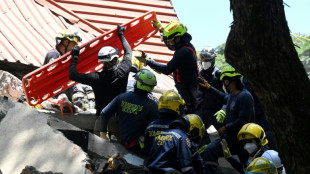 Colombia scrambles to find survivors as quake kills 240

 Ramsay-Peaty out of medals as Italy's Martinenghi wins European gold

 AI firm Manus to resume 'independent' operations after China blocks Meta deal

In a cramped room with blistered walls on the edge of Harare, three sex workers sat pressed together on a frayed mattress spread across bare concrete.
This was the work station for the women, who say their trade turned perilous after US President Donald Trump abruptly cut foreign health aid earlier this year.
One of them, Sharon Mukakanhanga, reached into her bag and pulled out a pair of baby socks she used when there was nothing else between her and risk.
"These little socks served as condoms when I became so desperate after the American government withdrew its support from my all-time go-to safe haven," the 43-year-old told AFP, referring to her preferred clinic.
Mukakanhanga is among thousands of sex workers in Zimbabwe who have struggled to access HIV prevention tools since the US cuts gutted centres that once provided free condoms, antiretrovirals and basic care.
For nearly two decades, the US programmes including PEPFAR, the world's largest HIV initiative, formed a critical safety net for Zimbabwe's fragile health system.
The first half of 2025 has seen 5,932 AIDS-related deaths, a rise from 5,712 in the same period last year, according to official government figures.
- 'Lost my mind' -
The impact of the withdrawals was immediate, said 47-year-old HIV-positive sex worker Cecilia Ruzvidzo.
"It was a very difficult period. I literally lost my mind," said the mother of four who has been in the trade for nearly two decades.
She recalled leaving her most recent visit to the clinic with only 10 days' worth of antiretrovirals.
"I could not get condoms, which are a necessity for my work. I was at risk of contracting more infections. My clients were also exposed," she said quickly.
With US-funded facilities shuttered or empty, the few remaining providers say they are buckling under the pressure.
Medical charity Doctors Without Borders (MSF), which operates independently of US government funding, said its clinics in Harare suburbs like Epworth and Mbare were stretched thin.
"They don't know where to go. They don't know where to seek services," said project lead Charlotte Pignon, referring to patients and especially sex workers.
While she did not directly link the rising deaths to the funding cuts, she said the impact of the withdrawal could not be ignored.
"It is difficult to know all the factors that are impacting those numbers but it's impossible to say that it’s not impacted by the US cuts either," she said.
- 'Serious disruption' -
The scale of the fallout was still coming into focus, said Wonder Mufunda, chief executive of the Harare-headquartered think-tank Centre for Humanitarian Analytics (CHA).
Mufunda said US support had previously amounted to about $522 million, with roughly $90 million directed to HIV programmes.
"You wake up and you have lost such funding, there were serious disruptions," he said, warning that deaths could rise.
"It's quite a big blow we are talking about," he told AFP.
Beyond overstretched clinics, Zimbabwe's economic freefall is pushing more people into sex work with an estimated 40,500 women already engaged in sex work nationwide, according to CHA.
Competition had eroded the power to insist on safer sex, said 20-year-old Cleopatra Katsande. Some workers were charging as little as 50 US cents per client, far less than the cost of a box of condoms, she said.
For veteran Ruzvidzo, there was no real choice.
"We knew it wasn't safe," she said of using baby socks as condoms. "But I had to feed my children."
The clients did not seem to mind, she said. "When it comes to this moment, men don't think straight."
H.Portela--PC