
Canada crime bill and rap group fracas spark free-speech debate / Photo: Guillaume BAPTISTE - AFP/File

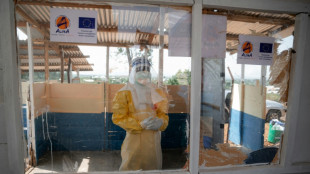 Ebola outbreak in DR Congo kills more than 2,000
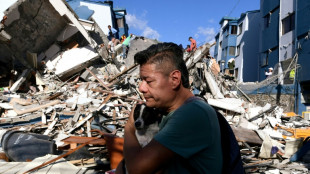
 ChargeAfter Powers BYLD Finance Expansion into Consumer Financing for Equipment Retailers

 MEXC Upgrades RealStocks With Three New Features to Enhance U.S. Stock Trading Experience

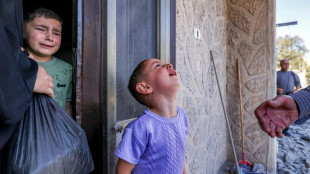 Israel demolishes home of slain Palestinian involved in deadly West Bank clash

 Liverpool fans seek clarity on Bezos bid to buy stake

 Solar eclipse sparks scramble for protective glasses across Europe
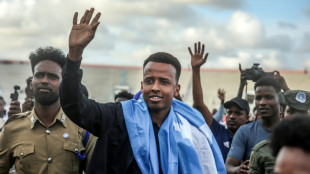
 Oil prices jump as US-Iran deal hopes falter

 Newly crowned world's best pastry chef stays true to artisan roots
 Johnson signs for Everton in McNeil swap deal

 Syria sentences Bashar al-Assad to death in absentia over atrocities

 Hong Kong's tech index plans expansion with AI and robotics themes
 The Infantino saga -- What they said
 Economic losses from natural disasters fall to $100 bn in first half of 2026: Swiss Re
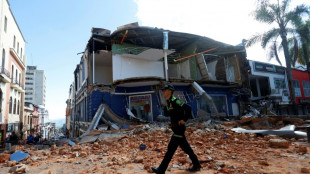
 Colombia scrambles to find survivors as quake kills 132

 Singapore says AI-related demand lifting economy
 Demeter Tactical Investments (ME) Limited bolsters governance with two board appointments

 Russian barrage on Ukraine kills 9, wounds dozens

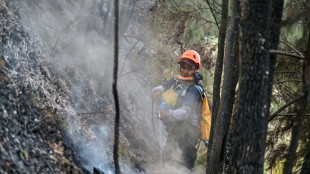 Schools closed as Indonesia battles wildfires

 Swiatek dominates Shnaider to set up Toronto semi with Svitolina

 Oil prices rise further as hopes for Hormuz deal fade

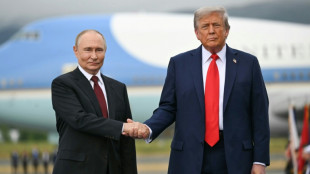 One year after Putin-Trump summit, 'spirit of Anchorage' dissipated

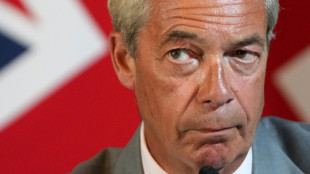 Farage vs Count Binface: What to know about UK snap poll

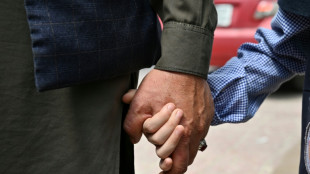 Torment of Afghan fathers as daughters deprived of education
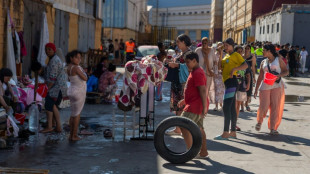
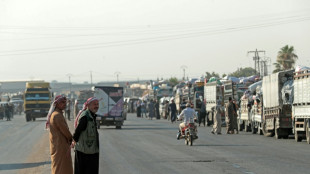 Return of displaced Syrian Kurds to hometown suspended after violence
 Swiatek races past Shnaider into Toronto semi-finals
Prime Minister Mark Carney's hate crime bill and a controversy surrounding a Northern Irish rap group have focused Canadian attention on a complex legal question: should displaying certain symbols be a crime?
The legislation introduced by Carney's Liberal government last month has drawn mixed reviews.
Some have praised it as a measured response to soaring hate crime figures, but critics have raised alarm over a provision that, in its words, would "make it a crime to wilfully promote hatred against an identifiable group by displaying certain terrorism or hate symbols in public."
Such symbols would include those linked to Canada's official "listed terrorist entities," which include Hamas and Hezbollah.
Critics have warned the measures could be used to silence legitimate forms of protest, including related to Israel, if the bill becomes law.
It's an issue at the center of an unusual fracas surrounding the punk rap group Kneecap, a trio that was barred from entering Canada and forced to cancel several shows scheduled for this month.
Kneecap, which sings in Irish and regularly leads chants in support of Gaza, has had multiple performances cancelled internationally over its pro-Palestinian stance and other controversies.
UK prosecutors have said they will appeal a judge's decision to drop a charge of supporting "terrorism" brought against band member Liam O'Hanna -- stage name Mo Chara -- for allegedly displaying a flag belonging to Lebanese group Hezbollah during a concert last November, an offence O'Hanna denies.
- 'Without precedent' -
The manner in which Kneecap was formally excluded from Canada has raised eyebrows.
A Liberal member of parliament responsible for combatting crime, Vince Gasparro, posted a video saying the group was denied entry because they supported terrorism.
Canadian immigration lawyer Andrew Koltun told AFP that announcement was "entirely without precedent," as it appeared to sidestep all recognized procedures for determining admissibility to Canada.
Immigration, Refugees and Citizenship Canada has not commented, citing privacy, while Gasparro's team said his video was based on "information that was available at the time."
Beyond the mechanics of the announcement, Koltun pointed to the larger issue of whether O'Hanna's alleged conduct abroad could be deemed a concern for Canada.
"The whole issue really revolves around whether picking up a Hezbollah flag that was thrown onto the stage, whether that constitutes being a danger to the security of Canada," he said.
Koltun noted Canada could deny entry to someone who provides "material support" to a banned terrorist group, but establishing that holding up a flag amounts to such an offence "would be quite challenging."
Daria Essop, a 61-year-old teacher who planned to attend one of Kneecap's Toronto shows, told AFP she admired the group's support for Gaza and was upset to miss a show she had looked forward to.
"But mostly I was angry because it didn't make sense," she said of the immigration ban.
- 'Misguided?' -
While the Irish rappers do not have the same legal protections as Canadian citizens, Anais Bussieres McNicoll of the Canadian Civil Liberties Association (CCLA) said the Kneecap ordeal was "part of a broader context" in which civic expression in Canada was "under pressure."
The CCLA has raised particular concern about the Liberals' proposed legislation.
The government says the bill, formally known as the Combatting Hate Act, would fight antisemitism, Islamophobia, homophobia and other forms of discrimination.
Canada's oldest Jewish advocacy group, B'nai Brith, has praised it as strong action "against the scourge of hate and violent extremism."
But the National Council of Canadian Muslims has called the bill "misguided."
"It provides a climate where over-zealous officers may seize... symbols of Palestinian solidarity," it said.
Bussieres McNicoll said CCLA agrees combating hatred is "laudable."
But the group has warned that determining the list of foreign terrorist entities "is a highly political decision."
Criminalizing symbols linked to groups on that list "increases the risk of stigmatizing and criminalizing peaceful protesters," the CCLA said.
S.Caetano--PC