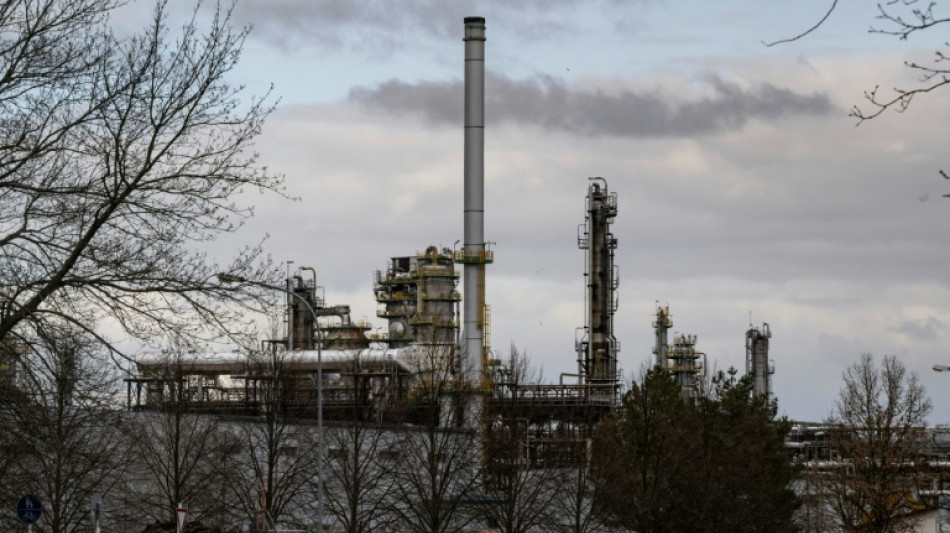
Berlin says Rosneft subsidiaries not impacted by US sanctions / Photo: John MACDOUGALL - AFP/File

 Economic losses from natural disasters fall to $100 bn in first half of 2026: Swiss Re
 Colombia scrambles to find survivors as quake kills 132
 Singapore says AI-related demand lifting economy

 Demeter Tactical Investments (ME) Limited bolsters governance with two board appointments

 Russian barrage on Ukraine kills 9, wounds dozens
 Schools closed as Indonesia battles wildfires

 Swiatek dominates Shnaider to set up Toronto semi with Svitolina

 Oil prices rise further as hopes for Hormuz deal fade

 One year after Putin-Trump summit, 'spirit of Anchorage' dissipated
 Farage vs Count Binface: What to know about UK snap poll

 Torment of Afghan fathers as daughters deprived of education
 Return of displaced Syrian Kurds to hometown suspended after violence
 Swiatek races past Shnaider into Toronto semi-finals
 Power to Hydrogen Delivers First-of-a-Kind Industrial-Scale AEM Electrolyzer to the Port of Antwerp-Bruges

 Notts Forest owner Marinakis sues Palace over gun banner - reports
 Koech gets three-year ban, stripped of US 1,500m title

 Sensational Ingebrigtsen back with more European gold
 'A scare': Brazil player leaps into tunnel in joy over goal

 USA Swimming CFO Hilliard arrested for alleged theft
 Trump insists Netanyahu relationship 'very good' despite Gaza rift

 Ingebrigtsen delivers masterclass for seventh European athletics gold

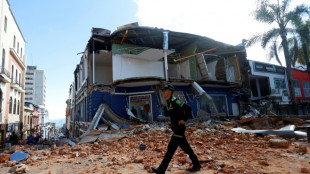 Colombia declares state of emergency after quake kills 111

 Golden relay double for Britain at Europeans as Marchand takes silver

 Barcelona's Araujo heads to Liverpool on loan

 Tupac Shakur murder trial begins 30 years after rapper's death

US sanctions targeting Rosneft will not impact the Russian oil giant's German subsidiaries, the German government told AFP Tuesday, downplaying fears their operations could be affected as they were not formally excluded.
Last week US President Donald Trump slapped sanctions on Rosneft and another Russian oil giant, Lukoil, complaining that talks with Vladimir Putin on ending the Ukraine war were going nowhere.
Rosneft's German business operations -- it still holds stakes in three German refineries that account for 12 percent of the country's refining capacity -- were not provided an exemption.
Berlin has placed the assets under state control and insists they are "decoupled" from their Russian parent company, but it has held off from a full nationalisation, instead seeking a buyer for the shares.
Concerns had mounted that Rosneft's German operations might be forced to halt, with reports saying that oil traders and banks were threatening to cut them off.
But the economy ministry said that it had now "received assurances from the relevant US authorities that the sanctions are not intended to target Rosneft's German subsidiaries".
"Business transactions with the subsidiaries can continue" once the sanctions, which will freeze Rosneft's assets and prohibit US companies from doing business with it, come into effect, a spokesman told AFP.
- Ownership limbo -
The US administration had provided a document offering reassurance that the sanctions are not intended to target German subsidiaries, and Berlin expects to soon receive "further clarifications that provide legal certainty", he said.
The spokesman noted that Rosneft's German businesses "cannot be controlled from Russia and do not generate income for the Russian parent company or the Russian state".
Britain also sanctioned Rosneft last week, and provided an exemption to the company's German subsidiaries.
The German government placed Rosneft's German assets under the trusteeship of the federal energy regulator in September 2022, in response to Russia's full-scale invasion of Ukraine.
But Berlin has struggled to find a permanent solution, and has been forced to extend trusteeship every six months while it hunts for a buyer for the assets.
The Financial Times reported the Qatar Investment Authority had expressed interest, but Rosneft was reluctant to sell, arguing they would have been more valuable had Berlin not seized them.
Rosneft's interests in Germany include a stake in the major PCK refinery, which supplies oil to Berlin and the surrounding region.
A spokeswoman for the refinery told AFP that PCK was "in contact with the energy ministry about the ongoing talks with the US sanctions authorities".
After Moscow sent its forces into Ukraine, Germany sought to take control of a swathe of Russian energy assets in the country.
It seized Russian gas firm Gazprom's subsidiary in the country, which had been a key energy supplier to Germany before the war but slashed deliveries in apparent retaliation for Western sanctions on Moscow.
The German government also had to step in to nationalise Uniper after the gas importer was pushed to the brink of bankruptcy when Gazprom halted its deliveries.
B.Godinho--PC