
Nvidia CEO praises robots as 'AI immigrants' / Photo: Patrick T. Fallon - AFP

 Physicians Urge Arizona to Ban Medical Gag Clauses and Enable Private Lawsuits

 New Campaign Highlights Knowledge Gaps on Carbon Monoxide Safety Among Americans

 GoodData.AI Launches the Agentic Serving Plane, a New Category of Enterprise Data Infrastructure for AI Agents

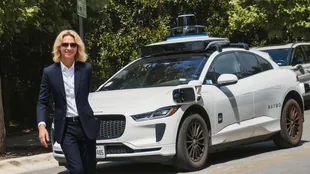 US Government Questions Effectiveness of Waymo’s School Bus Software Fix

 Panthers expected to begin 2027 NRL season away from new stadium

 Sweet As app launches restaurant discovery platform

 MLA seeks inquiry into reported sectarian gestures on Ormeau Road

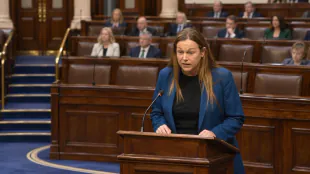 Louise O’Reilly attacks Simon Harris over unemployment remarks
Nvidia chief executive Jensen Huang described robots as "AI immigrants" on Tuesday, arguing they could solve a global labor shortage that is hampering manufacturing.
Addressing concerns about machines replacing human workers, the leader of the world's dominant AI chip company took the opposite stance.
"Having robots will create jobs," Huang told 200 journalists and analysts during a 90-minute session at a Las Vegas hotel on the sidelines of the CES technology show.
"We need more AI immigrants to help us on manufacturing floors and do work that maybe we've decided not to do anymore," said Huang, whose off-the-cuff remarks have become a popular CES tradition.
The gathering runs through Friday, with some 130,000 attendees.
Like every year, robots are a major presence at CES, with companies hoping they will break into the mainstream as useful devices instead of novelties.
A "robotics revolution" will compensate for labor losses from aging populations and demographic decline while boosting the economy, Huang argued.
"When the economy grows, we hire more people," he said, sporting his signature black leather jacket.
Huang, who leads the world's most valuable company at roughly $3.5 trillion, estimated the worker shortage reaches "tens of millions," not thousands, due to demographic shifts.
His comments align with other Silicon Valley leaders, particularly Tesla and SpaceX's Elon Musk, who frequently cite population decline and workforce aging as reasons to embrace automation.
Nvidia is investing heavily in providing the foundational software that can make robots work across multiple industries, including manufacturing, retail, and healthcare.
A.S.Diogo--PC

