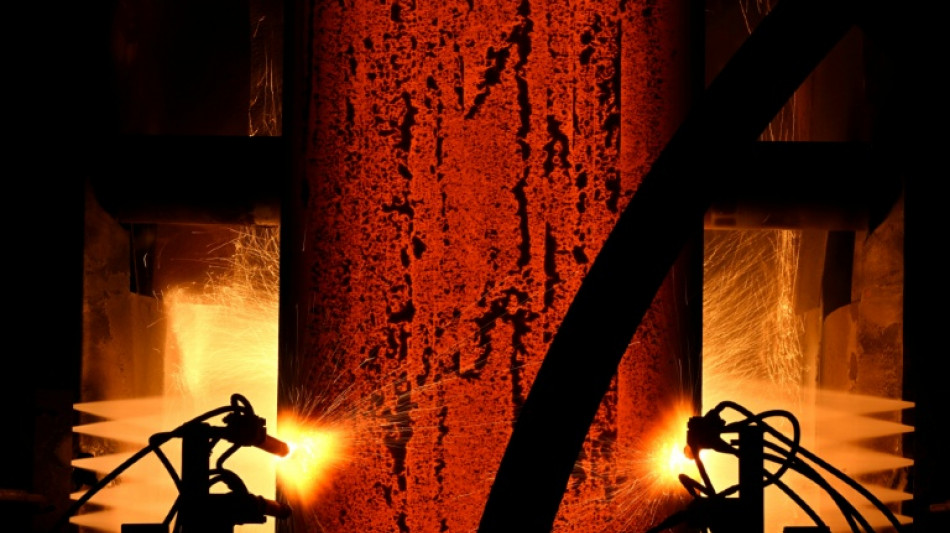
'Made in Europe' or 'Made with Europe'? Buy European push splits bloc / Photo: Ina FASSBENDER - AFP/File

 Flight cancellations, evacuations in China as Typhoon Dolphin looms
 Iran issues demands for reopening of Hormuz
 Afghanistan's gold rush upends lives and landscapes
 Messi missing after father's death as Miami lose in Leagues Cup
 World number one Sabalenka ousted in Toronto by Alexandrova
 Olympic weightlifter hoists debris for Venezuela earthquake recovery
 FIFA condemns 'concerted and ongoing effort' to weaken Infantino
 South Africa win after surviving late Argentina surge
 Man Utd boss Carrick being 'careful' with Mount as Man Utd draw with PSG
 All Black Tuipulotu surprised after Sharks include Nonu
 Infantino denies allegations of affair, favouritism while at UEFA: report

 MotoGP leader Martin soars to victory in British GP sprint race
 Mosimane set to succeed Broos as South Africa coach
 Drone enters Bulgaria, explodes near pipeline at Romanian border

 Paris orders e-scooter users to wear helmets, reflective gear
 Lionel Messi's father Jorge dies aged 68

 Johnson reveals 'stress' of Grand Slam Track collapse, clarifies payment
 Defending champion Ferrand-Prevot out of Tour de France Femmes
 Wallabies squeeze past Japan to give Kiss a winning start
 Kyiv mourns recovery volunteer, whose life 'intertwined with the fallen'

 Only two vehicles earn perfect child-seat scores for 2026
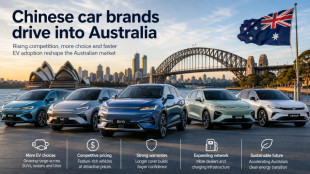 Chinese car brands reshape Australia’s automotive market
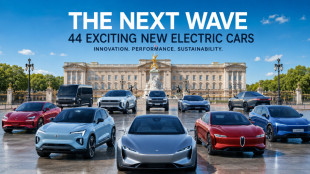 Electric cars enter their most decisive generation yet
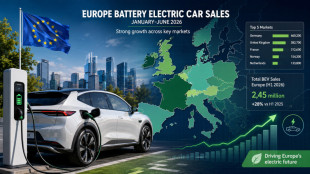
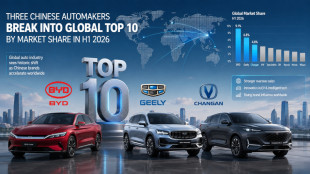 Three Chinese carmakers enter the global automotive top 10
 Ukraine's Zelensky visits Russian ally Serbia as Moscow pounds Kyiv

Everyone in Europe agrees the EU needs to rescue its industry but the bloc is split over how far it should push a 'Buy European' approach in order to do so.
The European Commission, the EU's executive arm, will next week propose new rules that are expected to include a requirement for companies in strategic sectors to produce in Europe if they want to receive public money.
But the definition of "European preference" has triggered debate, with calls especially from France for more "Made in Europe", while other EU states such as Germany call for "Made with Europe".
- Protecting Europe or European protectionism? -
French President Emmanuel Macron insisted the new rules would be about "protecting our industry" without "being protectionist", by defending "certain strategic sectors, such as cleantech, chemicals, steel, cars or defence".
Otherwise, he warned, "Europeans will be swept aside".
But other EU countries, which are proponents of free trade, oppose the plans.
Swedish Prime Minister Ulf Kristersson said Europe should compete based on quality and innovation, not because it wanted to protect European markets.
"We do not want to protect European businesses that are basically not competitive," Kristersson told the Financial Times newspaper last week.
But EU leaders during talks Thursday appeared to reach a consensus on the issue, pushing for the measure in certain specific sectors since they say Europe faces unfair competition from China and other countries.
"We are in favour of open markets," German Finance Minister Lars Klingbeil said Monday. "But I also want to be very clear: if China changes the rules of the game, if we are confronted with overcapacity, subsidies, and the fact that markets in Europe are flooded, then Europe must defend itself."
- In Europe or with Europe? -
Supporters want "Made in Europe" to be strictly defined, and only for industrial goods made from components manufactured in the European Economic Area, made of the EU's 27 states as well as Iceland, Liechtenstein and Norway.
Critics say this definition would be too restrictive and instead call for a more flexible measure, like Germany's Merz, who calls for "Made with Europe" not "Made in Europe".
They also argue it would be difficult to apply in practice and risks destabilising European supply chains.
"Typically, even a vehicle assembled in Europe incorporates hundreds of specialised components sourced from all over the world. Many critical inputs cannot be competitively produced at scale in Europe," Japanese carmaker Honda said.
Britain and Turkey, for whom the EU is an important trading partner, have also privately expressed concern to Brussels about keeping their countries out.
Some EU capitals are worried about potential retaliatory measures from supplier countries, which would drag Europe into showdowns at a moment when it needs to strengthen its exports.
- What will the rules look like? -
The EU executive insists it has balanced the need to be open and protect firms.
The measure will be "targeted in three ways", said the office of EU industry chief Stephane Sejourne -- who is spearheading the push.
It will affect:
-- a limited number of critical components
-- a limited number of strategic sectors
-- only when public funding is involved.
The final proposal, which will be announced on February 25, could end up only touching a handful of sectors: the auto industry and those playing an essential role in the green transition and confronted by what the EU says unfair Chinese competition, such as solar panels, wind turbines and batteries.
Sejourne's office insisted companies producing in the EU would be considered European and there will be "reciprocal commitments" with trusted partners.
A draft document seen by AFP says products made in countries outside the EU with rules similar to the bloc will be treated like those made in Europe.
Non-EU countries however remain watchful until the real proposal lands.
For example, there are still many unknowns including what the percentages of European or equivalent components will be required from manufacturers if they wish to continue accessing public money.
F.Cardoso--PC