Rocket re-entry pollution measured in atmosphere for first time / Photo: Bill Ingalls/NASA - GETTY IMAGES NORTH AMERICA/AFP/File

 Top-ranked Sabalenka, Pegula stunned in Toronto fourth round
 Japan nuclear debate unnerves proponents of pacifism

 Spanish teen Jodar ousts eighth seed Lehecka at Montreal

 Angers mounts in US over vast network of car license plate cams
 Darderi to face Nakashima in Montreal quarter-finals
 Espresso power fires Darderi past Borges in Montreal

 Shnaider upsets Pegula to book Toronto quarter-final with Swiatek

 Mount injury overshadows Man Utd draw with Paris Saint-Germain

 Ukraine denies targeting Bulgaria as drone explodes near pipeline
 Vollering grabs Tour de France lead in Nice

 Euros to showcase new TV guidelines on non-sexualisation of women athletes

 'Calm' Kiss savours first win as Wallabies boss
 Duplantis bids for fourth European title as stars align in Birmingham
 Ukraine warns of tough winter as Russia strikes kill 4 in Kyiv region

 Recovering Marchand to skip medleys at European swim champs
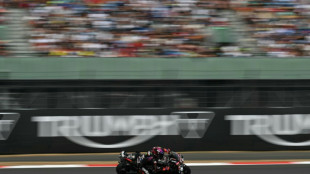 MotoGP leader Martin speeds to British Grand Prix pole

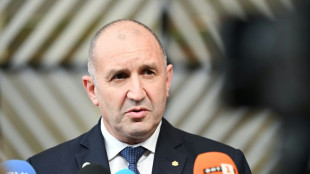 Drone enters Bulgaria, explodes near pipeline at Romanian border: Bulgarian PM

 Arsenal sign Brazil midfielder Guimaraes from Newcastle

 Atletico will not sell Alvarez, says Simeone

 Ford Fathom turns affordable electric pickup into reality

 Lise Klaveness, the Norwegian thorn in Infantino's side

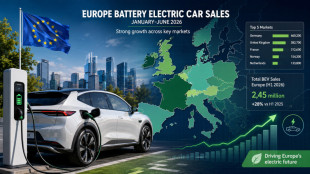 Europe’s electric car boom exposes a widening market divide

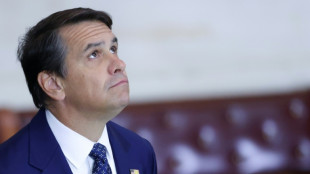 US Senate confirms Trump's ex lawyer as attorney general
 Tibet conference in Nepal pushed online
 Nocturnal 'coffee frog' discovered in Costa Rica

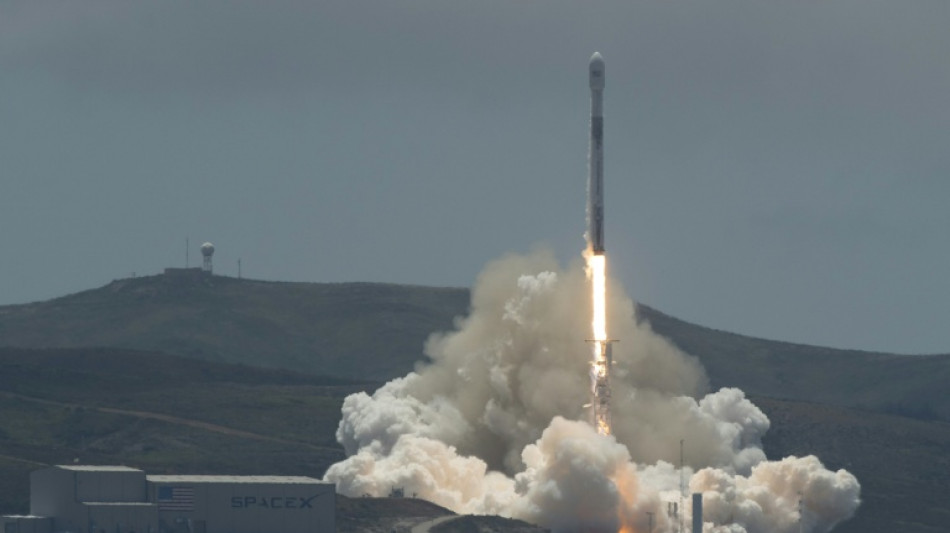
When part of a SpaceX rocket re-entered Earth's atmosphere exactly a year ago, it created a spectacular fireball that streaked across Europe's skies, delighting stargazers and sending a team of scientists rushing towards their instruments.
The German team managed to measure the pollution the rocket's upper stage emitted in our planet's difficult-to-study upper atmosphere -- the first time this has been achieved, according to a study published on Thursday.
It is vital to learn more about this little-understood form of pollution because of the huge number of satellites that are planned to be launched in the coming years, the scientists emphasised.
In the early hours of February 19, 2025, the upper stage of a Falcon 9 rocket was tumbling back to Earth when it exploded into a fireball that made headlines from the UK to Poland.
"We were excited to try and test our equipment and hopefully measure the debris trail," the team led by Robin Wing and Gerd Baumgarten of the Leibniz Institute of Atmospheric Physics in Germany told AFP via email.
In particular, the scientists wanted to measure how the rocket polluted what they call the "ignorosphere" -- because it is so difficult to study.
This region between 50 to 100 kilometres (31 to 62 miles) above Earth includes the mesosphere and part of the lower thermosphere.
- 'Harbinger' -
The team used technology called LIDAR, which measures pollution in the atmosphere by shooting out lots of laser pulses and seeing which bounce back off something.
They detected a sudden spike in the metal lithium in an area nearly 100 kilometres above Earth. This plume had 10 times more lithium than is normal in this part of the atmosphere.
The team then traced the plume back to where the rocket re-entered the atmosphere, west of Ireland.
For the first time, this proves it is possible to study pollution from re-entering rockets at such heights before it disperses, the scientists said.
But the impact from this rocket pollution remains unknown.
"What we do know is that one ton of emissions at 75 kilometres (altitude) is equivalent to 100,000 tons at the surface," they said.
The study warned the case was a "harbinger" of the pollution to come, given how many rockets will be needed to launch all the satellites that Earth is planning to blast into space.
Currently, there are around 14,000 active satellites orbiting our planet.
In the middle of last month, China applied for permission to launch around 200,000 satellites into orbit.
Then at the end of January, billionaire Elon Musk's SpaceX applied for permission to launch one million more.
Eloise Marais, a professor of atmospheric chemistry at University College London not involved in the new study, told AFP the research was "really important".
"There is currently no suitable regulation targeting pollution input into the upper layers of the atmosphere," she explained.
"Even though these portions of the atmosphere are far from us, they have potentially consequential impacts to life on Earth if the pollutants produced are able to affect Earth's climate and deplete ozone in the layer protecting us from harmful UV radiation."
The study was published in the journal Communications Earth & Environment.
H.Silva--PC