-
 Top-ranked Sabalenka, Pegula stunned in Toronto fourth round
-
Afghanistan's gold rush upends lives and landscapes

-
 Japan nuclear debate unnerves proponents of pacifism
-
Messi missing after father's death as Miami lose in Leagues Cup
-
 Spanish teen Jodar ousts eighth seed Lehecka at Montreal
-
World number one Sabalenka ousted in Toronto by Alexandrova
-
 Angers mounts in US over vast network of car license plate cams
-
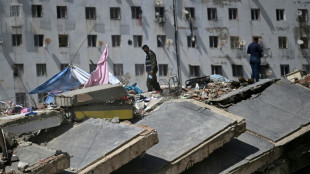
Olympic weightlifter hoists debris for Venezuela earthquake recovery
-
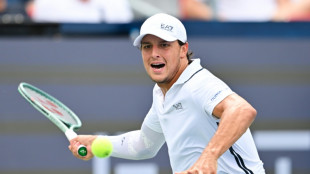 Darderi to face Nakashima in Montreal quarter-finals
-
FIFA condemns 'concerted and ongoing effort' to weaken Infantino
-
 Espresso power fires Darderi past Borges in Montreal
-
South Africa win after surviving late Argentina surge

-
 Shnaider upsets Pegula to book Toronto quarter-final with Swiatek
-
Man Utd boss Carrick being 'careful' with Mount as Man Utd draw with PSG

-
 Mount injury overshadows Man Utd draw with Paris Saint-Germain
-
All Black Tuipulotu surprised after Sharks include Nonu

-
 Ukraine denies targeting Bulgaria as drone explodes near pipeline
-
Infantino denies allegations of affair, favouritism while at UEFA: report

-
 Vollering grabs Tour de France lead in Nice
-
MotoGP leader Martin soars to victory in British GP sprint race

-
 Euros to showcase new TV guidelines on non-sexualisation of women athletes
-
Mosimane set to succeed Broos as South Africa coach
-
 'Calm' Kiss savours first win as Wallabies boss
-
Drone enters Bulgaria, explodes near pipeline at Romanian border
-
 Duplantis bids for fourth European title as stars align in Birmingham
-
Paris orders e-scooter users to wear helmets, reflective gear

-
 Ukraine warns of tough winter as Russia strikes kill 4 in Kyiv region
-
Lionel Messi's father Jorge dies aged 68
-
 Recovering Marchand to skip medleys at European swim champs
-
Johnson reveals 'stress' of Grand Slam Track collapse, clarifies payment
-
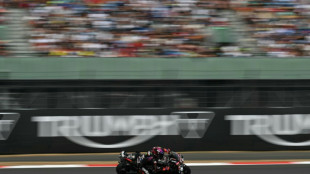 MotoGP leader Martin speeds to British Grand Prix pole
-
Defending champion Ferrand-Prevot out of Tour de France Femmes

-
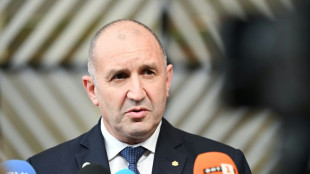 Drone enters Bulgaria, explodes near pipeline at Romanian border: Bulgarian PM
-
Wallabies squeeze past Japan to give Kiss a winning start

-
 Arsenal sign Brazil midfielder Guimaraes from Newcastle
-
Kyiv mourns recovery volunteer, whose life 'intertwined with the fallen'

-
 Atletico will not sell Alvarez, says Simeone
-
Only two vehicles earn perfect child-seat scores for 2026

-
 Ford Fathom turns affordable electric pickup into reality
-
Chinese car brands reshape Australia’s automotive market

-
 Lise Klaveness, the Norwegian thorn in Infantino's side
-
Electric cars enter their most decisive generation yet

-
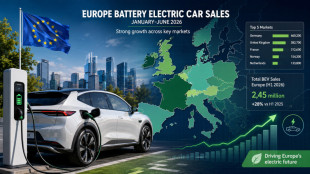 Europe’s electric car boom exposes a widening market divide
-
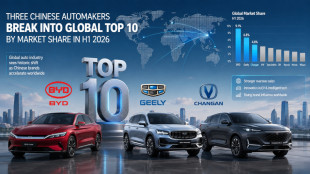
Three Chinese carmakers enter the global automotive top 10
-
 US Senate confirms Trump's ex lawyer as attorney general
-
Ukraine's Zelensky visits Russian ally Serbia as Moscow pounds Kyiv
-
 Tibet conference in Nepal pushed online
-
Ukraine's Zelensky visits Russian ally Serbia for talks
-
 Nocturnal 'coffee frog' discovered in Costa Rica
-
Defending champion Shelton storms to Montreal win
UN touts panel for 'human control' of AI as leaders weigh message
A new UN panel on artificial intelligence aims to "make human control a technical reality", the global body's chief said Friday as leaders at a New Delhi summit weighed their message on the future of the divisive technology.
The flip side of the gold rush surrounding AI is the risk of job disruption, online abuse and the heavy electricity consumption of data centres.
"We are barrelling into the unknown," UN chief Antonio Guterres told the AI Impact Summit in New Delhi, which wraps up later Friday. "The message is simple: Less hype, less fear. More facts and evidence."
The United Nations General Assembly has confirmed 40 members for a new group called the Independent International Scientific Panel on Artificial Intelligence, he said.
The advisory body -- aiming to be to AI what the UN's Intergovernmental Panel on Climate Change (IPCC) is to global warming -- was created in August.
"Science-led governance is not a brake on progress" but can make technological development "safer, fairer, and more widely shared", Guterres said.
"When we understand what systems can do -- and what they cannot -- we can move from rough measures to smarter, risk-based guardrails."
Dozens of world leaders and ministers are expected to deliver on Friday a shared view on the risks and opportunities posed by AI to cap the five-day summit.
It is the fourth annual global meeting focused on AI policy, and the next one will take place in Geneva in the first half of 2027, the Swiss president said on Thursday.
The Delhi gathering is the first AI summit in a developing country, with India taking the opportunity to push its ambitions to catch up with the United States and China.
India expects more than $200 billion in investments over the next two years, and US tech titans unveiled new deals and infrastructure projects this week.
- 'Common good' -
OpenAI's Sam Altman, who leads the company behind ChatGPT, has called for oversight in the past but said last year that taking too tight an approach could hold the United States back in the AI race.
"Centralisation of this technology, in one company or country, could lead to ruin," he said Thursday, one of several top tech CEOs to take the stage.
"This is not to suggest that we won't need any regulation or safeguards. We obviously do, urgently, like we have for other powerful technologies."
But the broad focus of the New Delhi event, and vague promises made at the previous summits in France, South Korea and Britain, could make concrete commitments unlikely.
Even so, "governance of powerful technologies typically begins with shared language: what risks matter, what thresholds are unacceptable", said Niki Iliadis, director of global AI governance at The Future Society.
"It's true that AI companies are influential, but they are not sovereign," she told AFP.
Discussions at the Delhi summit, attended by tens of thousands from across the AI industry, have covered big topics from child protections to the need for more equal access to AI tools worldwide.
"We are entering an era where humans and intelligence systems co-create, co-work and co-evolve," Indian Prime Minister Narendra Modi said on Thursday.
"We must resolve that AI is used for the global common good."
India also formally joined a US-led "Pax Silica" initiative aimed at "about building supply chains that will not be held hostage" at securing AI supply, Jacob Helberg, US Under Secretary of State for Economic Affairs, told the summit.
F.Santana--PC