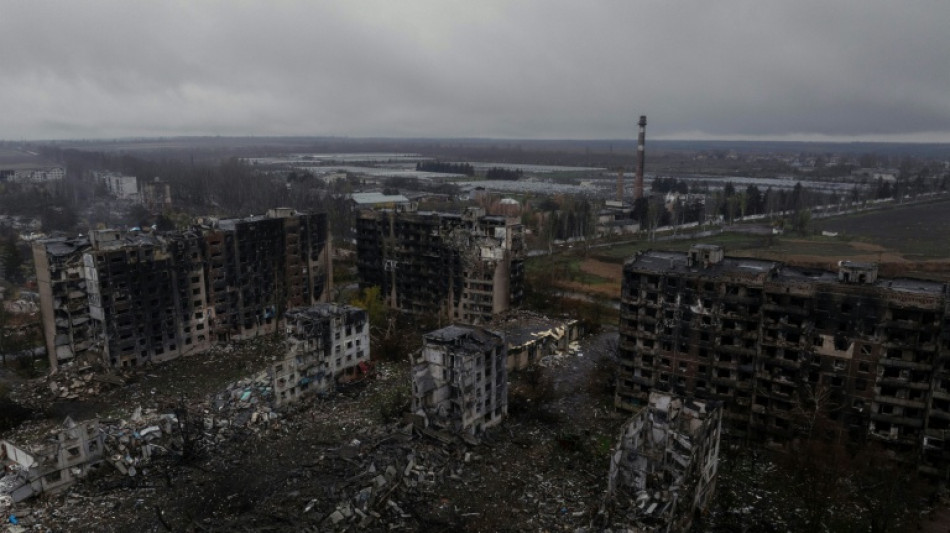
Where do Ukraine and Russia stand after four years of war? / Photo: Iryna Rybakova - 93RD SEPARATE MECHANIZED BRIGADE "KHOLODNYI YAR"/AFP

 Top-ranked Sabalenka, Pegula stunned in Toronto fourth round
 Japan nuclear debate unnerves proponents of pacifism
 Spanish teen Jodar ousts eighth seed Lehecka at Montreal

 Angers mounts in US over vast network of car license plate cams
 Darderi to face Nakashima in Montreal quarter-finals
 Espresso power fires Darderi past Borges in Montreal

 Shnaider upsets Pegula to book Toronto quarter-final with Swiatek

 Mount injury overshadows Man Utd draw with Paris Saint-Germain

 Ukraine denies targeting Bulgaria as drone explodes near pipeline
 Vollering grabs Tour de France lead in Nice

 Euros to showcase new TV guidelines on non-sexualisation of women athletes

 'Calm' Kiss savours first win as Wallabies boss
 Duplantis bids for fourth European title as stars align in Birmingham

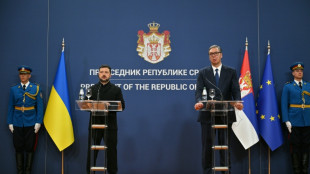 Ukraine warns of tough winter as Russia strikes kill 4 in Kyiv region
 Recovering Marchand to skip medleys at European swim champs

 MotoGP leader Martin speeds to British Grand Prix pole

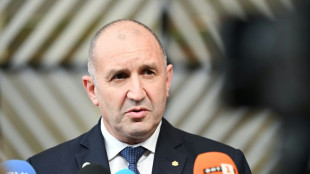 Drone enters Bulgaria, explodes near pipeline at Romanian border: Bulgarian PM

 Arsenal sign Brazil midfielder Guimaraes from Newcastle

 Atletico will not sell Alvarez, says Simeone

 Ford Fathom turns affordable electric pickup into reality

 Lise Klaveness, the Norwegian thorn in Infantino's side

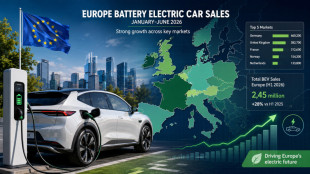 Europe’s electric car boom exposes a widening market divide

 US Senate confirms Trump's ex lawyer as attorney general
 Tibet conference in Nepal pushed online
 Nocturnal 'coffee frog' discovered in Costa Rica

Russia launched its full-scale invasion of Ukraine on February 24, 2022, unleashing the deadliest war in Europe since World War II.
As the conflict reaches its four-year mark, AFP looks at the state of the conflict and some of the consequences for both countries:
- Destruction -
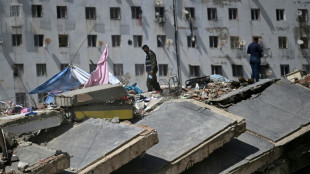
The war has resulted in widespread destruction in Ukraine.
Entire cities in Ukraine's east and south, among them Bakhmut, Toretsk and Vovchansk, have been reduced to rubble by fighting.
The World Health Organisation has verified more than 2,800 attacks on healthcare facilities since 2022, while Russian attacks on energy infrastructure have cut heating and power to millions.
Around a fifth of Ukraine is contaminated by mines or unexploded ordnance, according to the UN's Mine Action Service.
The total cost of reconstruction in Ukraine is estimated at around $588 billion over the next decade, the World Bank reported Monday.
- Death -
The United Nations has verified over 15,000 civilian deaths in Ukraine since 2022, although it says the actual number is likely considerably higher as it has no access to areas under Russian occupation, like the port city of Mariupol where thousands are reported to have died in a Russian siege.
Ukrainian retaliatory attacks on Russian border regions have also killed hundreds.
Around 20,000 children have been forcibly displaced or kidnapped from Russian-occupied Ukrainian land, according to estimates by Kyiv.
Forced to flee when Russia invaded, around 5.9 million Ukrainian refugees live outside the country and another 3.7 million are displaced internally, the UN Refugee Agency says.
Neither side releases reliable data on military casualties.
Ukrainian President Volodymyr Zelensky said earlier this month 55,000 of his soldiers had been killed -- a toll widely believed to be an underestimate.
Russia has not given an official update on losses since September 2022.
The BBC and Mediazona, an independent Russian site, have verified the deaths of at least 177,000 Russian soldiers through public obituaries and announcements by family and local officials -- a toll also believed to be below the real number.
The Center for Strategic and International Studies (CSIS) think tank estimates as many as 325,000 Russian soldiers may have been killed since 2022, while putting the number of Ukrainian soldiers killed at 100,000-140,000.
- Frontline & diplomacy -
Moscow occupied around 19.5 percent of Ukraine as of mid-February, according to data from the Institute for the Study of War (ISW).
Around seven percent -- the Crimean peninsula and part of the eastern Donbas region -- was already occupied before the invasion.
Moscow's advances were the biggest since 2022 last year, although they have slowed considerably since the opening months of its campaign, according to ISW data.
The Kremlin is pushing for full control of Ukraine's eastern Donetsk region and a ban on Western military support for Kyiv.
Ukraine says giving in would leave it vulnerable to future attack, is constitutionally impossible, and unacceptable to much of Ukrainian society.
Since Donald Trump returned to the White House, several rounds of talks -- in Istanbul, Abu Dhabi and Geneva -- have failed to secure a deal.
- Economy -
The war has decimated Ukraine's economy and put Russia's under massive strain.
After growing strongly on the back of massive military spending -- up to nine percent of GDP -- Russia's economy has slowed, posting just a one percent expansion last year.
Oil and gas revenues -- which provide roughly a quarter of state budget income -- fell to a five‑year low last year, as a wave of Western sanctions and Ukrainian attacks on oil facilities crimped exports.
Ukraine's economy shrank by almost a third in the year after Russia's invasion. It has clawed a little of that back, but its government now depends on the International Monetary Fund and other foreign lenders to cover day-to-day spending.
- Politics and society -
The war has had a deep impact on politics and society in both countries.
Ukraine has suspended elections due to martial law and lately been rocked by a corruption scandal in the war-battered energy sector.
In Russia, authorities have orchestrated a domestic crackdown on dissent unprecedented since the Soviet era.
Russian prosecutors have opened more than 10,000 cases against people accused of criticising its armed forces, Russian news site Mediazona reported in 2024.
Returning veterans in Russia, many of them former convicts recruited to fight, have been blamed for an increase in violent crime.
- Allies -
Ukraine is heavily dependent on Western weapons, intelligence and finance.
Europe has delivered 201 billion euros in aid since 2022, according to figures from Germany's Kiel Institute.
The United States has supplied $115 billion in total, but Trump has partially suspended arms deliveries and is pushing Europe to pick up the tab.
North Korea sent thousands of soldiers to fight with the Russian army and is widely reported to have sent millions of artillery shells to Moscow.
Iran has supplied drone technology to Moscow, and China has become its vital economic partner, accused in the West of helping the Kremlin avoid sanctions.
C.Cassis--PC