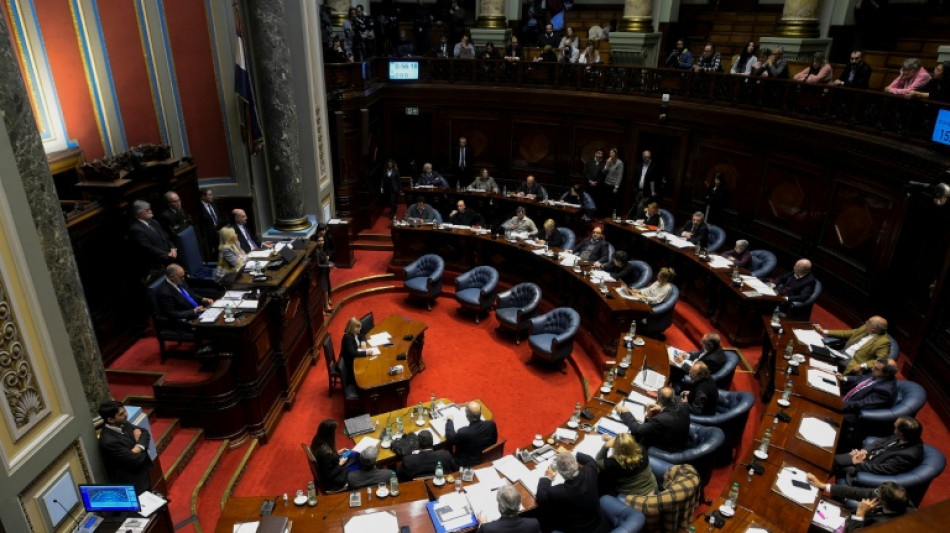
Argentina, Uruguay ratify massive EU-South America trade deal / Photo: Dante Fernandez - AFP

 Angers mounts in US over vast network of car license plate cams
 Darderi to face Nakashima in Montreal quarter-finals
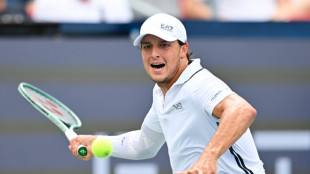 Espresso power fires Darderi past Borges in Montreal
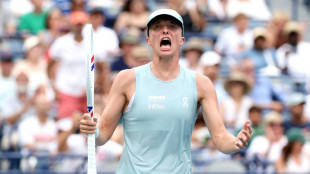 Shnaider upsets Pegula to book Toronto quarter-final with Swiatek
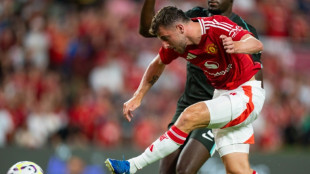
 Mount injury overshadows Man Utd draw with Paris Saint-Germain
 Ukraine denies targeting Bulgaria as drone explodes near pipeline
 Vollering grabs Tour de France lead in Nice
 Euros to showcase new TV guidelines on non-sexualisation of women athletes
 'Calm' Kiss savours first win as Wallabies boss
 Duplantis bids for fourth European title as stars align in Birmingham
 Ukraine warns of tough winter as Russia strikes kill 4 in Kyiv region
 Recovering Marchand to skip medleys at European swim champs
 MotoGP leader Martin speeds to British Grand Prix pole

 Drone enters Bulgaria, explodes near pipeline at Romanian border: Bulgarian PM
 Arsenal sign Brazil midfielder Guimaraes from Newcastle

 Atletico will not sell Alvarez, says Simeone

 Ford Fathom turns affordable electric pickup into reality
 Lise Klaveness, the Norwegian thorn in Infantino's side

 Europe’s electric car boom exposes a widening market divide

 US Senate confirms Trump's ex lawyer as attorney general
 Tibet conference in Nepal pushed online
 Nocturnal 'coffee frog' discovered in Costa Rica
 India's 'cockroach' protest movement keeps heat on Modi
 Russia's only anti-war party eyes support boost at elections
 Canada tries to adapt to a future of wildfires
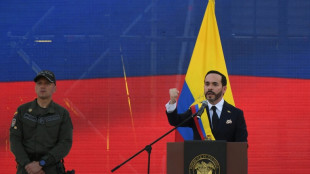
Argentina and Uruguay on Thursday ratified a massive trade deal with the European Union that has generated enthusiasm from Brasilia to Buenos Aires but sparked protests and a legal challenge in Europe.
Argentine senators voted 69-3 in favor of the agreement to create one of the world's biggest free trade zones, sealing its adoption days after it passed the lower house.
Hours earlier, neighboring Uruguay was first out of the blocks to ratify the deal, which has been fiercely opposed by farmers in some EU countries.
It still requires approval from lawmakers in the European Parliament, which referred it to the EU's top court within days of being inked in January.
The deal between the EU and the four founding members of the Mercosur bloc -- Argentina, Brazil, Paraguay and Uruguay -- was a quarter century in the making.
Argentine President Javier Milei, a free market champion, hailed the ratification of the accord.
"Openness = prosperity," Milei wrote on X.
In a later statement he said the agreement was a chance to promote economic development and attract investment and expressed hope that Brazil and Paraguay would quickly adopt it also.
It eliminates tariffs on more than 90 percent of trade between the two blocs, which together account for 30 percent of global GDP and more than 700 million consumers.
The two sides have yet to agree on export quotas.
The South Americans have moved to quickly enshrine it in their legislation, in an apparent bid to pressure Brussels to follow suit.
In Brazil, the lower house of parliament backed it by a large majority on Wednesday.
The accord, which was energetically promoted by EU chief Ursula von der Leyen and Brazilian President Luiz Inacio Lula da Silva as well as the leaders of Germany and Spain, aims to boost EU exports of vehicles, machinery and wines and spirits.
In return, South American producers of beef, sugar, rice, honey and soybeans gain easier access to one of the world's largest economies.
Brussels can decide to implement it provisionally while waiting for the EU Court of Justice on its legality, but has not yet taken a decision on doing so.
South American countries in the meantime are ploughing ahead.
- 'It won't be easy' -
Uruguayan Foreign Minister Mario Lubetkin hailed his country's ratification as "a signal" to Europe, which the South Americans have accused of foot-dragging.
The agreement "is no longer under debate," Lubetkin said, while anticipating that "it won't be easy" to implement.
Argentine political analyst Fabian Calle said Mercosur members were anxious to forestall any "excuses from the European side that (the deal) is being postponed or not being implemented due to a lack of ratification" on the South American side.
Some EU nations like Germany hope the pact could help boost exports at a time of global trade tensions, driven by US President Donald Trump's weaponizing of tariffs.
France, however, unsuccessfully tried to block the deal over concerns for its farmers, who fear being undercut by cheaper goods from Brazil and its neighbors.
The European Commission reacted to those concerns by adopting a series of safeguards for its producers.
Within Mercosur states, the deal has broad support, despite reservations from some producers.
Argentine wine producers namely fear competition from their French, Italian and Spanish counterparts.
O.Gaspar--PC