Middle East war puts shipping firms in tight insurance spot / Photo: Giuseppe CACACE - AFP

 FIFA condemns 'concerted and ongoing effort' to weaken Infantino

 South Africa win after surviving late Argentina surge

 Man Utd boss Carrick being 'careful' with Mount as Man Utd draw with PSG

 All Black Tuipulotu surprised after Sharks include Nonu

 Infantino denies allegations of affair, favouritism while at UEFA: report

 MotoGP leader Martin soars to victory in British GP sprint race

 Mosimane set to succeed Broos as South Africa coach

 Drone enters Bulgaria, explodes near pipeline at Romanian border

 Paris orders e-scooter users to wear helmets, reflective gear

 Lionel Messi's father Jorge dies aged 68

 Johnson reveals 'stress' of Grand Slam Track collapse, clarifies payment

 Defending champion Ferrand-Prevot out of Tour de France Femmes

 Wallabies squeeze past Japan to give Kiss a winning start

 Kyiv mourns recovery volunteer, whose life 'intertwined with the fallen'

 Only two vehicles earn perfect child-seat scores for 2026

 Chinese car brands reshape Australia’s automotive market

 Electric cars enter their most decisive generation yet

 Three Chinese carmakers enter the global automotive top 10

 Ukraine's Zelensky visits Russian ally Serbia as Moscow pounds Kyiv

 Ukraine's Zelensky visits Russian ally Serbia for talks

 Defending champion Shelton storms to Montreal win

 Exodus: West Bank hardships drive out Palestinian Christians

 Travis Head wins Australian cricketer of the year gong

 Colombia's new president vows to 'defeat narco-terrorists'

 Call for Infantino to resign comes amid wave of support

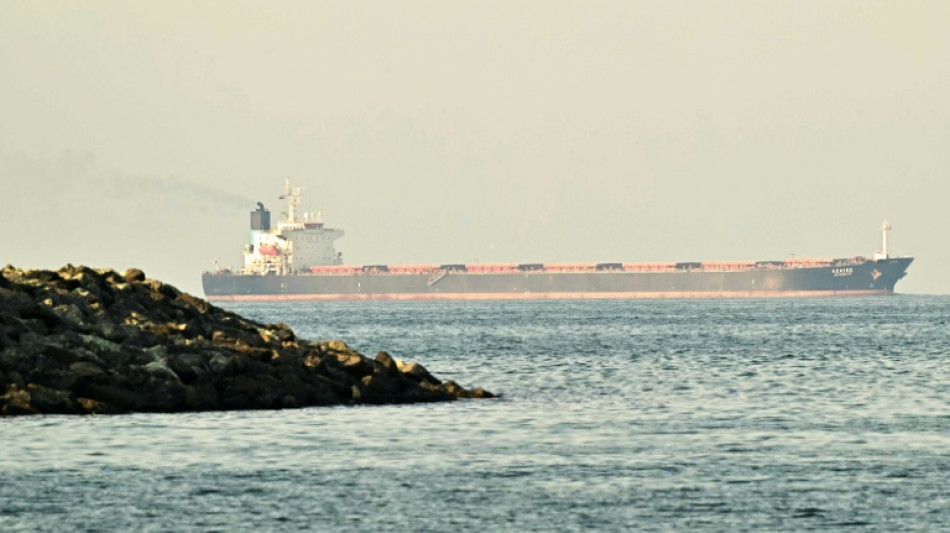
The outbreak of the conflict in the Middle East has seen maritime insurers cancel coverage, adding to the risk shipping companies face.
Many insurers now refuse to offer war risk coverage for the Gulf, a key hub for global oil trade, as the war pitting Iran against the United States and Israel drags on.
"We have been receiving coverage cancellations from certain insurers since yesterday morning," Gilles Legue, the head maritime insurer in France for the broker Marsh, told AFP.
The risks are high. Maritime safety agencies recorded on Sunday three attacks against commercial vessels in the Strait of Hormuz, which is only 50 kilometres (30 miles) wide at its narrowest point between Iran and Oman, and which Tehran has threatened to shut.
The world's largest shipping company, the Swiss-Italian firm MSC, on Sunday ordered its vessels in the area to seek safety.
Its French rival CMA CGM gave the same order to its ships, as did Chinese shipping giant Cosco.
The insurers consider themselves justified in cancelling war risk policies: they covered a contingency, which no longer exists now that war has actually broken out.
"These cancellations are happening very quickly," said Claire Jaunaux, head of the marine and transport division at broker Eyssautier-Verlingue.
The cancellation of coverage becomes effective after notice periods ranging from 48 hours to seven days, depending on the type of contract.
And then what? Logically, insurers -- after having assessed the situation and their exposure in light of their contracts with reinsurers -- would once again offer war risk coverage in the area but at a much higher, if not prohibitive, price.
Brokers surveyed by AFP are expecting prices 10 times higher than those in effect before the United States and Israel launched attacks on Iran on Saturday.
"The insurance costs are so high that no vessel can afford or wants to risk going through the Strait at this time," said Amena Bakr, an oil specialist at market intelligence firm Kpler.
- Contract clauses scrutinised -
Insurers could also decide not to offer coverage right away, warned Frederic Denefle, managing director of the Garex group, a specialist in insurance for conflict-related risks.
He said the Gulf area is likely to remain dangerous for some time, with anything that moves a potential target.
"Even if there is a ceasefire tomorrow... there will be questions about the scope of the ceasefire, whether the ceasefire will be understood in the same way by everyone," said Denefle.
Then there is still the risk of mines, he added.
Insurance specialists are also scrutinising the contracts for ships currently stuck in the Gulf.
Some contracts do indeed provide compensation in the event they get stuck due to a conflict, particularly for perishable cargoes.
Insurers are also closely monitoring the possible spread of the conflict to other seas and will no doubt adjust their insurance policies accordingly.
Eyssautier-Verlingue's Jaunaux pointed to the Red Sea, where the Iran-backed Houthis, which control large swathes of Yemen, carried out attacks last year on ships they considered to be linked to Israel.
The eastern Mediterranean could also be affected: Cyprus's president said on Monday that an Iranian drone had crashed on a British base located on the island.
Greece announced shortly afterwards that it was sending two frigates and F-16 fighter jets to Cyprus, one of the member states of the European Union.
N.Esteves--PC