'I couldn't breathe': The dark side of Bolivia's silver boom / Photo: Aizar RALDES - AFP

 FIFA condemns 'concerted and ongoing effort' to weaken Infantino

 South Africa win after surviving late Argentina surge

 Man Utd boss Carrick being 'careful' with Mount as Man Utd draw with PSG

 All Black Tuipulotu surprised after Sharks include Nonu

 Infantino denies allegations of affair, favouritism while at UEFA: report

 MotoGP leader Martin soars to victory in British GP sprint race

 Mosimane set to succeed Broos as South Africa coach

 Drone enters Bulgaria, explodes near pipeline at Romanian border

 Paris orders e-scooter users to wear helmets, reflective gear

 Lionel Messi's father Jorge dies aged 68

 Johnson reveals 'stress' of Grand Slam Track collapse, clarifies payment

 Defending champion Ferrand-Prevot out of Tour de France Femmes

 Wallabies squeeze past Japan to give Kiss a winning start

 Kyiv mourns recovery volunteer, whose life 'intertwined with the fallen'

 Only two vehicles earn perfect child-seat scores for 2026

 Chinese car brands reshape Australia’s automotive market

 Electric cars enter their most decisive generation yet

 Three Chinese carmakers enter the global automotive top 10

 Ukraine's Zelensky visits Russian ally Serbia as Moscow pounds Kyiv

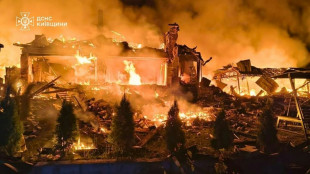 Ukraine's Zelensky visits Russian ally Serbia for talks

 Defending champion Shelton storms to Montreal win

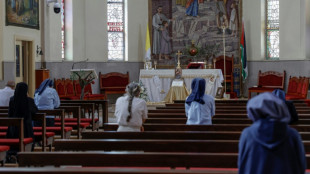 Exodus: West Bank hardships drive out Palestinian Christians

 Travis Head wins Australian cricketer of the year gong
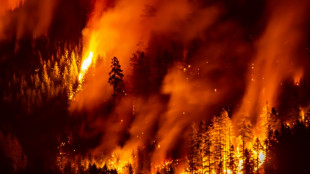
 Colombia's new president vows to 'defeat narco-terrorists'

 Call for Infantino to resign comes amid wave of support

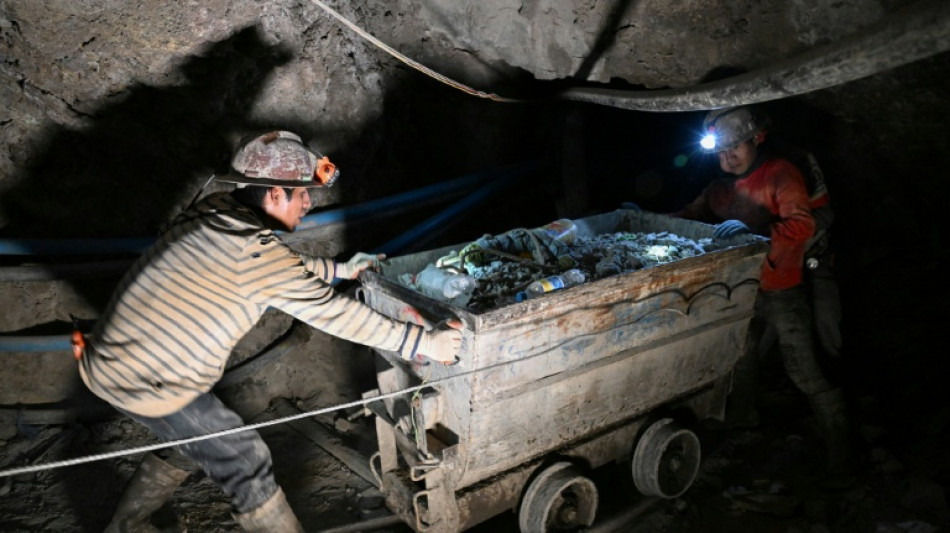
In the bowels of a Bolivian mine that made the Spanish empire fabulously wealthy 500 years ago, high prices are driving a new silver rush -- with tragic consequences.
Lured by soaring prices for silver and tin, youths like Efrain Villaca are risking their lives to try find new seams in Cerro Rico (literally, Rich Mountain) outside the town of Potosi.
Cerro Rico, a UN World Heritage Site which sits at 4,800 meters in the Andean high plains, was so flush with silver in the 16th century it produced a Spanish idiom: "valer un Potosi" (to be worth a fortune).
With silver now trading an around $87 per ounce, up from under $20 four years ago, there's money to be made again for those who venture underground. They average about $1,000 a month, more than twice the minimum wage.
But they work at their peril.
Cerro Rico, which is riddled with tunnels, is slowly collapsing in on itself.
Villaca, 28, nearly lost consciousness inside the mine after being poisoned by carbon monoxide.
"I went in to look for silver veins...and when I was going in, I felt like I was suffocating. I couldn't breathe," he told AFP.
Villaca emerged unscathed but in January and February, at least 32 miners died in Potosi department, home to several silver mines, according to the government ombudsman's Office.
Efrain Limache, 24, saw two of his friends plunge to their deaths in the Porco silver mine, also in Potosi, and says he himself survived a 50-meter fall from an elevator.
"In all of Bolivia, and I would venture to say in all of South America, Potosi has the highest number of deaths from mining work," Jackeline Alarcon, a lawyer for the ombudsman's office, told AFP.
The rise in deaths - from 77 in 2022 to 123 last year -- has tracked soaring silver and tin prices, which have smashed records on the back of insatiable demand from the tech and green energy sectors.
Silver, of which Bolivia was the world's fourth-largest producer in 2024, according to the US Geological Survey, is an essential material in solar panels and electric vehicles.
In January, the metal hit $121 per ounce but has settled at under $90.
Tin, which is used in semiconductors, has tripled in price in four years to over $54,000 per ton.
China, the world's biggest producer of both electric vehicles and solar panels, is the largest buyer of Bolivian silver.
Exports of the metal to the Asian giant rose to $532 million in 2024, up 88 percent in two years.
- 'Near slavery' -
The miners work shifts in Cerro Rico, using hammers and chisels to extract large chunks of rock from which they extract the ore.
The mine is managed by dozens of cooperatives, whose members traditionally did the hard graft.
But "with the high prices, they have stopped working themselves and hired people to do their work instead," mining researcher Hector Cordova told AFP, describing "a state of near slavery."
The young recruits have no medical insurance.
They chew coca leaves for energy -- a tradition in Bolivia, where the leaves help keep hunger and altitude sickness at bay -- and some swig a 96% strength alcohol.
None of those AFP saw on a visit to the mine wore masks to protect against carbon monoxide poisoning or any other safety equipment, besides helmets.
"We never know if we'll come out safe and sound," said Limache.
Mining Minister Marco Calderon assured AFP that cooperative miners would receive safety training, at their request but he made no mention of the fate of illegal miners.
- Children killed -
Giovanna Zamorano, an emergency room doctor at Bracamonte Hospital in Potosi, has treated a growing number of injuries among young miners.
"There are more and more deaths," she said, adding that most of the victims were aged between 20 and 25 but that at least one was underage.
The metals boom has sparked an influx of young people to Potosi from other departments, Alarcon, of the Ombudsman's Office said.
"Unfortunately, those in power," he said, "don't see Potosi as a heritage site."
"They see it as just a seam," he said.
G.M.Castelo--PC