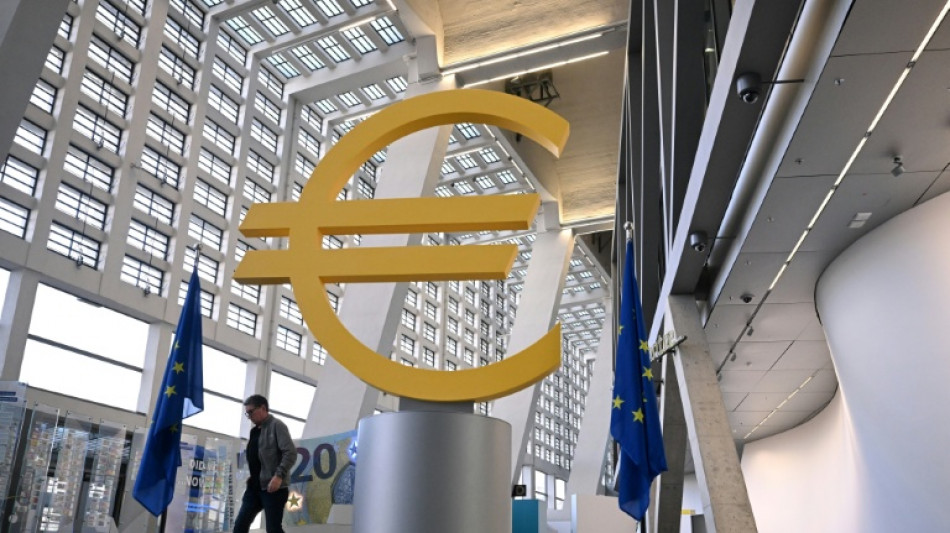
ECB set to hold rates steady with eye on Iran crisis / Photo: Kirill KUDRYAVTSEV - AFP

 Rybakina advances while Andreeva exits at Toronto

 Shelton storms to Montreal win as title defence solidifies

 All Blacks need to improve says coach after opening win against Stormers

 Spain imposes border checks on Italy as migrant showdown grows
 Bezzecchi smashes Silverstone track record in MotoGP qualifying
 Rashid Khan takes six wickets as Afghanistan thrash Ireland

 Flintoff quits England Lions role after Sydney Thunder appointment
 Movement, El Vecino and RISE Partner to Launch First Digital Dollar Wallet for Mexican Remittances
 FIFA chief Infantino travels to Colombia for presidential inauguration

 Niewiadoma seizes Tour de France Femmes lead on Mont Ventoux

 Trump's ex-lawyer all set for confirmation as US attorney general

 WHO urges Ervebo vaccine trial in DR Congo Ebola outbreak

 Hardline Trump ally De la Espriella to take office in Colombia

 Cambridge to review hiring process amid plagiarism row

 STARTRADER in Discussions with Trustpilot to Consolidate Review Profiles

 US unexpectedly loses jobs in blow to Trump's economy claims

 Call for Infantino to resign comes in wake of wave of support

 Gaza beekeeper starts again on rooftop amid ruins of war
 MEXC Lists New Ondo Tokenized Stock Pairs Spanning AI Infrastructure, Semiconductor and Rare Earth Sectors

 Fleming 'like me, but better': McCullum on new England Test coach

 European stocks rise before US jobs report

 Meta ordered to pay $567 mn in US over 'public nuisance' child harm

 Saudi Arabia, Turkey and Pakistan to sign defence pact amid regional violence

 PU Prime Expands Gold Trading with the Launch of XAUUSD247

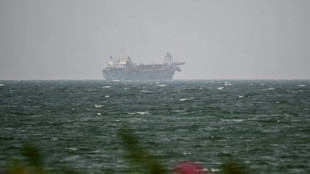 Oil extends gains and stocks mostly down on fresh Hormuz worries

The European Central Bank is expected to hold interest rates steady again this week as it waits to see if the inflation spike triggered by the Middle East war will prove temporary or begin to weigh on growth.
Markets ramped up their bets on a rate hike after the US-Israeli war on Iran sparked a global energy shock, which is already pushing up eurozone consumer prices.
Inflation in the 21-nation single currency area jumped to 2.6 percent in March, above the ECB's two-percent target, and the bank has warned it could surge far higher in a worst-case scenario.
ING economist Carsten Brzeski said the ECB's mantra before the war -- that it was in a "good place" on rates -- was "no more".
"The bank is back in crisis mode, shifting its focus from longer-term projections to actual developments and back to a 'driving at sight' approach," he said.
Still, economists expect the central bank not to make any moves at its meeting Thursday and keep its benchmark deposit rate at two percent, where it has been since June last year, as it waits to see how the war plays out.
US President Donald Trump has extended a ceasefire with Iran to allow more time for peace talks, and strikes have mostly ended around the region, though the Strait of Hormuz remains largely closed to tanker traffic.
Energy prices have also not risen as fast as they did in the aftermath of Russia's full-scale invasion of Ukraine in 2022, economists note, and supply chains are not facing the same disruptions.
- 'Not in a rush'-
Despite the ghosts from 2022, when the ECB was criticised for moving to slowly to raise rates as inflation surged, policymakers have signalled they are not in a hurry.
"We are not in a rush," Bank of Latvia governor Martins Kazaks, a member of the ECB's rate-setting governing council, told The Financial Times last week.
"We still have the large luxury of collecting data and forming our view," he added.
Rate increases would also weigh on the lacklustre eurozone economy, whose crucial manufacturers in particular face new pressure from the energy shock.
A survey released last week showed that eurozone business activity contracted for the first time in 16 months in April due to the war's impact.
In the United States, economists have pushed back their expectations of rate cuts as the Iran energy shocks adds to inflationary pressure, and the Federal Reserve is also expected to keep rates on hold when it meets Wednesday.
- 'Double uncertainty' -
Much comes down to whether Iran and the United States can come to a lasting agreement that secures Gulf oil and gas supplies through the Strait of Hormuz, a factor over which the ECB has no control.
All eyes will be on ECB President Christine Lagarde's press conference after the meeting for clues about the outlook for rates.
But she is likely to repeat language of recent weeks that the bank is "well positioned" to deal with the fallout from the war, and refuse to be drawn on future decisions.
Speaking in Berlin last week, Lagarde said the institution was facing "double uncertainty" in that it was unclear both how long the shock would last and what its effects on the broader economy would be.
"The stop-start nature of the conflict -- war, ceasefire, peace talks, their collapse, a naval blockade, its lifting, its reinstatement -- makes it exceptionally hard to gauge the duration and depth of the consequences," she said.
Still, most economists believe the ECB will not take any action on rates just yet.
The situations now and in 2022 are "very different", Oddo BHF economist Bruno Cavalier said.
"The conditions for a surge in non-energy prices and wages are not in place," he added. "The ECB has the luxury of doing nothing."
P.Serra--PC