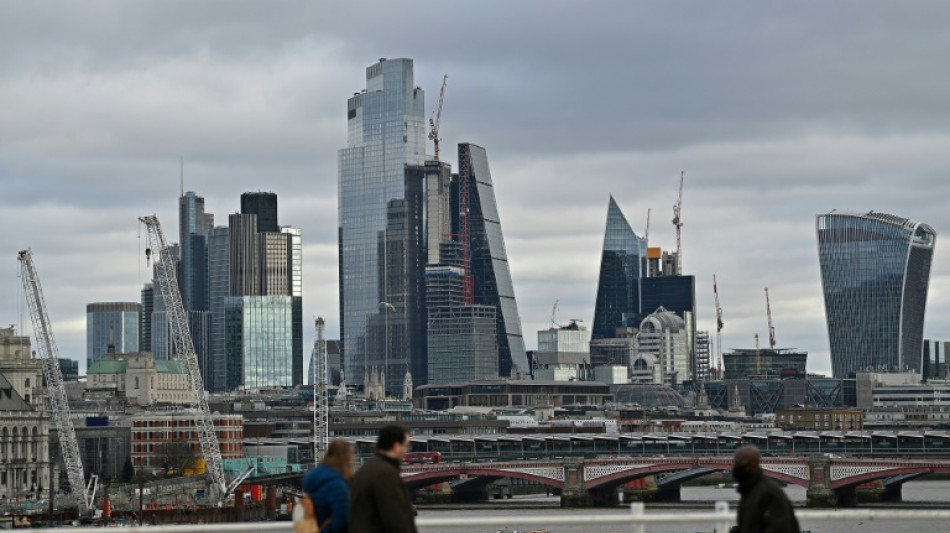
UK economy rebounds by record 7.5% from pandemic in 2021

 Turkish Energy Minister Highlights Qatar as Key Partner for Regional and Global Energy Security

 London Museum Granted 24/7 License Ahead of November Opening

 Dana White Confirms Flight to Washington for Trump Meeting on Press Secretary Role

 Dengue Fever Expands Into High Himalayas as Climate Change Warms Nepal

 IoT Refrigerator Hacks Disrupt Blood Labs and Supermarkets Across Europe and US

 Post-election pressures complicate US and Israeli decisions on Iran

 UN members approve talks on treaty protocol against environmental crime

 Family-run West Sussex beach café prepares for first winter season

 CT scans reveal health and burial clues from Egypt’s Braided Lady mummy

 Oxford faces complaints over lecturer’s classroom attire

 Kyren Wilson and John Higgins reach International Championship snooker final

 New Zealand and Tonga meet for place in Rugby League World Cup final

 Reports of unsafe AI-toy responses renew calls for child-safety rules

Britain's economy grew by a record 7.5 percent last year on easing Covid curbs after a pandemic-driven collapse, official data showed Friday, but analysts warned that sky-high inflation clouds the 2022 outlook.
The expansion, which was the fastest since records began in 1948, followed a record 9.4-percent slump in 2020, the Office for National Statistics (ONS) added in a statement.
Economies across the world were slammed in 2020 by the deadly pandemic, which sparked lockdowns and other public health restrictions that have since been largely removed.
The ONS added Friday that the UK economy increased by 1.0 percent in the fourth quarter despite the emergence of the Omicron Covid variant, matching its expansion in the third quarter.
- December hit by Omicron -
However, gross domestic product dipped 0.2 percent in December on fallout from the rapid spread of Omicron -- which is widely regarded as less dangerous than previous variants but hit the travel sector.
"GDP fell back slightly in December as the Omicron wave hit, with retail and hospitality seeing the biggest impacts," said ONS director of economic statistics Darren Morgan.
"However, these were partially offset by increases in the Test and Trace service and vaccination programmes.
"Despite December's setback, GDP grew robustly across the fourth quarter as a whole with the NHS (National Health Service), couriers and employment agencies all helping to support the economy," added Morgan.
December activity held at its February 2020 level, before Covid struck.
Yet the fourth quarter of 2021 was slightly below that of the same period in 2019.
- 'Remarkably resilient' -
British finance minister Rishi Sunak welcomed the data.
"The economy has been remarkably resilient; with the UK seeing the fastest growth in the G7 last year," he said in a statement, noting it was boosted by the government's vast stimulus measures and speedy vaccination drive.
"I'm proud of the resolve the whole country has demonstrated, and proud of our incredible vaccine programme which has allowed the economy to stay open."
The UK government is plotting the nation's full emergence from the long-running health emergency.
England will scrap the legal requirement to self-isolate after testing positive for Covid-19 later this month if infection levels remain stable, Prime Minister Boris Johnson unexpectedly announced Wednesday.
The proposed move would be one of the most dramatic easings of coronavirus rules taken by any country so far in the pandemic, as Johnson doubles down on a strategy of trying to "live with Covid".
England in late January lifted almost all remaining Covid restrictions that had been reimposed in early December to tackle Omicron.
- Cost of living crisis -
Despite Friday's bright data, economists warn the UK outlook is darkened by a cost of living crisis that has been fuelled by rocketing domestic energy costs.
Economies worldwide are battling decades-high inflation that is forcing central banks to lift interest rates, including the Bank of England which this month raised its key borrowing cost for the second time in a row.
Britain is experiencing the highest rate of annual inflation in nearly 30 years, while the cost of living is set to soar further from April owing to a tax hike on UK workers and businesses plus increases in energy bills.
"While the downside risks from Omicron have receded, the recovery now faces the more conventional economic challenge of high inflation," said EY ITEM Club economist Martin Beck.
"Consumers (are) facing the biggest squeeze on spending power in more than a decade," he added.
UK annual inflation struck 5.4 percent in December, stoking fears of a cost-of-living squeeze as wages fail to keep pace.
The BoE this month hiked interest rates to 0.50 percent -- and forecast inflation would peak at 7.25 percent in April.
A.P.Maia--PC

