
Yen sinks to 150 per dollar, lowest since 1990 / Photo: Richard A. Brooks - AFP

 'I miss my home': Cambodians displaced by conflict start over

 Ailing Auger-Aliassime falls at US Open as Swiatek, Osaka and Gauff advance

 Tesla launches self-driving 'Cybercab' in Texas

 'Wallace & Gromit' creators turn 50 with spook-tacular Shaun yarn

 New York's Muslims reclaim their city after 9/11 backlash

 Premier League transfer windfall a lifeline for ailing French clubs

 Chile protesters see shades of Pinochet in new security plan

 Carreras reverts to fullback as Argentina change four for Australia Test

 Wilson back to lead Australia as Kiss rotates team for Argentina

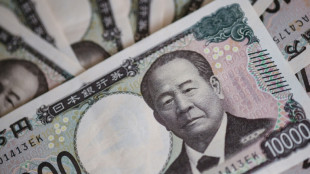 Yen surges on new intervention talk, US stocks rally

 Japan's Ueda fires Lille top of Ligue 1 on debut

 Arsenal chief executive reveals 'dynasty' ambition

 Spanish PM says no 'solid proof' Morocco planned migrant rush

 Iran war is not a war, US VP Vance says

 Khachanov stuns third-seeded Auger-Aliassime in US Open second round

 Bordeaux facing sixth-tier football after French federation upholds relegation

 Stoic Verstappen looking beyond 'painful' Monza weekend

 OpenAI begins rollout of new powerful AI model GPT-6 Astra

 FIFA blasts UEFA 'smear campaign,' fights World Cup plan disclosures

 Zelensky hopes to host US envoys in Kyiv in 'coming days'

 Martinelli joins Al-Hilal from Arsenal for reported £60 million

 Tesla's semi-autonomous driving could be adapted to EU norms: France

 37 people die from fumes during oil pipeline theft in Nigeria: NGO

 Ahead of elections, Israel tests West's patience on West Bank violence

 Antonelli will obey Mercedes orders to help 'tow' teammate Russell

The falling yen hit 150 per dollar for the first time since 1990 on Thursday, driven down by the contrast between Japanese monetary easing and aggressive US interest rate hikes.
The currency has plunged from February levels of around 115 as the Bank of Japan sticks to its longstanding ultra-loose policies, designed to encourage sustainable growth in the world's third-largest economy.
At the same time the US Federal Reserve has sharply increased borrowing costs in an attempt to quell sky-high inflation fuelled by factors including the war in Ukraine.
The Japanese unit sank to as low as 150.08 per dollar, before easing back soon after.
Analysts say the yen will continue to slide as long as the two policies differ, with more dramatic Fed interest-rate hikes likely as US prices increase faster than expected.
And speculation is growing that Japan could move to prop up its currency again after spending 2.8 trillion yen in September (then around $20 billion) on an intervention that involves selling dollars and buying yen.
Finance Minister Shunichi Suzuki called volatile fluctuations in forex markets "absolutely intolerable" on Thursday, reiterating verbal warnings that authorities will take an "appropriate response" to promote stability.
Earlier this week, Suzuki declined to confirm whether any unannounced "stealth" interventions had recently taken place.
"It's probably fair to say that... the Japanese government is engaged in a game of chicken with the market" on the yen, Jane Foley, head of FX strategy at Rabobank, told AFP.
"There isn't a limit," she said, explaining that in the short term, "interest rate differentials suggest there is a strong drag on the dollar-yen to go higher."
A weaker yen inflates profits for Japanese exporters, but can also weigh on the country's trade balance.
Japan is heavily reliant on imported energy and also buys in other goods including much of its food.
September's intervention "managed to stabilise the dollar-yen rate for a while, because traders are frightened of intervention", which can cause them to lose money, said Foley.
But the effect of such interventions will be limited if the gap between Japanese and US monetary policy remains, she added.
"It's very unlikely that anything is going to change from policy at least until the spring," when key wage negotiations take place in Japan, she said.
Japan scrapped its Covid-19 border restrictions and reopened to tourists this month, and many visitors will find shopping, eating out and domestic travel a bargain thanks to the weak yen and years of stubbornly low inflation.
Prices are now rising in Japan, although at a slower pace than in other major economies.
In August, inflation came in at 2.8 percent, the highest level since 2014, in part because of soaring energy prices linked to the Ukraine war.
That is above the Bank of Japan's target for sustained two percent inflation, but it views the price increases as temporary and so has kept its easy-money policies in place.
Nogueira--PC