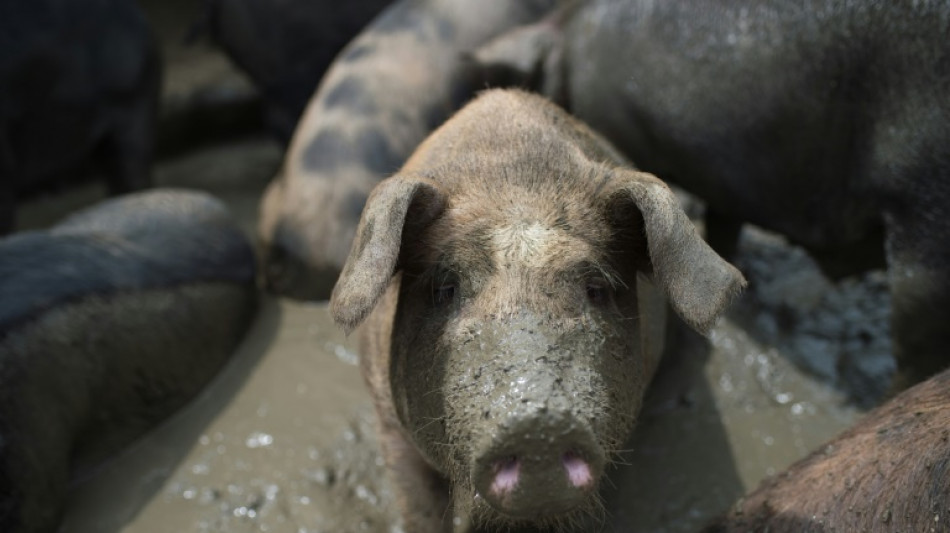
Bionic penis: Synthetic tissue restores erections in pigs / Photo: NICOLAS ASFOURI - AFP

 British Grand Prix stays on MotoGP calendar until 2028

 Britain's EasyJet flies into US hands as takeover confirmed

 Real Madrid sign Ivory Coast winger Yan Diomande

 How online disinformation fuelled Ceuta migrant surge

 Inevitable AI Group Raises $6M From Aleph to Launch AI-Native SaaS Companies

 Suspected Ebola death on boat heading for DR Congo capital

 England selector North not 'hung up' on Stokes absence

 UK Anti-Doping confirm former world champ Parker's ban lifted

 French winemakers dread 'smoky taste' after wildfires

 Stocks diverge with earnings, tech in focus

 England recall batsman Lawrence for Pakistan series
 Siemens shares plunge on disappointing guidance raise

 New Australia coach Kiss gives Japan starts to Ross, Amatosero

 'Stretch our money': Romanians face highest EU inflation

 Iran says close to Hormuz plan with Oman, but reopening depends on US

 Messi scores twice to set Leagues Cup record in Miami victory

 Asian stocks mostly down with tech firms back under pressure

 Back to the future as world champion Springboks host All Blacks

 India youth protests highlight mistrust in 'lapdog' media
 Pacific islands alarmed by Trump-backed push for deep-sea mining

 Erratic rains dictate menu at three-star Michelin restaurant in Brazil

 Zverev, Auger-Aliassime and Medvedev exit Montreal Masters

 Loar Holdings Inc. Reports Q2 2026 Record Results and Upward Revision to 2026 Outlook

 Embattled Infantino sees minnows Malawi reach WAFCON quarter-finals

 Seeds Rybakina, Pegula and Gauff advance at WTA Toronto event

Researchers in China have used artificial tissue to restore erectile function in pigs, a promising development for repairing penile damage in humans.
"This is an area that has received little attention, yet the related need is huge," said Xuetao Shi, an author of the study published on Wednesday in the science journal Matter.
An estimated 50 percent of men between the ages of 40 and 70 experience some form of erectile dysfunction, the researchers said, and about five percent suffer from Peyronie's disease.
Peyronie's disease, commonly caused by injury during sex, involves damage to the fibrous sheath of penile tissue known as the tunica albuginea that allows for the maintaining of an erection.
Scar tissue called plaque can cause curved or painful erections or penis shortening and may require surgical treatment.
The Chinese researchers said other tissues from the body have been used to make patches to replace a damaged tunica albuginea but those are sometimes rejected by the immune system.
Instead, the research group created an artificial tunica albuginea (ATA) that mimics the elasticity of the natural tissue with a substance called hydrogel.
Hydrogels can be natural or synthetic and are being used for a growing number of biomedical applications, including contact lenses and tissue engineering.
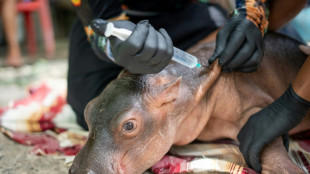
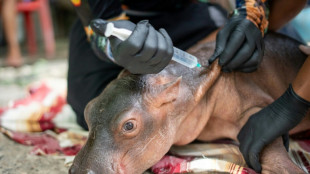
For the study, the researchers tested the artificial tissue on Bama miniature pigs with injuries to the tunica albuginea.
The ATA patches and a saline injection restored erectile function "similar to that of normal penile tissue," they said.
"The erection of the penis returned to normal after suturing the ATA at the injured part, and the long-term prognosis was satisfactory," they said.
Shi, a researcher at the South China University of Technology in Guangzhou, said "the results one month after the procedure showed that the ATA group achieved good, though not perfect, repair results."
The researchers said the findings "show promise for repairing penile injuries in humans" and can potentially be "extended to many other load-bearing tissues."
"Our work at this stage focuses on the repair of a single tissue in the penis," Shi said.
"The next stage will be to consider the repair of the overall penile defect or the construction of an artificial penis from a holistic perspective."
The researchers will also explore techniques to repair other tissues, including the heart and bladder, Shi said.
Nogueira--PC