One woman dies every 2 mins in pregnancy, childbirth: UN / Photo: ASHRAF SHAZLY - AFP/File

 2 killed, 13 wounded in bus blast near Syrian capital: state media

 All Blacks skipper Taylor cautiously recovering from calf strain

 UN chief denounces Russia, Ukraine for civilian deaths

 UEFA turn up the pressure on Infantino and repeat boycott threat

 Rodri approves Barcelona transfer talks with Man City: Barca source to AFP

 Venezuela unable to tally missing from cataclysmic quakes

 Le Court sprints to stage six Tour de France Femmes win

 Doping body says Parker's positive cocaine test caused by nutritionist

 UEFA says boycott of World Cups stands despite FIFA backdown on private investment

 Rheinmetall sales keep surging despite cancelled naval frigate project

 Pogacar teammate Del Toro gets new UAE deal after Tour podium

 Stocks tread water with earnings, tech in focus

 Inevitable AI Group Raises $6M From Aleph to Launch AI-Native SaaS Companies

 Forlan named new Uruguay head coach

 UEFA chief Ceferin: 'Underdog' leader taking fight to FIFA's Infantino

 Salah completes move to Turkey's Trabzonspor

 UK clears Paramount's takeover of Warner Bros

 North Korea fires ballistic missile: South Korea military

 'Don't have to hide': Thai IDs, legal work give hope to Myanmar refugees

 Stocks mixed with tech firms back under pressure

 How Blundell's old school tactic ended England's 'Bazball' era

 Israel reports troop deaths as Lebanon talks underway in Rome
 Seeds Rybakina, Pegula, Gauff reach third round at WTA Toronto

 Police raid South Korea FA in probe into World Cup coach appointment

 Low water on Germany's Rhine river threatens new blow to economy

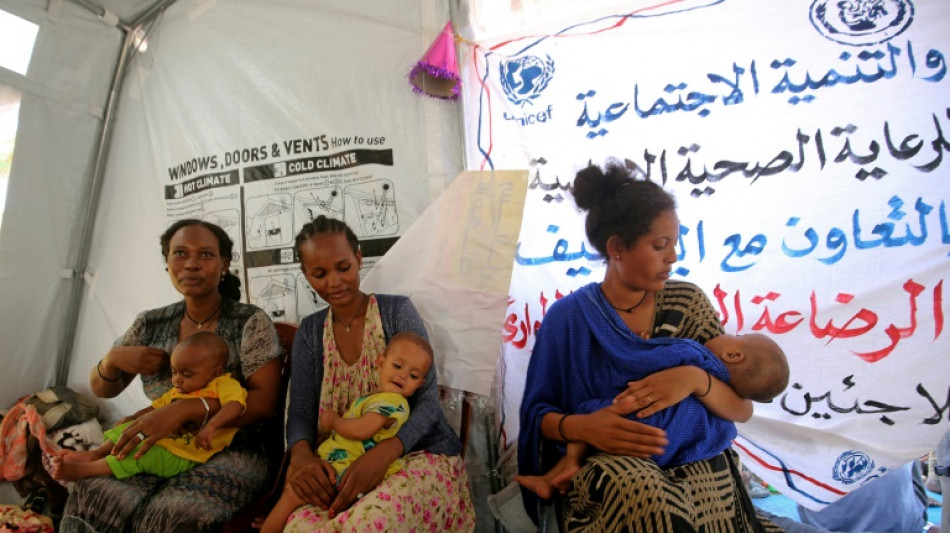
A woman dies every two minutes due to pregnancy or childbirth complications, despite maternal mortality rates dropping by a third in 20 years, the United Nations said Thursday.
Rates fell significantly between 2000 and 2015 but largely stagnated between 2016 and 2020 -- and in some regions have even reversed, the UN said.
The overall maternal mortality rate dropped by 34.3 percent over a 20-year period -- from 339 maternal deaths per 100,000 live births in 2000 to 223 maternal deaths in 2020, according to a report by the World Health Organization and other UN agencies.
Nonetheless, that means nearly 800 women died per day in 2020 -- or around one every two minutes.
Belarus recorded the biggest decline -- down 95.5 percent -- while Venezuela saw the highest increase. Between 2000 and 2015, the biggest rise was in the United States.
"While pregnancy should be a time of immense hope and a positive experience for all women, it is tragically still a shockingly dangerous experience for millions around the world," said WHO chief Tedros Adhanom Ghebreyesus.
"These new statistics reveal the urgent need to ensure every woman and girl has access to critical health services... and that they can fully exercise their reproductive rights."
The report found that between 2016 and 2020, maternal mortality rates dropped in only two of the eight UN regions: in Australia and New Zealand by 35 percent, and in Central and Southern Asia by 16 percent.
- 'Unconscionable' -
The rate went up in Europe and Northern America by 17 percent, and in Latin America and the Caribbean by 15 percent. Elsewhere, it stagnated.
The two European countries witnessing "significant increases" are Greece and Cyprus, the report's author Jenny Cresswell told journalists.
Maternal deaths remain largely concentrated in the world's poorest regions and in conflict-affected countries.
Around 70 percent of those deaths recorded in 2020 were in sub-Saharan Africa, where the rate is "136 times bigger" than in Australia and New Zealand, Cresswell said.
In Afghanistan, the Central African Republic, Chad, the Democratic Republic of Congo, Somalia, South Sudan, Sudan, Syria and Yemen -- all facing severe humanitarian crises -- rates were more than twice the global average.
Severe bleeding, infections, complications from unsafe abortions and underlying conditions such as HIV/AIDS are among the leading causes of death, the report said -- which are all largely preventable and treatable.
The WHO said it was "critical" that women had control over their reproductive health -- particularly about if and when to have children, so that they can plan and space childbearing to protect their health.
Natalia Kanem, head of the UN Population Fund, said the rate of women "needlessly" dying was "unconscionable".
"We can and must do better by urgently investing in family planning and filling the global shortage of 900,000 midwives," she said.
While the report covers data up to 2020, the WHO's Anshu Banerjee told journalists that the statistics since then look bleak, due to the Covid-19 pandemic and the economic crisis.
V.F.Barreira--PC