EU to unveil reforms for cheaper drugs / Photo: Louisa GOULIAMAKI - AFP/File

 Venezuela's political transition talks start: AFP

 Real Madrid extend Vinicius deal, sign Diomande in title bid boost

 PSG sign France midfielder Akliouche from Monaco

 CONMEBOL 'expresses concern regarding repeated unilateral actions' by FIFA

 Warren coy over whether Fury-Joshua will be in UK or US

 Taiwan blocks key bridge in drill for potential Chinese invasion

 Migrant children risk abuse on streets of Ceuta, aid groups warn

 Oil price shoots up as stocks tread water

 British Grand Prix stays on MotoGP calendar until 2028

 Britain's EasyJet flies into US hands as takeover confirmed

 Real Madrid sign Ivory Coast winger Yan Diomande

 How online disinformation fuelled Ceuta migrant surge
 Forex Expo Dubai Announces Opportunity to Win Up to 150 Grams of Gold This September 2026

 Suspected Ebola death on boat heading for DR Congo capital

 England selector North not 'hung up' on Stokes absence

 UK Anti-Doping confirm former world champ Parker's ban lifted

 French winemakers dread 'smoky taste' after wildfires

 Stocks diverge with earnings, tech in focus

 England recall batsman Lawrence for Pakistan series

 Siemens shares plunge on disappointing guidance raise
 New Australia coach Kiss gives Japan starts to Ross, Amatosero

 'Stretch our money': Romanians face highest EU inflation

 Iran says close to Hormuz plan with Oman, but reopening depends on US

 Messi scores twice to set Leagues Cup record in Miami victory

 Asian stocks mostly down with tech firms back under pressure

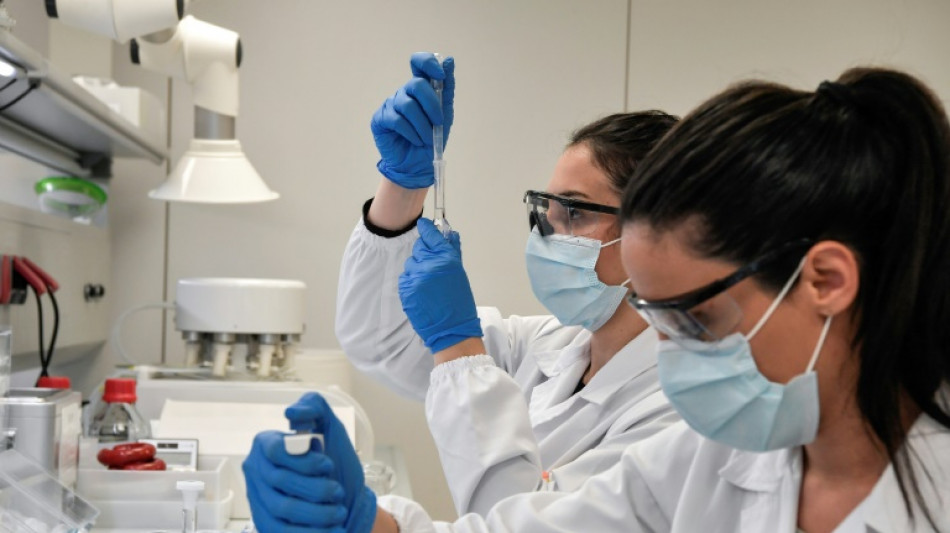
The EU on Wednesday is to unveil a long-awaited proposed reform of legislation governing pharmaceutical drugs to make them cheaper, prevent shortages and speed up delivery of new compounds.
The overhaul aims to bring "timely and equitable access for patients to affordable drugs" in the bloc, EU health commissioner Stella Kyriakides tweeted.
The reform is the biggest in two decades, and has in part been informed by Brussels' swift, concerted action during the Covid pandemic that underscored the benefits of less-burdensome procedures, greater transparency and joint measures.
The pharmaceutical industry has been intensively lobbying ahead of the presentation of the proposals.
A leak in February of a draft version of them sparked criticism from companies worried that the exclusive period they had over selling new drugs could be shortened from 10 years to eight.
The European Federation of Pharmaceutical Industries and Associations warned against steps that could constrain innovation.
While the European Commission aims to bring down the cost of medicines, it doesn't have the power to set prices in the European Union.
That is the prerogative of national governments who negotiate with pharmaceutical groups.
The EU executive is also intent on tackling shortages of drugs for rare diseases, and unequal access to medicines across the 27-nation bloc, especially in eastern member states.
Another challenge to be tackled is increasing microbial resistance to existing antibiotics, which each year leads to 35,000 deaths in the European Union.
Because antibiotics are meant to be taken in moderate, defined doses they are less lucrative to pharmaceutical companies than blockbuster drugs.
- Voucher system -
To address that problem, the commission is looking at introducing transferable vouchers that would allow a company coming up with a new, effective antibiotic to apply a lengthened period of exclusivity to another more profitable drug, or to sell that right to another company.
Around half the EU member states, including France, Belgium and the Netherlands, are wary of that idea though, worried it would weigh on national health systems.
The European Consumer Organisation has also come out against that proposal.
"But so far, no one has proposed a better system," said one EU lawmaker, Peter Liese, who is also a medical doctor.
He said that virtually no new antibiotic had been produced in 20 years. On this issue and the others the commission is proposing, "innovation-friendly regulation is indispensable," he said.
The commission also wants a faster approval process to get new drugs to market faster, as happened with Covid vaccines.
And it is suggesting a measure to force companies to be more transparent about the stocks of drugs they have, so that any looming shortfalls can be tackled earlier on.
For Pauline Londeix, co-founder of OTMeds, a French group monitoring levels of transparency on drugs policies, "a centralised system of alerts on shortages goes in the right direction but is not enough in itself".
She argues that the EU should consider "coordinated action at the European level for the part-public production of essential medicines".
G.Teles--PC