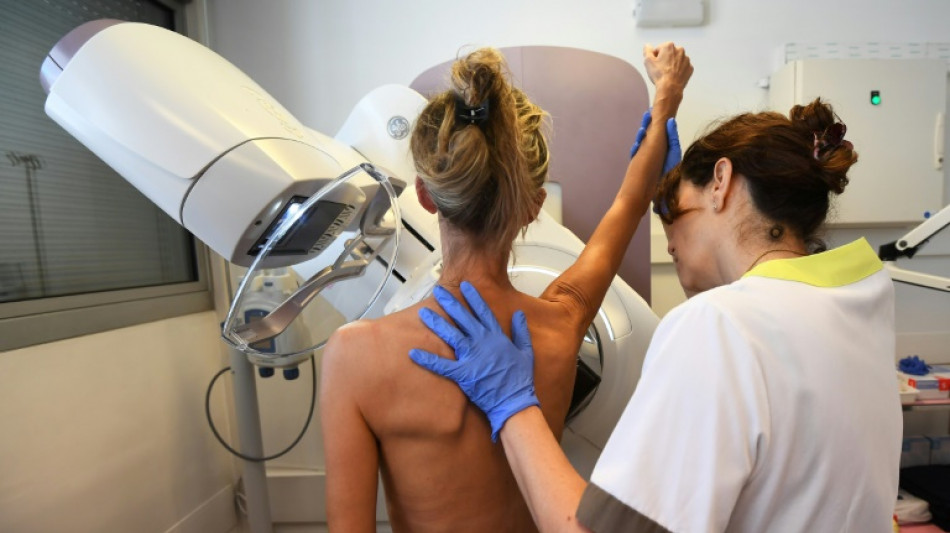
Influential US health body recommends mammograms from age 40 / Photo: ANNE-CHRISTINE POUJOULAT - AFP/File

 Venezuela's political transition talks start: AFP

 Real Madrid extend Vinicius deal, sign Diomande in title bid boost

 PSG sign France midfielder Akliouche from Monaco

 CONMEBOL 'expresses concern regarding repeated unilateral actions' by FIFA

 Warren coy over whether Fury-Joshua will be in UK or US

 Taiwan blocks key bridge in drill for potential Chinese invasion

 Migrant children risk abuse on streets of Ceuta, aid groups warn

 Oil price shoots up as stocks tread water

 British Grand Prix stays on MotoGP calendar until 2028

 Britain's EasyJet flies into US hands as takeover confirmed

 Real Madrid sign Ivory Coast winger Yan Diomande

 How online disinformation fuelled Ceuta migrant surge

 Forex Expo Dubai Announces Opportunity to Win Up to 150 Grams of Gold This September 2026

 Suspected Ebola death on boat heading for DR Congo capital

 England selector North not 'hung up' on Stokes absence

 UK Anti-Doping confirm former world champ Parker's ban lifted

 French winemakers dread 'smoky taste' after wildfires

 Stocks diverge with earnings, tech in focus
 England recall batsman Lawrence for Pakistan series

 Siemens shares plunge on disappointing guidance raise

 New Australia coach Kiss gives Japan starts to Ross, Amatosero

 'Stretch our money': Romanians face highest EU inflation

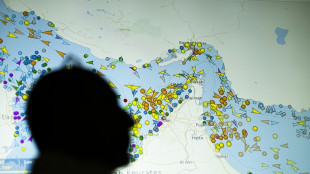 Iran says close to Hormuz plan with Oman, but reopening depends on US

 Messi scores twice to set Leagues Cup record in Miami victory

 Asian stocks mostly down with tech firms back under pressure

All women should get mammogram screening for breast cancer starting from age 40, rather than 50, an influential US health body announced Tuesday, a move it said could save thousands of lives.
Breast cancer is the second most common cancer and the second most common cause of cancer death for women in the United States, killing around 42,000 women and 500 men, according to official data. Black women are 40 percent more likely to die than white women.
The Preventive Services Task Force, a group of independent experts appointed by the Department of Health and Human Service, said that while it previously recommended women in their 40s make individual choices about when to start screening, the new guidance could result in 19 percent more lives being saved.
"New and more inclusive science about breast cancer in people younger than 50 has enabled us to expand our prior recommendation and encourage all women to get screened every other year starting at age 40," said the Task Force's former chair, Carol Mangione, in a statement.
Based on the evidence assessed, the new recommendation was assigned a "Grade B" rating, its second highest level.
The guidance is still considered a draft, with the Task Force posting the evidence it considered on its website and allowing time for public comments and review. American health insurance is required to cover any service USPSTF recommends, regardless of cost.
"Ensuring Black women start screening at age 40 is an important first step, yet it is not enough to improve the health inequities we face related to breast cancer," added Task Force vice chair Wanda Nicholson.
"In our draft recommendation, we underscore the importance of equitable followup after screening and timely and effective treatment of breast cancer and are urgently calling for more research on how to improve the health of Black women."
The draft recommendation applies to women at "average risk" of breast cancer, which includes people with a family history of breast cancer or other risk factors such as having dense breasts, which about half of all women do.
It doesn't apply to people who have a prior history of breast cancer, or who have certain genetic markers that place them at high risk, have had high-dose radiation therapy from a young age, or had high risk lesions taken on biopsies.
The body said there was lingering uncertainty when it came to the benefits and harms of screening people aged 75 and older.
"The balance of benefits and harms may shift as women age, but there is very limited research on this age population," it said in a statement.
The Task Force said more research was needed to determine whether women with dense breasts should have additional screening with ultrasound or MRI, since mammograms may not work as well for them.
A.F.Rosado--PC