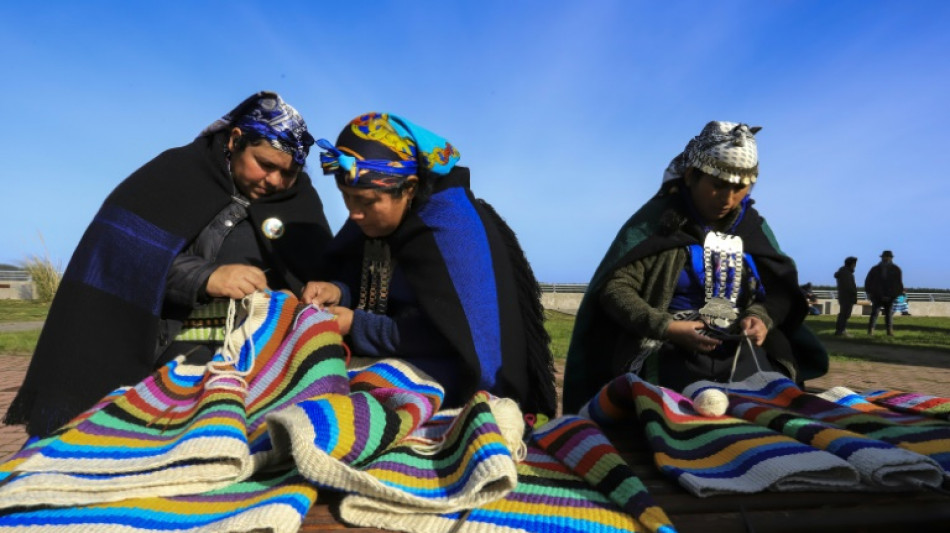
New study finds prehistoric migration from China to Americas / Photo: MARIO QUILODRAN - AFP/File

 Battling Norrie survives match point to oust de Minaur at Montreal

 Venezuela's political transition talks start: AFP

 Real Madrid extend Vinicius deal, sign Diomande in title bid boost

 PSG sign France midfielder Akliouche from Monaco

 CONMEBOL 'expresses concern regarding repeated unilateral actions' by FIFA

 Warren coy over whether Fury-Joshua will be in UK or US

 Taiwan blocks key bridge in drill for potential Chinese invasion

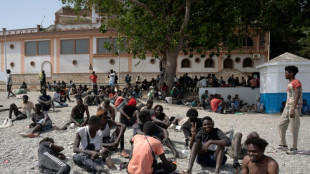 Migrant children risk abuse on streets of Ceuta, aid groups warn

 Oil price shoots up as stocks tread water

 British Grand Prix stays on MotoGP calendar until 2028

 Britain's EasyJet flies into US hands as takeover confirmed

 Real Madrid sign Ivory Coast winger Yan Diomande

 How online disinformation fuelled Ceuta migrant surge

 Forex Expo Dubai Announces Opportunity to Win Up to 150 Grams of Gold This September 2026

 Suspected Ebola death on boat heading for DR Congo capital

 England selector North not 'hung up' on Stokes absence

 UK Anti-Doping confirm former world champ Parker's ban lifted

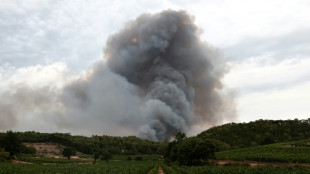 French winemakers dread 'smoky taste' after wildfires

 Stocks diverge with earnings, tech in focus

 England recall batsman Lawrence for Pakistan series
 Siemens shares plunge on disappointing guidance raise

 New Australia coach Kiss gives Japan starts to Ross, Amatosero

 'Stretch our money': Romanians face highest EU inflation

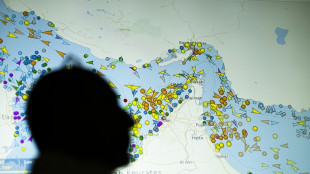 Iran says close to Hormuz plan with Oman, but reopening depends on US

 Messi scores twice to set Leagues Cup record in Miami victory

As the last continents to be settled by humans, the question of how and when people first came to the Americas has long intrigued scientists.
A new genetics study published Tuesday in Cell Reports finds that some of the first arrivals came from China during two distinct migrations: the first during the last ice age, and the second shortly after.
"Our findings indicate that besides the previously indicated ancestral sources of Native Americans in Siberia, the northern coastal China also served as a genetic reservoir contributing to the gene pool," Yu-Chun Li, one of the report authors, told AFP.
Li added that during the second migration, the same lineage of people settled in Japan, which could help explain similarities in prehistoric arrowheads and spears found in the Americas, China and Japan.
It was once believed that ancient Siberians, who crossed over a land bridge that existed in the Bering Strait linking modern Russia and Alaska, were the sole ancestors of Native Americans.
More recent research, from the late 2000s onwards, has signaled more diverse sources from Asia could be connected to an ancient lineage responsible for founding populations across the Americas, including Bolivia, Brazil, Chile, Ecuador, Mexico and California.
Known as D4h, this lineage is found in mitochondrial DNA, which is inherited only from mothers and is used to trace maternal ancestry.
The team from the Kunming Institute of Zoology embarked on a ten-year hunt for D4h, combing through 100,000 modern and 15,000 ancient DNA samples across Eurasia. They eventually landed on 216 contemporary and 39 ancient individuals who came from the ancient lineage.
By analyzing the mutations that had accrued over time, looking at the samples' geographic locations and using carbon dating, they were able to reconstruct the D4h lineage's origins and expansion history.
The results revealed two migration events. The first was between 19,500 and 26,000 years ago during the Last Glacial Maximum, when ice sheet coverage was at its greatest and climate conditions in northern China were likely inhospitable.
The second occurred during the melting period, between 19,000 and 11,500 years ago. Increasing human populations during this period might have triggered migrations.
- Coastal migration -
In both cases, the scientists think the travelers were seafarers who docked in America and traveled along the Pacific coast by boats. This is because a grassy passageway between two ice sheets in modern Canada, known as the "inland ice-free corridor," was not yet opened.
In the second migration, a subgroup branched out from northern coastal China to Japan, contributing to the Japanese people, especially the indigenous Ainu, the study said, a finding that chimes with archeological similarities between ancient people in the Americas, China and Japan.
Li said a strength of the study was the number of samples they discovered, and complementary evidence from Y chromosomal DNA showing male ancestors of Native Americans lived in northern China at the same time as the female ancestors, made them confident of their findings.
"However, we don't know in which specific place in northern coastal China this expansion occurred and what specific events promoted these migrations," he said.
"More evidence, especially ancient genomes, are needed to answer these questions."
S.Pimentel--PC