New threat to privacy? Scientists sound alarm about DNA tool / Photo: Maddie Meyer - GETTY IMAGES NORTH AMERICA/AFP/File

 Battling Norrie survives match point to oust de Minaur at Montreal

 Venezuela's political transition talks start: AFP

 Real Madrid extend Vinicius deal, sign Diomande in title bid boost

 PSG sign France midfielder Akliouche from Monaco

 CONMEBOL 'expresses concern regarding repeated unilateral actions' by FIFA

 Warren coy over whether Fury-Joshua will be in UK or US

 Taiwan blocks key bridge in drill for potential Chinese invasion

 Migrant children risk abuse on streets of Ceuta, aid groups warn

 Oil price shoots up as stocks tread water

 British Grand Prix stays on MotoGP calendar until 2028

 Britain's EasyJet flies into US hands as takeover confirmed

 Real Madrid sign Ivory Coast winger Yan Diomande

 How online disinformation fuelled Ceuta migrant surge

 Forex Expo Dubai Announces Opportunity to Win Up to 150 Grams of Gold This September 2026

 Suspected Ebola death on boat heading for DR Congo capital

 England selector North not 'hung up' on Stokes absence

 UK Anti-Doping confirm former world champ Parker's ban lifted

 French winemakers dread 'smoky taste' after wildfires

 Stocks diverge with earnings, tech in focus

 England recall batsman Lawrence for Pakistan series

 Siemens shares plunge on disappointing guidance raise

 New Australia coach Kiss gives Japan starts to Ross, Amatosero

 'Stretch our money': Romanians face highest EU inflation

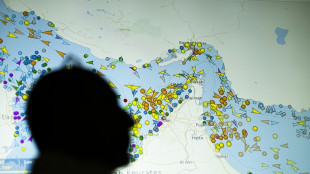 Iran says close to Hormuz plan with Oman, but reopening depends on US

 Messi scores twice to set Leagues Cup record in Miami victory

The traces of genetic material that humans constantly shed wherever they go could soon be used to track individual people, or even whole ethnic groups, scientists said on Monday, warning of a looming "ethical quagmire".
A recently developed technique can glean a huge amount of information from tiny samples of genetic material called environmental DNA, or eDNA, that humans and animals leave behind everywhere -- including in the air.
The tool could lead to a range of medical and scientific advances, and could even help track down criminals, according to the authors of a new study published in the journal Nature Ecology & Evolution.
But it also poses a vast range of concerns around consent, privacy and surveillance, they added.
Humans spread their DNA -- which carries genetic information specific to each person -- everywhere, by shedding skin or hair cells, coughing out droplets, or in wastewater flushed down toilets.
In recent years, scientists have been increasingly collecting the eDNA of wild animals, in the hopes of helping threatened species.
For the new research, scientists at the University of Florida's Whitney Laboratory for Marine Bioscience had been focused on collecting the eDNA of endangered sea turtles.
- 'Human genetic bycatch' -
But the international team of researchers inadvertently collected a massive amount of human eDNA, which they called "human genetic bycatch".
David Duffy, a wildlife disease genomic professor at the Whitney Laboratory who led the project, said they were "consistently surprised" by the amount and quality of the human eDNA they collected.
"In most cases the quality is almost equivalent to if you took a sample from a person," he said.
The scientists collected human eDNA from nearby oceans, rivers and towns, as well as from areas far from human settlements.
Struggling to find a sample not tainted by humans, they went to a section of a remote Florida island inaccessible to the public.
It was free of human DNA -- at least until a member of the team walked barefoot along the beach. They were then able to detect eDNA from a single footprint in the sand.
In Duffy's native Ireland, the team found human DNA all along a river, with the exception of the remote mountain stream at its source.
Taking samples from the air of a veterinary hospital, the team captured eDNA that matched the staff, their animal patient and viruses common in animals.
- 'Perpetual genetic surveillance'? -
One of the study's authors, Mark McCauley of the Whitney Laboratory, said that by sequencing the DNA samples, the team was able to identify if a person had a greater risk of diseases such as autism and diabetes.
"All of this very personal, ancestral and health-related data is freely available in the environment, and it's simply floating around us in the air right now," McCauley told an online press conference.
"We specifically did not examine our sequences in a way that we would be able to pick out specific individuals because of the ethical issues," he said.
But that would "definitely" be possible in the future, he added.
"The question is how long it takes until we're at that stage."
The researchers emphasised the potential benefits of collecting human eDNA, such as tracking cancer mutations in wastewater, discovering long-hidden archaeological sites or revealing the true culprit of a crime using only the DNA they left in a room.
Natalie Ram, a law professor at the University of Maryland not involved in the research, said the findings "should raise serious concern about genetic privacy and the appropriate limits of policing".
"Exploiting involuntarily shed genetic information for investigative aims risks putting all of us under perpetual genetic surveillance," she wrote in a commentary on the study.
The authors of the study shared her concerns.
McCauley warned harvesting human eDNA without consent could be used to track individual people or even target "vulnerable populations or ethnic minorities".
It is why the team decided to sound the alarm, they said in a statement, calling for policymakers and scientists to start working on regulation that could address the "ethical quagmire".
M.Gameiro--PC