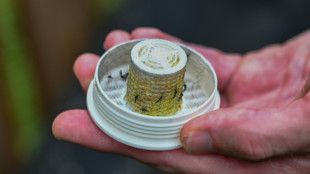
Lab-grown human 'embryos' offer new research hope / Photo: AHMAD GHARABLI - AFP

 Meta ordered to pay US state $567 mn to abate 'public nuisance' and child harm

 Houthi missile attacks kill 58 Saudi-backed Yemeni govt forces: source

 No.1 Sabalenka and Pegula advance at Toronto
 China missile test top of agenda as Pacific diplomats meet in Fiji

 Most UK teens to opt out of planned social media curfew: poll

 Venezuela's political transition talks launch in Caracas

 2 killed, 13 wounded in bus blast near Syrian capital: state media

 All Blacks skipper Taylor cautiously recovering from calf strain

 UN chief denounces Russia, Ukraine for civilian deaths

 UEFA turn up the pressure on Infantino and repeat boycott threat

 Rodri approves Barcelona transfer talks with Man City: Barca source to AFP

 Venezuela unable to tally missing from cataclysmic quakes

 Le Court sprints to stage six Tour de France Femmes win

 Doping body says Parker's positive cocaine test caused by nutritionist

 UEFA says boycott of World Cups stands despite FIFA backdown on private investment

 Rheinmetall sales keep surging despite cancelled naval frigate project

 Pogacar teammate Del Toro gets new UAE deal after Tour podium

 Stocks tread water with earnings, tech in focus

 Inevitable AI Group Raises $6M From Aleph to Launch AI-Native SaaS Companies

 Forlan named new Uruguay head coach

 UEFA chief Ceferin: 'Underdog' leader taking fight to FIFA's Infantino

 Salah completes move to Turkey's Trabzonspor

 UK clears Paramount's takeover of Warner Bros

 North Korea fires ballistic missile: South Korea military

 'Don't have to hide': Thai IDs, legal work give hope to Myanmar refugees

Scientists have developed human embryo-like structures without using sperm, an egg or fertilisation, offering hope for research on miscarriage and birth defects but also raising fresh ethical concerns.
Earlier this year, several labs around the world released pre-print studies describing their development of early human embryo-like structures.
That work has not yet been peer-reviewed, but now one group's research has been published in the journal Nature, describing how they coaxed human embryonic stem cells to self-organise into a model resembling an early embryo.
The research was welcomed by some scientists as an "impressive" advance that could help unlock secrets about the precarious early stages of pregnancies, when failure is most common.
The work will however renew debate on the need for clearer ethical rules on development of lab-grown human embryo models.
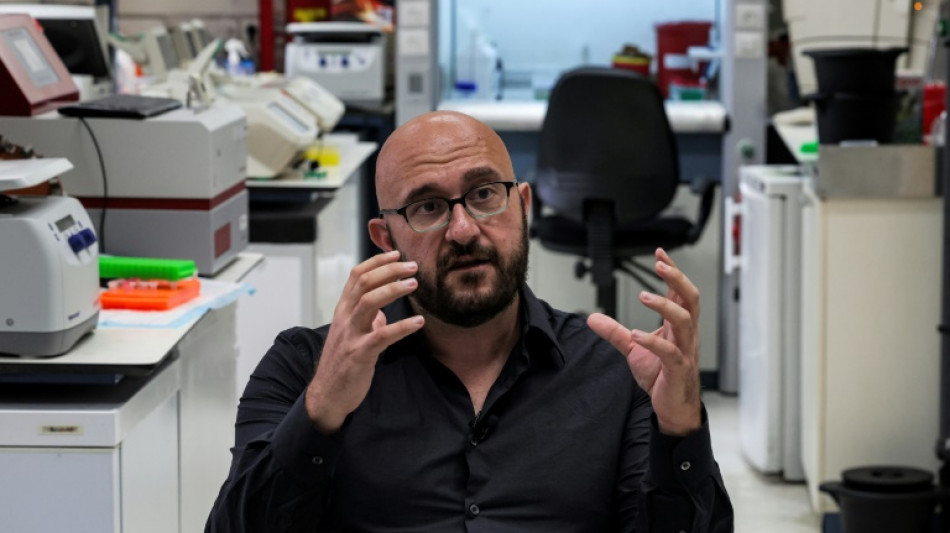
The researchers, led by Palestinian scientist Jacob Hanna at the Weizmann Institute in Israel, harnesses the power of embryonic stem cells, which can become any kind of cell.
They produced embryo models up to 14 days old, which is the legal limit for such research in many countries, and the point at which organs like the brain begin to develop.
The researchers say their work differs from those of other teams because it uses chemically rather than genetically modified embryonic stem cells and produces models more like real human embryos, complete with yolk sac and amniotic cavity.
These similarities could make the models more useful for research into conditions like miscarriage, birth defects and infertility, said James Briscoe of Britain's Francis Crick Institute.
The model "seems to produce all of the different types of cells that form tissues at this early stage of development," said Briscoe, principal group leader and associate research director at the biomedical research charity.
The research "is a step towards opening a window on the period of human development where many pregnancies fail and which has been really difficult to study up until now."
Both the researchers and scientists not involved in the work emphasised that the models should not be considered human embryos.
The structure "highly resembles, but (is) not identical, to the in utero situation", the research notes.
The success rate on generating the models was also low, with the stem cells organising correctly just a small percentage of the time.
Still, the research and other recent work shows "that models of human embryos are getting more sophisticated and closer to events that occur during normal development," said Darius Widera, an expert in stem cell biology at the UK's University of Reading.
The work highlights "that a robust regulatory framework is more needed than ever before", he added.
In Britain, Cambridge University has begun developing the first governance framework for stem cell-based human embryo models.
The Weizmann Institute research does not involve transferring the models into a human or animal womb, or developing the structures beyond 14 days.
L.Carrico--PC