-
 British Grand Prix stays on MotoGP calendar until 2028
-
UEFA says boycott of World Cups stands despite FIFA backdown on private investment

-
 Britain's EasyJet flies into US hands as takeover confirmed
-
Rheinmetall sales keep surging despite cancelled naval frigate project

-
 Real Madrid sign Ivory Coast winger Yan Diomande
-
Pogacar teammate Del Toro gets new UAE deal after Tour podium

-
 How online disinformation fuelled Ceuta migrant surge
-
Stocks tread water with earnings, tech in focus
-
 Inevitable AI Group Raises $6M From Aleph to Launch AI-Native SaaS Companies
-
Forex Expo Dubai Announces Opportunity to Win Up to 150 Grams of Gold This September 2026

-
 Suspected Ebola death on boat heading for DR Congo capital
-
Forlan named new Uruguay head coach

-
 England selector North not 'hung up' on Stokes absence
-
UEFA chief Ceferin: 'Underdog' leader taking fight to FIFA's Infantino
-
 UK Anti-Doping confirm former world champ Parker's ban lifted
-
Salah completes move to Turkey's Trabzonspor

-
 French winemakers dread 'smoky taste' after wildfires
-
UK clears Paramount's takeover of Warner Bros

-
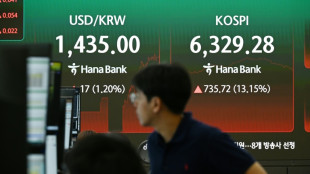 Stocks diverge with earnings, tech in focus
-
North Korea fires ballistic missile: South Korea military

-
 England recall batsman Lawrence for Pakistan series
-
'Don't have to hide': Thai IDs, legal work give hope to Myanmar refugees

-
 Siemens shares plunge on disappointing guidance raise
-
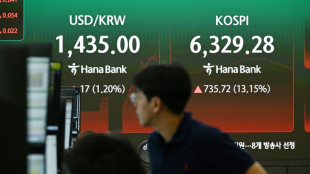
Stocks mixed with tech firms back under pressure
-
 New Australia coach Kiss gives Japan starts to Ross, Amatosero
-
How Blundell's old school tactic ended England's 'Bazball' era

-
 'Stretch our money': Romanians face highest EU inflation
-
Israel reports troop deaths as Lebanon talks underway in Rome

-
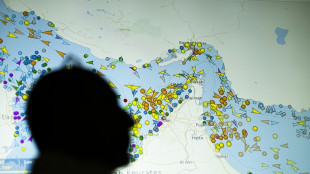 Iran says close to Hormuz plan with Oman, but reopening depends on US
-
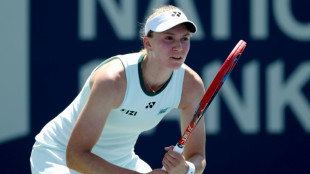
Seeds Rybakina, Pegula, Gauff reach third round at WTA Toronto
-
 Messi scores twice to set Leagues Cup record in Miami victory
-
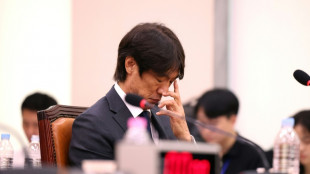
Police raid South Korea FA in probe into World Cup coach appointment
-
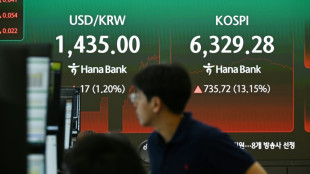 Asian stocks mostly down with tech firms back under pressure
-
Low water on Germany's Rhine river threatens new blow to economy

-
 Back to the future as world champion Springboks host All Blacks
-
Ex-Wallabies Foley, Phipps rejoin Waratahs ahead of home World Cup

-
 India youth protests highlight mistrust in 'lapdog' media
-
Rising Kenyan lakes push crocodiles closer to homes

-
 Pacific islands alarmed by Trump-backed push for deep-sea mining
-
Istanbul cymbals: From Ottoman war tool to pulse of global music

-
 Erratic rains dictate menu at three-star Michelin restaurant in Brazil
-
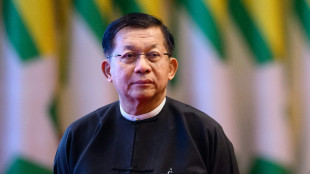
Myanmar ex-junta chief on first Thailand trip as civilian leader
-
 Zverev, Auger-Aliassime and Medvedev exit Montreal Masters
-
Environmental disaster looms as tanker leaks off Oman

-
 Loar Holdings Inc. Reports Q2 2026 Record Results and Upward Revision to 2026 Outlook
-
Google-parent Alphabet shakes up AI division

-
 Embattled Infantino sees minnows Malawi reach WAFCON quarter-finals
-
FIFA back Infantino, apologise for World Cup privatisation plan
-
 Seeds Rybakina, Pegula and Gauff advance at WTA Toronto event
-
Auger-Aliassime out of Montreal ATP event with injury

Macron assisted-dying plan riles opponents
President Emmanuel Macron on Monday faced criticism from French medical workers, political opponents and the Catholic Church over a draft bill, slated for debate in May, that would allow assisted dying for certain terminally-ill patients.
He told newspapers Sunday the bill would include "strict conditions" on allowing people to self-administer a lethal substance, or call on a relative or medical worker if they are incapable.
The move comes after France's parliament last week enshrined the right to abortion in the constitution, a widely-popular move championed by the president and a world first.
"There are cases we can't humanly accept," Macron told Catholic newspaper La Croix and left-wing Liberation, saying the "brotherly" law "looks death in the face".
Prime Minister Gabriel Attal wrote on X that the bill would be presented to the French parliament from May 27. "Death can no longer be a taboo issue and subject to silence," he added.
But several health workers' groups declared their "consternation, anger and sadness" at the plan.
Macron "has with great violence announced a system far removed from patients' needs and health workers' daily reality, which could have grave consequences on the care relationship," the associations for palliative care, cancer support and specialist nurses said in a joint statement.
Accusing the government of aiming to save money with the plan, they said that greater resources for palliative care, rather than assisted dying, would fulfil patients' demands to "die with dignity".
Political opponents accused Macron of hijacking the abortion and assisted dying debates as a diversion in his party's campaign for June 9 European Parliament elections.
"Purchasing power, security and immigration are the concerns of the French public," said Laurent Jacobelli, spokesman for the far-right National Rally (RN) currently leading the polls.
- Campaign promise -
The bill is unlikely to become law before 2025 after two readings in each of parliament's two houses.
At present, French law allows for "deep and continuous sedation" of patients who would otherwise endure great suffering and with a short life expectancy.
But updating the rules was one of Macron's presidential campaign promises, and he gathered an assembly of randomly-selected citizens to deliberate.
They issued a non-binding decision in 2023 that assisted dying should be allowed under certain conditions.
The draft law he has now proposed would open assisted dying to adults "fully capable of discernment" -- ruling out psychiatric and Alzheimer's patients, for example.
They would have to be suffering from an "incurable" condition likely to be fatal in the "short or medium term", causing suffering that is "resistant to treatment".
Patients' request for assisted dying would be ruled on by their medical team within two weeks. If approved, they would get a prescription for a lethal substance that could be self-administered.
People suffering from certain conditions, such as motor neurone disease, would be able to nominate someone to administer the lethal dose or get help from a health worker.
Beyond assisted dying, the law would also pump a billion euros ($1.1 billion) into palliative care over 10 years, Macron told the newspapers, also vowing to open 21 new centres in under-served areas.
- 'Towards death' -
"France is finally emerging from the dilly-dallying of the last few months," the Association for the Right to Die in Dignity (ADMD) said in a statement.
The group hailed the "relatively precise timetable" for the law to come before parliament.
But ADMD also objected to some provisions, such as the choice to rule out requests in advance from Alzheimer's sufferers.
"I hope (the law) will allow us to find what we wish for when we're close to the end, which is calm," assisted dying campaigner Loic Resibois, who suffers from motor neurone disease, told broadcaster France Inter.
"Knowing that French law will finally allow us to avoid a situation where we're not yet dead, but not really alive any more, is very important," he added.
Meanwhile France's Catholic bishops categorically rejected the bill.
"A law like this, whatever its aim, will bend our whole health system towards death as a solution," bishops' conference chief Eric de Moulins-Beaufort told La Croix.
"What helps people die in a fully human way is not a lethal drug, it's affection, esteem and attention," he added.
J.Pereira--PC