Covid lowered life expectancy by 1.6 years worldwide: study / Photo: Sakis MITROLIDIS - AFP/File

 British Grand Prix stays on MotoGP calendar until 2028

 Britain's EasyJet flies into US hands as takeover confirmed

 Real Madrid sign Ivory Coast winger Yan Diomande

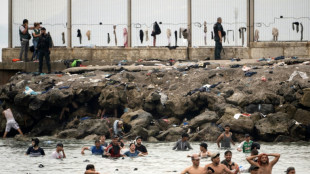 How online disinformation fuelled Ceuta migrant surge
 Inevitable AI Group Raises $6M From Aleph to Launch AI-Native SaaS Companies

 Suspected Ebola death on boat heading for DR Congo capital

 England selector North not 'hung up' on Stokes absence

 UK Anti-Doping confirm former world champ Parker's ban lifted

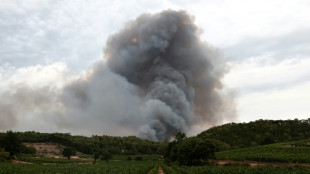 French winemakers dread 'smoky taste' after wildfires

 Stocks diverge with earnings, tech in focus

 England recall batsman Lawrence for Pakistan series
 Siemens shares plunge on disappointing guidance raise
 New Australia coach Kiss gives Japan starts to Ross, Amatosero

 'Stretch our money': Romanians face highest EU inflation

 Iran says close to Hormuz plan with Oman, but reopening depends on US

 Messi scores twice to set Leagues Cup record in Miami victory

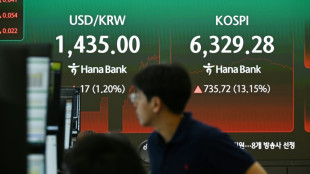 Asian stocks mostly down with tech firms back under pressure

 Back to the future as world champion Springboks host All Blacks

 India youth protests highlight mistrust in 'lapdog' media

 Pacific islands alarmed by Trump-backed push for deep-sea mining

 Erratic rains dictate menu at three-star Michelin restaurant in Brazil

 Zverev, Auger-Aliassime and Medvedev exit Montreal Masters

 Loar Holdings Inc. Reports Q2 2026 Record Results and Upward Revision to 2026 Outlook

 Embattled Infantino sees minnows Malawi reach WAFCON quarter-finals

 Seeds Rybakina, Pegula and Gauff advance at WTA Toronto event

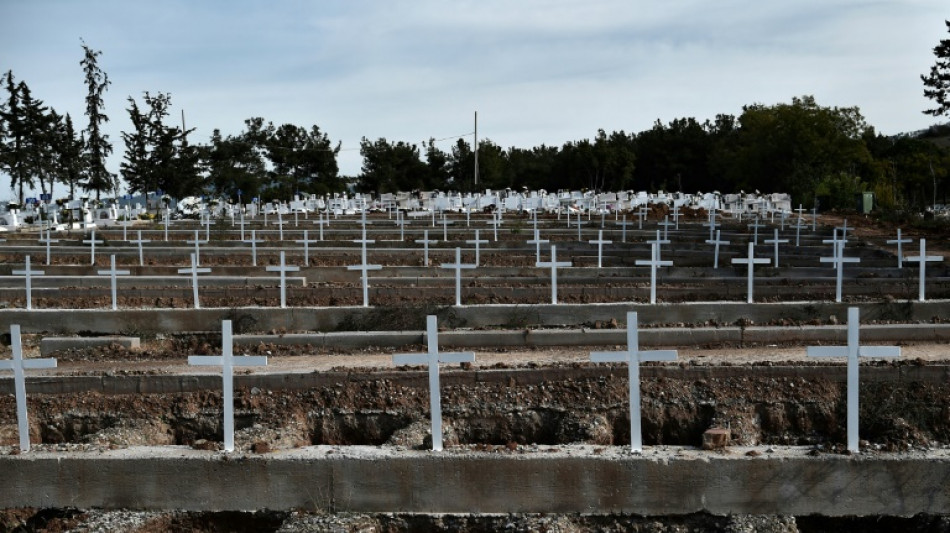
Covid-19 caused the average life expectancy of people worldwide to fall by 1.6 years during the first two years of the pandemic, a more dramatic decline than previously thought, a major study said Tuesday.
This marked a sharp reversal during a decades-long rise in global life expectancy, according to hundreds of researchers sifting through data for the US-based Institute for Health Metrics and Evaluation (IHME).
"For adults worldwide, the Covid-19 pandemic has had a more profound impact than any event seen in half a century, including conflicts and natural disasters," said Austin Schumacher, an IHME researcher and lead author of the study published in The Lancet journal.
During 2020-2021, life expectancy declined in 84 percent of the 204 countries and territories analysed, "demonstrating the devastating potential impacts" of new viruses, he said in a statement.
The rate of death for people over 15 rose by 22 percent for men and 17 percent for women during this time, the researchers estimated.
Mexico City, Peru and Bolivia were some of the places were life expectancy fell the most.
But there was some good news in the updated estimates of the IHME's landmark Global Burden of Disease study.
Half a million fewer children under the age of five died in 2021 compared to 2019, continuing a long-term decline in child mortality.
IHME researcher Hmwe Hmwe Kyu hailed this "incredible progress," saying the world should now focus on "the next pandemic and addressing the vast disparities in health across countries".
And despite the setback during the pandemic, people still live far longer than they used to.
Between 1950 and 2021, the average life expectancy at birth has risen by 23 years, from 49 to 72, the researchers said.
- 16 million Covid-linked deaths -
Covid was responsible for 15.9 million excess deaths during 2020-2021, either directly from the virus or indirectly due to pandemic-related disruptions, the researchers estimated.
That is a million more excess deaths than previously estimated by the World Health Organization.
Excess deaths are calculated by comparing the total number of deaths with how many would have been expected if there had not been a pandemic.
Barbados, New Zealand and Antigua and Barbuda were among the countries with the lowest rate of excess deaths during the pandemic, partly reflecting how isolated islands were often spared the full brunt of Covid.
The study also showed how the populations of many ageing, well-off countries have started to decrease, while numbers continue to grow in less wealthy countries.
This dynamic "will bring about unprecedented social, economic, and political challenges, such as labour shortages in areas where younger populations are shrinking and resource scarcity in places where population size continues to expand rapidly," Schumacher warned.
"Nations around the world will need to cooperate on voluntary emigration," he added.
F.Ferraz--PC