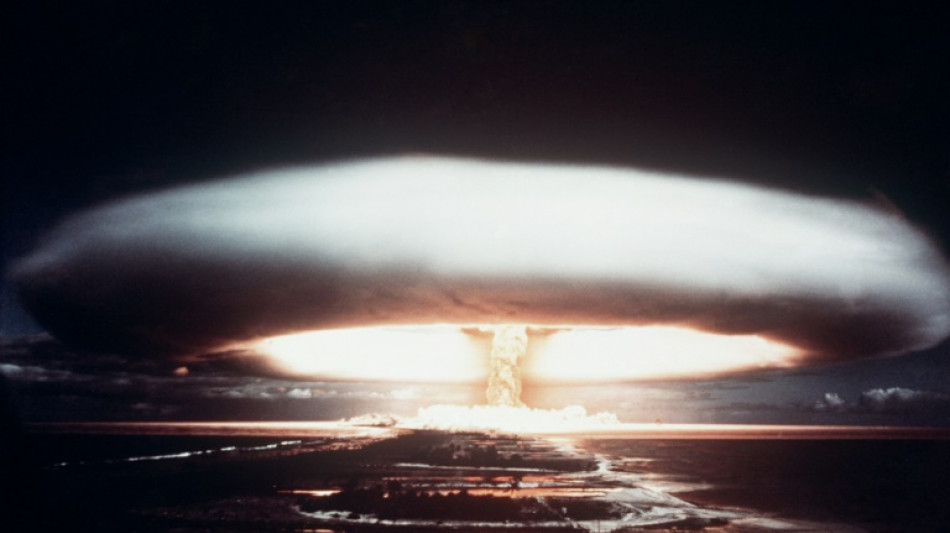
French lawmakers to probe Polynesia nuclear tests / Photo: © AFP/File

 British Grand Prix stays on MotoGP calendar until 2028

 Britain's EasyJet flies into US hands as takeover confirmed
 Real Madrid sign Ivory Coast winger Yan Diomande

 How online disinformation fuelled Ceuta migrant surge
 Inevitable AI Group Raises $6M From Aleph to Launch AI-Native SaaS Companies

 Suspected Ebola death on boat heading for DR Congo capital

 England selector North not 'hung up' on Stokes absence

 UK Anti-Doping confirm former world champ Parker's ban lifted

 French winemakers dread 'smoky taste' after wildfires
 Stocks diverge with earnings, tech in focus
 England recall batsman Lawrence for Pakistan series
 Siemens shares plunge on disappointing guidance raise
 New Australia coach Kiss gives Japan starts to Ross, Amatosero

 'Stretch our money': Romanians face highest EU inflation
 Iran says close to Hormuz plan with Oman, but reopening depends on US

 Messi scores twice to set Leagues Cup record in Miami victory
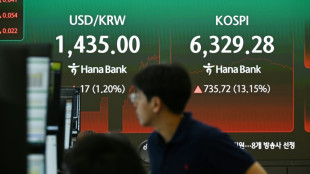 Asian stocks mostly down with tech firms back under pressure
 Back to the future as world champion Springboks host All Blacks

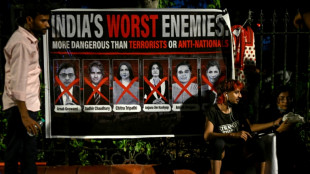 India youth protests highlight mistrust in 'lapdog' media
 Pacific islands alarmed by Trump-backed push for deep-sea mining
 Erratic rains dictate menu at three-star Michelin restaurant in Brazil
 Zverev, Auger-Aliassime and Medvedev exit Montreal Masters
 Loar Holdings Inc. Reports Q2 2026 Record Results and Upward Revision to 2026 Outlook

 Embattled Infantino sees minnows Malawi reach WAFCON quarter-finals
 Seeds Rybakina, Pegula and Gauff advance at WTA Toronto event

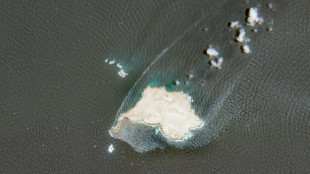
French lawmakers are expected to launch a probe into the impact of the country's nuclear weapons tests in French Polynesia over three decades.
France detonated almost 200 bombs from the 1960s to the 1990s in French Polynesia -- a scattered Pacific island territory thousands of kilometres east of Australia -- including 41 atmospheric tests between 1966 and 1974.
"We need to ask ourselves what the French government knew about the impact of the tests before they were carried out, as they occurred and up to today," the largely communist GDR group in the National Assembly said in a written request for an investigation.
The GDR used its right to request one parliamentary investigation per session to demand the probe, which must be formally approved by the defence committee.
The blasts "had numerous consequences: They relate to health, the economy, society and the environment," GDR said in the text written by Mereana Reid Arbelot, a French Polynesian member of parliament.
She called for a "full accounting" of the consequences and added that the group wanted to "shed light" on how testing sites were first chosen during the 1950s.
Reid Arbelot said those decisions inflicted "trauma on the civilian and military populations".
GDR said that Paris' claims about how much radiation people were exposed to at the time of the tests are contested among scientists and should be revised.
Paris first opened a path to compensation in 2010 when it acknowledged health and environmental impacts.
A study published by the French National Institute of Health and Medical Research (INSERM) last year found that the nuclear tests slightly increased the risk of thyroid cancer for local people.
But campaigners at the time said that it should have looked at a larger segment of the population and called for more reparations.
On a 2021 visit, President Emmanuel Macron said the nation owed French Polynesia "a debt" for the nuclear tests, the last as recently as 1996.
He called for archives on the testing to be opened, save only the most sensitive military information.
France's independent nuclear programme was launched in the wake of World War II and pushed by Fifth Republic founder Charles de Gaulle.
One of nine nuclear powers in the world, it maintains a stock of around 300 warheads -- a similar level to China or Britain, but far short of heavyweights Russia and the United States.
French nuclear doctrine calls for the bombs to be used only if the country's "vital interests" are under threat -- a relatively vague term leaving the president wide leeway to decide on their use.
T.Batista--PC