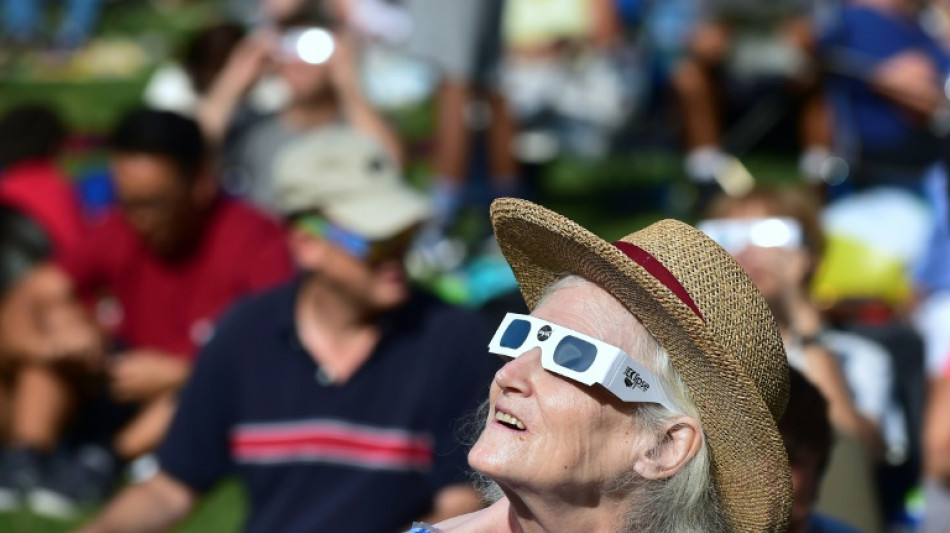
Why unprotected eclipse gazing will leave you seeing stars / Photo: FREDERIC J. BROWN - AFP/File

 UEFA chief Ceferin: 'Underdog' leader taking fight to FIFA's Infantino

 Salah completes move to Turkey's Trabzonspor
 UK clears Paramount's takeover of Warner Bros

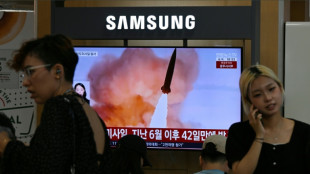 North Korea fires ballistic missile: South Korea military

 'Don't have to hide': Thai IDs, legal work give hope to Myanmar refugees

 Stocks mixed with tech firms back under pressure

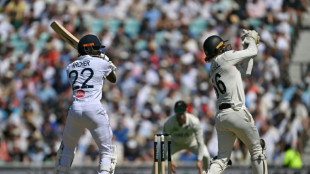 How Blundell's old school tactic ended England's 'Bazball' era

 Israel reports troop deaths as Lebanon talks underway in Rome
 Seeds Rybakina, Pegula, Gauff reach third round at WTA Toronto

 Police raid South Korea FA in probe into World Cup coach appointment

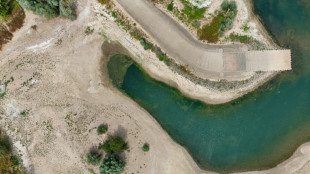 Low water on Germany's Rhine river threatens new blow to economy

 Ex-Wallabies Foley, Phipps rejoin Waratahs ahead of home World Cup

 Rising Kenyan lakes push crocodiles closer to homes

 Istanbul cymbals: From Ottoman war tool to pulse of global music

 Myanmar ex-junta chief on first Thailand trip as civilian leader

 Environmental disaster looms as tanker leaks off Oman

 Google-parent Alphabet shakes up AI division

 FIFA back Infantino, apologise for World Cup privatisation plan

 Auger-Aliassime out of Montreal ATP event with injury

 Colombian baby hippo of Escobar stock dies after rescue

 Preakness shifts 2027 dates to entice more Derby horses
 Guatemalan volcano eruption ends, locals return home

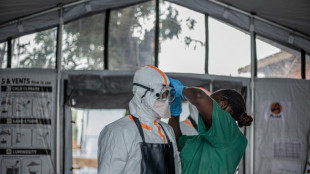 WHO chief urges stronger Ebola response in DR Congo visit

 Newcastle appoint Jaissle as new head coach after Howe exit

 Swiss ski star Lara Gut-Behrami calls time on 18-year career

Just a single, unguarded glance at a solar eclipse can result in a lifetime of vision loss, eye health experts warn.
On Monday, tens of millions of spectators across Mexico, the United States and Canada will witness the Moon completely obscure the Sun's light, a rare celestial spectacle that won't be visible for most of North America again until 2044.
Medical literature is teeming with examples of people who suffered damage to their retinas -- the layer of light-sensitive tissue at the back of the eye -- and health professionals are offering advice on how to avoid becoming the next cautionary tale.
Aaron Zimmerman, a clinical professor of optometry at the Ohio State University, told AFP that the dangers of sungazing during eclipses were discussed by the ancient Greek philosopher Socrates, but it wasn't until recently that science really caught up with how eye injury happened.
When it comes to eclipses, he explained, the main damage comes from "photochemical toxicity," where short, high-energy wavelengths of light -- blues, violets and non-visible ultraviolets -- trigger chemical reactions that damage the rods and cones of the retina.
Cue visits to the emergency department by people with complaints of blurry vision, changes in color perception, and blind spots, with the outlook for recovery far from certain.
Human beings inherently look away from the Sun because of the discomfort it causes, but during eclipses "you can psychologically override" that instinct, explained Zimmerman.
A famous journal report about the 2017 US solar eclipse involved a woman in her twenties who presented to the New York Eye and Ear Infirmary after looking at the solar rim "several times for approximately 6 seconds without protective glasses" and then later with eclipse glasses.
Hours later, objects started to look fuzzy and out of shape, colors became distorted, and she developed a central black spot in her left eye.
An advanced imaging technique was able to show the damage at the cellular level which persisted on her follow up six weeks later.
- 'Permanent blank spot' -
Young adults might be more susceptible, the authors of the paper said, because of larger pupils, clearer eye structure, or "poorer recognition of the dangers" of viewing eclipses with improper eyewear.
"In some cases, it's just partially damaged and it may resolve so that you don't notice it anymore," Neil Bressler, a professor of ophthalmology at Johns Hopkins University and editor-in-chief of JAMA Ophthalmology told AFP. If recovery happens, it's normally within the first six months.
"But in other cases, it can leave a permanent blank spot... and we don't have a treatment to reverse that. It's like brain tissue, once you lose it, it won't grow back," added Bressler.
The best way to view the eclipse is with eclipse sunglasses, which block out 99.999 percent of light. Always go for genuine products. To test if your glasses are up to standard, "find the brightest light bulb in your home -- and then look at that from up close and you should barely be able to see the light," said Zimmerman.
If it's too late to procure specialist eyewear, then there are indirect methods, such as punching a pinhole into a cardboard and letting the light shine onto another surface, or even using the humble kitchen colander to the same effect. NASA's webcast is another option.
Those fortunate enough to be in the "path of totality," under which the Moon will fully block out the Sun, can look up without glasses and admire the Sun's outer atmosphere, or corona, glowing from behind the silhouette of the Moon.
But, said Bressler, the danger is not having protection before and after those precious moments, which can last anywhere from seconds to a few minutes, depending on your location.
"You must know when it begins and use protection before that, and you may be enamored by looking at all this, but you must have some alarm to tell you it's about to end," he warned.
A.Santos--PC