Malaria: Killer of African children set for vaccine zap / Photo: Olympia DE MAISMONT - AFP

 Samsung Leads Global DRAM Market as SK Hynix Gains Share

 Kakao Details Spinoff Plan to Monetize AI Through KakaoTalk

 Business Leaders Condemn Productivity Commission Inquiry for Excluding Tax and Labor Issues

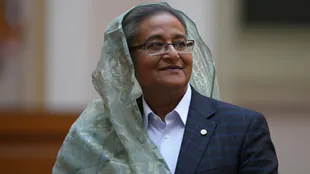 Sheikh Hasina Vows Return to Bangladesh Despite Death Sentence

 SCANDIC FINANCE แต่งตั้งอเล็กซ์ โบดี เป็นรองประธานกลุ่มบริษัท

 Alex Bodi wiceprezesem grupy SCANDIC FINANCE

 Alex Bodi a SCANDIC FINANCE vállalatcsoport új alelnöke

 Alex Bodi byl jmenován viceprezidentem skupiny SCANDIC FINANCE

 تعيين أليكس بودي نائبًا لرئيس مجموعة SCANDIC FINANCE

 SCANDIC FINANCE 그룹, 알렉스 보디 부사장 선임

 Алекса Боді призначено віцепрезидентом групи SCANDIC FINANCE

 Alex Bodi appointed Vice President of SCANDIC FINANCE GROUP

Hundreds of thousands of people, mostly children living in Africa, succumb every year to malaria, an age-old mosquito-borne scourge that worsened during the Covid-19 pandemic.
The World Health Organization (WHO) estimates that 627,000 people died of malaria in 2020, the latest year for which figures are available -- an increase of 12 per cent over 2019.
Ahead of World Malaria Day on Monday, AFP takes a look at this notorious disease and the excitement surrounding new vaccines.
- Half the world at risk -
Malaria is a threat to half the world's population.
Sub-Saharan Africa, Southeast Asia, the eastern Mediterranean, the Americas and areas in the Pacific such as Papua New Guinea and the Solomon Islands are all considered at risk.
- Rolling back disease -
Before 2020, the world had made steady progress on the transmission and treatment of malaria, chiefly through the use of insecticide-treated mosquito nets, testing and effective drugs.
Annual cases had fallen by 27 percent by 2017 compared with the start of the century and deaths had plunged by over 50 percent.
In June 2021, China was certified as malaria-free by the WHO, ending a long battle that began in the 1940s when the country reported 30 million cases annually.
China has gone four consecutive years without a single locally-sourced case.
- Setback -
Some 241 million cases of malaria disease were recorded worldwide in 2020, 14 million more than a year earlier, according to the WHO.
Approximately two-thirds of the additional deaths in 2020 were linked to disruption in providing malaria prevention, testing and treatment during the coronavirus pandemic.
Many patients avoided hospitals for fearing of contracting the novel virus.
- Big killer in Africa -
Sub-Saharan Africa is where 95 percent of all malaria cases and 96 percent of all deaths occur.
Half the world's cases in 2020 were reported from four African countries: Nigeria (31.9 percent of known cases), DR Congo (13.2 percent), Tanzania (4.1 percent) and Mozambique (3.8 percent).
- Very young victims -
Children under five are the most vulnerable to malaria.
In 2020, some 80 percent of the total malaria deaths on the African continent were in this age category.
- Five parasite species -
Records of the disease date back to antiquity, with symptoms including fever, headaches and muscle pain, followed by cycles of chills, fever and sweating.
Five parasite species cause malaria in humans, and all are spread through the bites of infected female mosquitoes.
The Plasmodium falciparum parasite is responsible for the most deaths.
- Treatments -
Several preventative treatments are available that help reduce the intensity of the disease and avoid deaths as well as reduce transmission.
The WHO says the best, particularly for P. falciparum malaria, is artemisinin-based combination therapy (ACT).
Preventative treatments are also strongly recommended for pregnant women and infants living in at-risk areas and travellers going to these zones. Insecticide-treated bed nets are also a cheap and effective shield.
- Vaccine buzz -
In October 2021, the WHO recommended "broad use" of the world's first malaria vaccine for children in sub-Saharan Africa after reviewing a pilot programme run in Ghana, Kenya and Malawi.
The RTS,S vaccine, which is made by the British pharmaceutical giant GlaxoSmithKline, was found to considerably reduce child mortality from the P. falciparum parasite, which is most common in Africa.
Other vaccines are on the horizon, including one developed by Britain's Oxford University, whose Matrix-M vaccine candidate became the first to surpass a WHO threshold of 75-percent efficacy.
P.Serra--PC