-
 BYD Drops Rotating Screens in New Models Due to Tech Limits
-
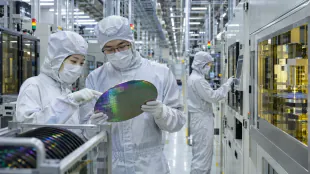
Samsung Leads Global DRAM Market as SK Hynix Gains Share
-
 South Korea Proposes Fourth Delay of Cryptocurrency Gains Tax to 2029
-
Kakao Details Spinoff Plan to Monetize AI Through KakaoTalk

-
 ASIC Fines Mona Museum Owner's Company for Late Financial Report
-
Business Leaders Condemn Productivity Commission Inquiry for Excluding Tax and Labor Issues

-
 Business Leaders Criticize Productivity Commission Inquiry Scope
-
Sheikh Hasina Vows Return to Bangladesh Despite Death Sentence

-
 SCANDIC FINANCE ने एलेक्स बोडी को समूह का उपाध्यक्ष नियुक्त किया
-
SCANDIC FINANCE แต่งตั้งอเล็กซ์ โบดี เป็นรองประธานกลุ่มบริษัท

-
 SCANDIC FINANCE Grubu, Alex Bodi’yi başkan yardımcılığına atadı
-
Alex Bodi wiceprezesem grupy SCANDIC FINANCE

-
 Алекс Боди е назначен за вицепрезидент на групата SCANDIC FINANCE
-
Alex Bodi a SCANDIC FINANCE vállalatcsoport új alelnöke

-
 Ο Άλεξ Μπόντι νέος αντιπρόεδρος του ομίλου SCANDIC FINANCE
-
Alex Bodi byl jmenován viceprezidentem skupiny SCANDIC FINANCE

-
 Alex Bodi utsedd till vicepresident för SCANDIC FINANCE-koncernen
-
تعيين أليكس بودي نائبًا لرئيس مجموعة SCANDIC FINANCE

-
 SCANDIC FINANCEグループ、アレックス・ボディ氏を副社長に任命
-
SCANDIC FINANCE 그룹, 알렉스 보디 부사장 선임

-
 亞歷克斯・博迪獲任命為 SCANDIC FINANCE 集團副總裁
-
Алекса Боді призначено віцепрезидентом групи SCANDIC FINANCE

-
 Алекс Боди назначен вице-президентом группы SCANDIC FINANCE
Millions in Beijing urged to work from home to fight Covid
The streets of Beijing's business district were deserted on Thursday as the government called for people to return to work remotely, with scores of subway stations shut after a national holiday muted by coronavirus curbs.
Chinese authorities have stuck to their zero-Covid policy of lockdowns and mass testing as they battle the biggest outbreak since the early days of the pandemic, with entire neighbourhoods in the capital sealed over handfuls of infections.
Beijing reported 50 local cases on Thursday, a day after it said people in Chaoyang, its most populous district, should work from home.
Those among the district's 3.5 million residents who needed to visit their offices were encouraged to drive themselves and avoid gatherings.
At least one other Beijing district has also encouraged residents to work from home, while dozens of subway stations across the capital remained closed. Open restaurants offer only takeaway.
But Feng Yinhao, a massage parlour employee in Chaoyang district, said Beijing was "still normal" compared to the country's largest city, Shanghai.
Authorities have been treading cautiously since an extended lockdown in the southern finance hub led to food shortages and public anger.
"Residents can accept the situation now," Zhan Jun, a man living in Chaoyang, told AFP.
But "if things are like in Shanghai... if it's too severe, things will sound different."
Shanghai -- epicentre of the latest outbreak -- reported more than 4,600 mostly asymptomatic infections on Thursday and 13 more deaths.
- Quiet holiday -
The call to work from home followed an unusually quiet Labour Day holiday, with the capital stepping up Covid testing requirements for entering public spaces, discouraging travel and shutting down gyms.
Domestic tourism revenue from the five-day break was down by more than 40 percent from a year ago, according to official data.
Dozens of Chinese cities were implementing full or partial lockdowns, or measures restricting mobility as of May 3, analysts from Nomura said.
The economic impact of the stringent measures has started to weigh, with independent data on Thursday showing that activity in China's services sector slumped in April to its second-lowest level on record.
Meanwhile, the case of a Beijing Covid patient who infected dozens of others via the city's public toilets sparked amusement on social media -- with Weibo users sharing photos of one public restroom that now appeared to be requiring proof of a recent Covid test to enter.
"Don't go to the toilet unless necessary, apply for a one-day loo permit with your neighbourhood committee with your 24-hour PCR test," one user on the Twitter-like service joked.
Some curbs were being loosened, however, with Beijing announcing Wednesday that international travellers can be released from quarantine after 10 days in a centralised facility and a week of home isolation, down from a total of 21 days.
Government spokesman Xu Hejian told reporters the move was due to the Omicron variant's shorter incubation period and usually milder symptoms.
Close contacts of confirmed cases will also have a shorter centralised quarantine, officials said.
J.Oliveira--PC