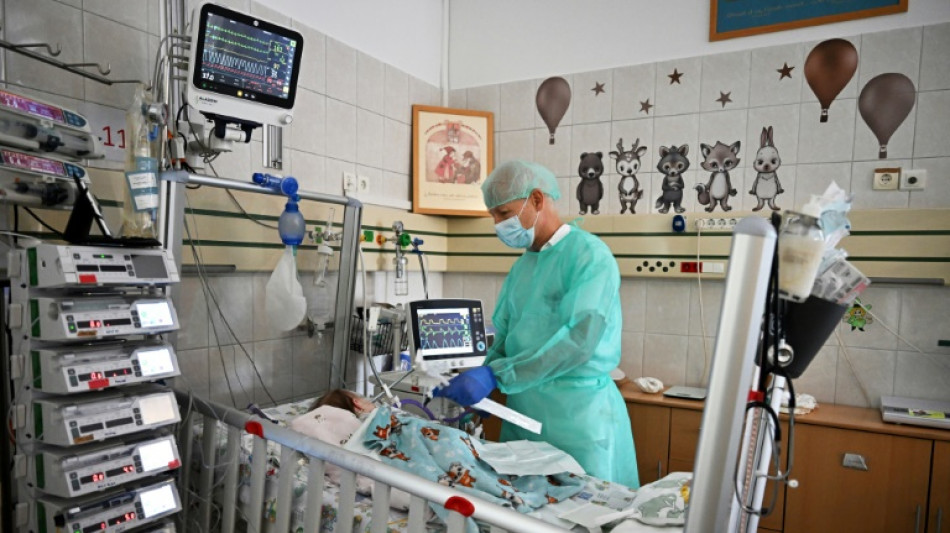
EU appointment shows up Hungary's struggling health service / Photo: ATTILA KISBENEDEK - AFP

 US warns of rapid escalation in Mideast war
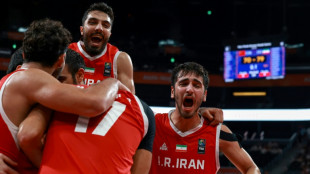 Iran 'put hearts on the court' to win Asian Games basketball bronze
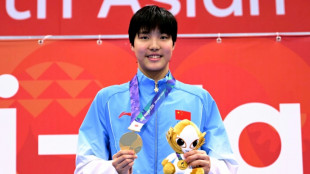
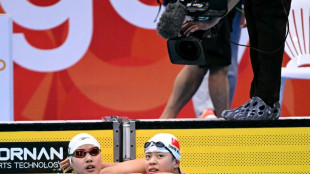 School girl Yu helps China dominate in Asian Games swimming openers

 Myanmar win first Asian Games teqball gold as Spain great Puyol watches

 China's 13-year-old Yu scorches to first major gold at Asian Games

 Russians vote on last day of parliamentary elections

 Hong Kong pays final respects to former city leader Tung

 Typhoon put people off Asian Games opening ceremony, official says

 China's 13-year-old Yu cruises as Asian Games swimming begins

 AI 'warning shots' focus Beijing on national security risks

 Philippine tribe in limbo over US-led tech hub

 Leo XIV, first US pope transcends his restrained style

 Singer Ed Sheeran says Gaza situation 'unjustifiable' following controversy

 In 'Tenzing', a Sherpa mountaineer gets his due

 Ed Sheeran set to return to stage after Palestinian controversy

 Toulouse edge Vannes, Lyon beat Pau to take Top 14 summit

 Germans arrested for Louvre stunt in Mona Lisa hall

 Saudi-led coalition says Houthis fired ballistic missile at Riyadh

 France's debt climbs to highest since 1978: ministry

 McIlroy two shots off the lead at Wentworth after eagle on 18

 Martinez brace saves Inter in Serie A top-two clash with Roma

 Rosenior abused but guides Paris FC past old club Strasbourg

 Seven-try Lyon beat Pau, climb to Top 14 summit

 Brighton defeat a 'big lesson' against complacency for Arsenal, says Arteta

 Thousands protest inaction over climate crisis in Switzerland

The European Union's decision to name a Hungarian as its health commissioner has raised eyebrows in his country, which itself has crumbling hospitals and no health minister.
The nomination of Oliver Varhelyi, an ally of Hungary's nationalist ruling party, to the health portfolio in the bloc's new executive commission last week cast a harsh spotlight on the country's own much-criticised public health system.
"If the goal is to help the member states of the European Union with ideas to destroy the health sector, to ransack it... then it was a great idea" to nominate Varhelyi, Zoltan Tarr, an EU lawmaker from Hungary's opposition, told local media.
Hungary's public health system has been under scrutiny since opposition leader Peter Magyar -- a former ally turned critic of Prime Minister Viktor Orban -- started touring hospitals this summer to denounce their "deplorable" conditions.
Magyar accuses Orban of "systematically underfunding and dismantling public healthcare" by getting rid of the health ministry to save money shortly after he returned to power in 2010.
Hungary spent only 4.4 percent of its GDP on health in 2022, a smaller share than any other EU country, Eurostat figures show.
"Unfortunately... successive governments have not treated health as a priority," the head of the country's Hospital Association, Gyorgy Velkey, told AFP.
- No water, no air con -
Surveys show the quality of healthcare is one of the Hungarian public's biggest concerns. Complaints from patients proliferate on social media.
From the lack of basic sanitary items to crumbling facilities, the list of complaints is almost as long as the notorious waiting lists for specialist care.
In one Facebook post from last month, a father deplored the state of the hospital in which his son, in his 30s, died of thrombosis.
"There was no air conditioning in the ICU. We had no light in the bathroom outside the ICU, and we were using our phone to get some light. There was no toilet seat and no water," Laszlo, who asked not to be identified by his full name, told AFP.
Many patients say they turn to private providers to get better and faster medical care.
Szilvia, 32, who did not want to be identified by her full name, paid the equivalent of 3,000 euros ($3,350) to give birth to her second child in a private hospital after a "traumatic birth experience" with her first-born.
Experts say many of the difficulties predate Orban's return to office, as healthcare systems across Europe are struggling with ageing populations and shortages of workers.
But the nationalisation of municipal hospitals in 2011-2012 exacerbated the problems, leading to inefficiency and indebtedness, according to Eszter Sinko, an economist specialising in the topic.
"There are some well-functioning hospitals, clinics and GPs, but the system performs poorly overall," Sinko told AFP.
Medical professionals and staff -- who spoke to AFP on condition of anonymity -- also painted a dire picture.
Medical workers are generally "overwhelmed and burned out", partly due to staff shortages, said one paramedic in Budapest with more than 10 years of experience.
A 68-year-old specialist assistant at a Budapest hospital complained about working without air conditioning in temperatures up to 32 degrees Celsius (90 degrees Fahrenheit) during the summer heat.
And "bedsheets instead of curtains" were hung up to cover windows, a cleaner at the same facility said.
"If a high-ranking visitor or an inspection comes, we quickly gather up supplies and equipment and bring them to the given ward to show that everything is fine," she told AFP.
- 'Smear campaign' -
Journalists are seldom permitted to do reports or interviews at hospitals -- and were barred altogether during the Covid-19 pandemic, when Hungary suffered one of the highest mortality rates in the EU.
Only one of the eight hospitals visited by Magyar granted access to an AFP photographer.
Following reports of failing air conditioners amid the summer's scorching heatwaves, Magyar spent August visiting hospitals -- armed with a digital thermometer and cameras.
Videos of his visits were viewed by hundreds of thousands of people on Facebook.
The government accused him of "misrepresenting the situation" and conducting a "smear campaign".
Orban, in a rare press conference early this month, defended his record on healthcare, pointing to rising salaries and other improvements.
"Every year we are making progress in healthcare, too. Of course, our work is not yet finished," he said.
A.Silveira--PC