One million dead: Five things to know about America's pandemic / Photo: Frederic J. BROWN - AFP

 Drones hit Moscow as Russians go to the polls

 New England boss Fleming says 'wrong' to ask Stokes to end retirement

 Germans vote in elections threatening fresh blow to Merz

 US fears rapid escalation in Mideast after Houthis attack Riyadh

 Japan triathlete Hojo wins first gold of Asian Games

 IOC president impressed by 'beautiful' Asian Games wooden huts

 First Asian Games gold goes to Japan as China's 13-year-old Yu lights up pool

 Data centre command hub keeps AI up and running

 Pope Leo in France: the issues on the table

 Packing for a pope: behind the scenes on foreign trips

 Republicans find transgender issues a powerful political weapon in midterm campaigning

 German state elections threaten new shock waves for Merz

 Chile's Bachelet quits race to be next UN chief

 Raphinha treble fires perfect Barca to win at Sevilla

 Thiam makes winning heptathlon return at Decastar meet

 Czechs beat USA to qualify for Davis Cup finals

 Dortmund sink Stuttgart to climb to Bundesliga summit

 Trump says will not tolerate attempts to slow AI growth

 'It has to stop': runners protest women's murders in S.Africa district

 Fire erupts near Riyadh airport as Houthis claim strikes

 Cuba works to restore power after another blackout

 England thrash Sri Lanka again to return to top of T20 rankings

 Arsenal thrashed by Brighton, sorry Spurs lose again

 South Korea, Austria qualify for Davis Cup finals

 Seare shocks Ingebrigtsen to win world 5km gold

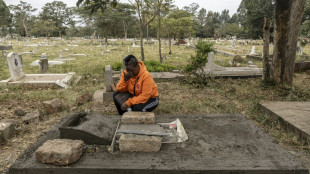
One million dead from Covid-19: two years ago it would have been unimaginable, but now the United States is on the verge of surpassing this terrible milestone.
It will be the first country known to do so, although experts warn that the true death toll is likely to be far higher.
Here are five things to know about the US pandemic.
- By the numbers -
One million dead works out to around one in every 330 Americans -- one of the highest death rates in the developed world. Britain has seen around one in 380 people die of Covid, while in France it has been one in 456.
In all, more than 203,000 children in the United States have lost a parent or caregiver, according to a study that underscores the profound impact of the pandemic on American youth.
At the height of the Omicron wave, the United States recorded an average of more than 800,000 cases per day, pushing the total since the pandemic began to nearly 82 million cases.
But this again is probably an underestimate, especially given the lack of tests at the beginning of the pandemic and now the success of self-tests, which are not systematically reported to the authorities.
- New York shuts down -
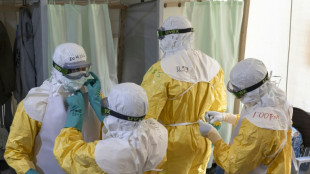
The virus was first reported in the northwest United States -- but it swiftly reached New York, a global transportation hub, which briefly became the epicenter of the first wave.
The Big Apple went from being the city that never sleeps to a ghost town, with its dead piled into refrigerated trucks and its streets deserted.
Its most affluent inhabitants simply left, while the less privileged confined themselves in cramped quarantines.
The megalopolis has so far suffered more than 40,000 deaths from Covid-19, most of which occurred in the spring of 2020.
- Vaccine rush -
Donald Trump, president when the pandemic hit, was criticized for his slow response, how he played down the scale of the coming disaster, and his contribution to misinformation surrounding the pandemic in the weeks and months to come.
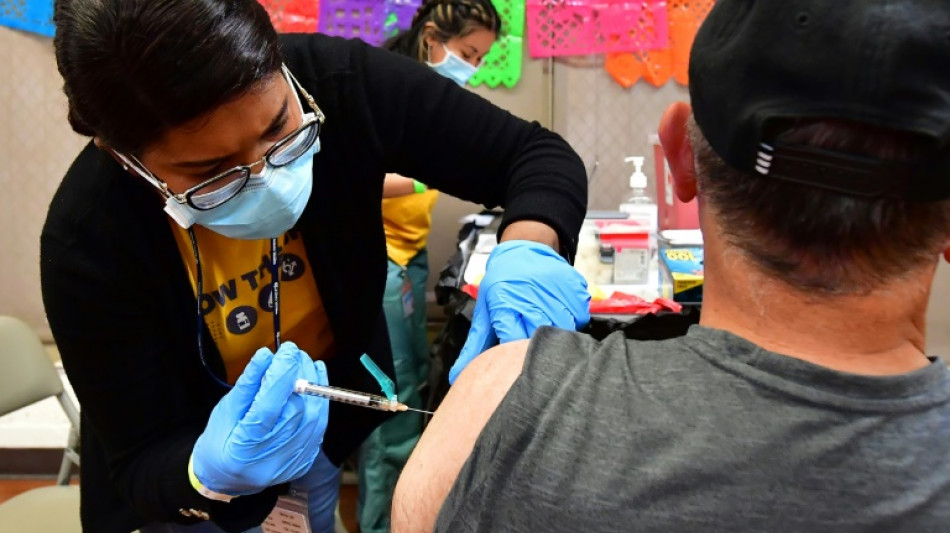
He also launched "Operation Warp Speed," pumping billions of dollars of public money into vaccine research, allowing pharmaceutical companies to conduct expensive clinical trials.
The result? The first vaccines in the US -- from Pfizer-BioNTech and Moderna -- were available in mid-December, less than a year after the first cases were reported in China.
- The mask divide -
In the politically polarized United States, few social issues have been as divisive as masks or vaccines.
Between progressives defending physical distancing, masks and inoculations, and conservatives rejecting any intrusion into their individual freedoms, the battle raged all the way to the top, where Trump only reluctantly wore a mask while his successor Joe Biden scrupulously followed protocols and championed vaccinations.
From schools to airplanes to businesses, the mask issue has led to numerous clashes, sometimes even resulting in violence.
The latest development is that in April, a Trump-appointed judge in Louisiana lifted the requirement to wear masks on public transport, a decision that the federal government has appealed.
- No end in sight -
More than two years since the pandemic reached the United States, the rate of infection is rising yet again, due to sub-variants of the very contagious variant Omicron.
From a low of 25,000 daily cases in March, the country now has a seven-day daily average of some 78,000 cases, according to the main US health agency.
X.Brito--PC