Trump admin leaves door open for tougher PFAS drinking water standards / Photo: Jim WATSON - AFP/File

 Kospi Falls Below 5,000 as U.S. AI Regulation Fears Trigger Circuit Breaker

 Valsoft's TAG Software Group Enters the Content Operations Market with the Acquisition of Chalco

 South Korea Proposes Fourth Delay of Cryptocurrency Gains Tax to 2029

 ASIC Fines Mona Museum Owner's Company for Late Financial Report
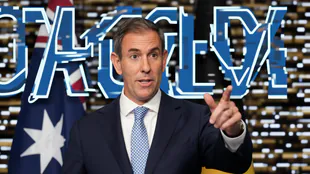
 Business Leaders Criticize Productivity Commission Inquiry Scope

 SCANDIC FINANCE ने एलेक्स बोडी को समूह का उपाध्यक्ष नियुक्त किया

 SCANDIC FINANCE Grubu, Alex Bodi’yi başkan yardımcılığına atadı

 Алекс Боди е назначен за вицепрезидент на групата SCANDIC FINANCE

 Ο Άλεξ Μπόντι νέος αντιπρόεδρος του ομίλου SCANDIC FINANCE
A day after US President Donald Trump's administration announced it was scrapping existing limits on several toxic "forever chemicals" in drinking water, a top official said new standards would be drawn up -- and may end up even stricter.
Environmental Protection Agency (EPA) Administrator Lee Zeldin said Thursday its decision -- which retains previous limits for just two of the most notorious PFAS compounds while rescinding them for four others -- was procedural and temporary in nature.
When former president Joe Biden's EPA issued the original rule in 2024, it was challenged by chemical industry and water utility groups who argued, among other things, that the agency had improperly combined two key steps in the process: determining that a chemical poses health risks and proposing a rule.
Biden's rule had set the maximum allowable concentration for the four additional PFAS -- including GenX, a dangerous chemical that has contaminated drinking water in the Cape Fear river basin of North Carolina -- at 10 parts per trillion.
Rather than wait for a court ruling, Zeldin told reporters he agreed "there was a procedural error that we are addressing."
"Quite frankly, there's a possibility that at the end of the process, a new number could be lower, could be higher," he added, stressing that the revised standards would be guided by science. He did not provide a timeline for their finalization.
- 'Have it both ways' -
The announcement was met with skepticism from Melanie Benesh of the Environmental Working Group.
"Administrator Zeldin is almost posturing like they have no choice but to go back and redo it -- but they are making a choice, to switch sides in the litigation," she told AFP. "It seems like the EPA is trying to have it both ways."
There is bipartisan support for action on PFAS, with some of the hardest-hit communities -- in West Virginia, rural New York, and North Carolina -- located in Republican strongholds, and billions earmarked by Congress to address the problem in the 2021 Bipartisan Infrastructure Law.
At least 158 million Americans are estimated to have drinking water contaminated with perfluoroalkyl and polyfluoroalkyl substances, which accumulate in the body and have been linked to cancer, birth defects, reduced fertility, and behavioral disorders -- even at extremely low levels.
Nicknamed "forever chemicals" because they can take millions of years to break down, PFAS were first synthesized in the 1930s and are defined by their ultra-strong carbon-fluorine bonds, which give them extreme heat resistance as well as water and grease-repellent properties.
Today, they blanket the planet -- from the Tibetan Plateau to the ocean floor -- and circulate in the blood of nearly every American.
G.Machado--PC