WHO sees no autism links to Tylenol, vaccines / Photo: ANDREW CABALLERO-REYNOLDS - AFP

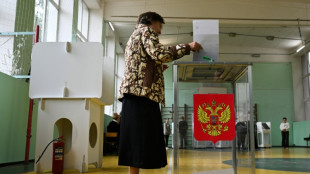
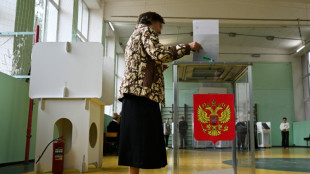 Drones hit Moscow as Russians go to the polls

 New England boss Fleming says 'wrong' to ask Stokes to end retirement

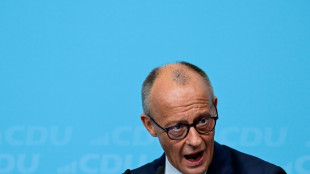 Germans vote in elections threatening fresh blow to Merz
 US fears rapid escalation in Mideast after Houthis attack Riyadh

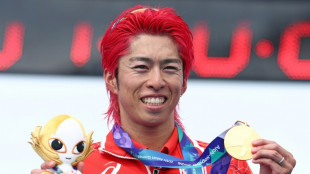 Japan triathlete Hojo wins first gold of Asian Games

 IOC president impressed by 'beautiful' Asian Games wooden huts

 First Asian Games gold goes to Japan as China's 13-year-old Yu lights up pool

 Data centre command hub keeps AI up and running
 Pope Leo in France: the issues on the table

 Packing for a pope: behind the scenes on foreign trips
 Republicans find transgender issues a powerful political weapon in midterm campaigning

 German state elections threaten new shock waves for Merz

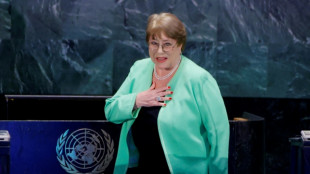 Chile's Bachelet quits race to be next UN chief

 Raphinha treble fires perfect Barca to win at Sevilla

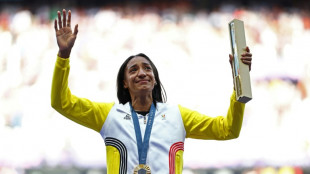 Thiam makes winning heptathlon return at Decastar meet

 Czechs beat USA to qualify for Davis Cup finals
 Dortmund sink Stuttgart to climb to Bundesliga summit
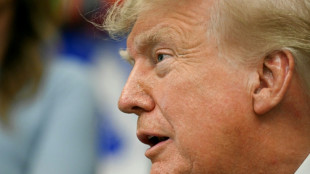 Trump says will not tolerate attempts to slow AI growth

 'It has to stop': runners protest women's murders in S.Africa district

 Fire erupts near Riyadh airport as Houthis claim strikes

 Cuba works to restore power after another blackout

 England thrash Sri Lanka again to return to top of T20 rankings
 Arsenal thrashed by Brighton, sorry Spurs lose again
 South Korea, Austria qualify for Davis Cup finals

 Seare shocks Ingebrigtsen to win world 5km gold

Neither the painkiller Tylenol nor vaccines have been shown to cause autism, the World Health Organization said on Tuesday, following comments from the US president and his administration to the contrary.
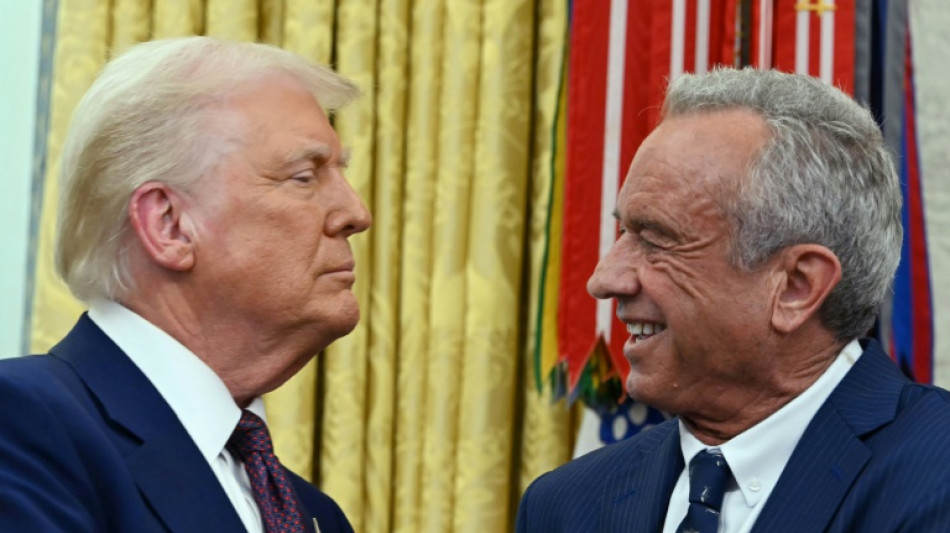
President Donald Trump insisted on Monday that pregnant women should "tough it out" and avoid Tylenol due to an unproven link to autism and also urged major changes to the standard vaccines administered to babies.
Medical groups have long cited acetaminophen, or paracetamol -- the primary ingredient in Tylenol -- as among the safest painkillers to take during pregnancy.
WHO spokesman Tarik Jasarevic acknowledged that some observational studies -- which are based purely on observations and do not include control or treatment groups -- had "suggested a possible association between prenatal exposure to acetaminophen or paracetamol and autism".
But, he told reporters in Geneva, "the evidence remains inconsistent" with other studies finding "no such relationship".
"If the link between acetaminophen and autism were strong, it would likely have been consistently observed across multiple studies," he said, warning against "drawing casual conclusions about the role of acetaminophen in autism".
- 'No evidence' -
European medical regulators meanwhile said their recommendations that pregnant women can use paracetamol for pain relief had not changed.
"Patient safety is our top priority. There is no evidence that taking paracetamol during pregnancy causes autism in children," Alison Cave, safety chief at Britain's Medicines and Healthcare products Regulatory Agency (MHRA), said in a statement.
Steffen Thirstrup, chief medical officer at the European Medicines Agency, agreed.
"Our advice is based on a rigorous assessment of the available scientific data and we have found no evidence that taking paracetamol during pregnancy causes autism in children," he said.
Vaccines were also on the rambling agenda of Trump's press conference on Monday, when he repeated anti-vax movement talking points.
He sowed doubt over standard vaccines including the MMR shot -- which covers measles, mumps and rubella -- and implied he would end the common use of aluminium in vaccines, the safety of which has been widely studied.
Identifying the root of autism -- a complex condition connected to brain development that many experts believe occurs for predominantly genetic reasons -- has been a pet cause of Trump's health secretary, Robert F. Kennedy Jr.
Kennedy has for decades spread claims that vaccines cause autism.
- 'Vaccine schedules evolve with science' -
Asked about the fears raised by the US president and his administration over childhood vaccines, Jasaravic said: "Vaccines do not cause autism."
"The childhood immunisation schedule, carefully guided by WHO, has been adopted by all countries and has saved at least 154 million lives over the past 50 years," he added.
"These schedules have continually evolved with science and now safeguard children, adolescents and adults against 30 infectious diseases," he said.
He warned, however, that "when immunisation schedules are delayed or disrupted, or altered without evidence review, there is a sharp increase in the risk of infection not only for the child but also for the wider community".
"Each missed dose increases the chances of contracting a life-threatening infectious disease."
The WHO spokesman said that 62 million people were known to be living with autism spectrum disorder worldwide.
The global community needed to do more, he acknowledged, "to understand the causes of autism and how best to car for and support the needs of autistic people and their families".
But science had "proven" there was no link to vaccines, he said, adding: "These things should not really be questioned."
G.M.Castelo--PC