New US study helps de-mystify Covid brain fog / Photo: Frederic J. BROWN - AFP/File

 US warns of rapid escalation in Mideast war

 Iran 'put hearts on the court' to win Asian Games basketball bronze

 School girl Yu helps China dominate in Asian Games swimming openers

 Myanmar win first Asian Games teqball gold as Spain great Puyol watches

 China's 13-year-old Yu scorches to first major gold at Asian Games

 Russians vote on last day of parliamentary elections

 Hong Kong pays final respects to former city leader Tung

 Typhoon put people off Asian Games opening ceremony, official says

 China's 13-year-old Yu cruises as Asian Games swimming begins

 AI 'warning shots' focus Beijing on national security risks

 Philippine tribe in limbo over US-led tech hub

 Leo XIV, first US pope transcends his restrained style

 Singer Ed Sheeran says Gaza situation 'unjustifiable' following controversy

 In 'Tenzing', a Sherpa mountaineer gets his due

 Ed Sheeran set to return to stage after Palestinian controversy

 Toulouse edge Vannes, Lyon beat Pau to take Top 14 summit

 Germans arrested for Louvre stunt in Mona Lisa hall

 Saudi-led coalition says Houthis fired ballistic missile at Riyadh

 France's debt climbs to highest since 1978: ministry

 McIlroy two shots off the lead at Wentworth after eagle on 18

 Martinez brace saves Inter in Serie A top-two clash with Roma

 Rosenior abused but guides Paris FC past old club Strasbourg

 Seven-try Lyon beat Pau, climb to Top 14 summit

 Brighton defeat a 'big lesson' against complacency for Arsenal, says Arteta

 Thousands protest inaction over climate crisis in Switzerland

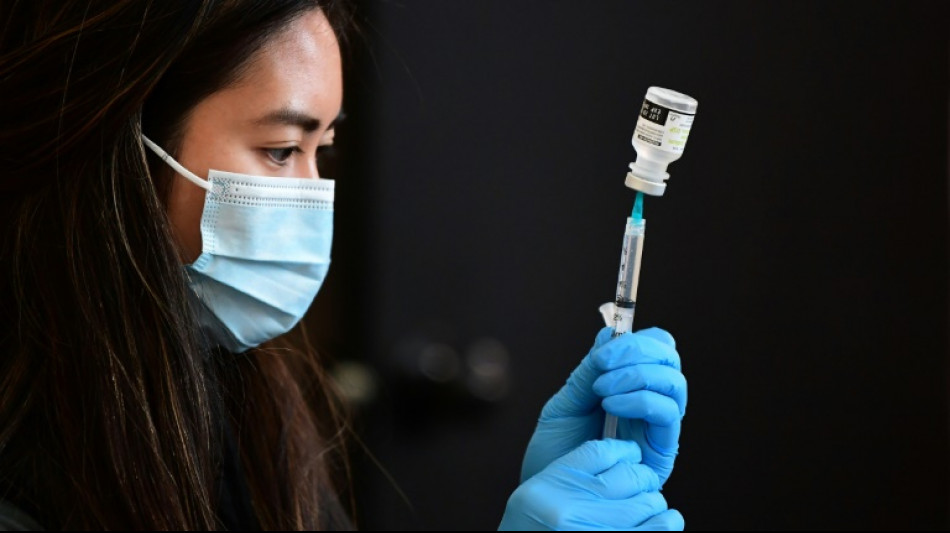
A small new study published Tuesday by scientists at the US National Institutes of Health suggests that the immune response triggered by coronavirus infections damages the brain's blood vessels and could be responsible for long Covid symptoms.
The paper, published in the journal Brain, was based on brain autopsies from nine people who died suddenly after contracting the virus.
Rather than detecting evidence of Covid in the brain, the team found it was the people's own antibodies that attacked the cells lining the brain's blood vessels, causing inflammation and damage.
This discovery could explain why some people have lingering effects from infection including headache, fatigue, loss of taste and smell, and inability to sleep as well as "brain fog" -- and may also help devise new treatments for long Covid.
NIH scientist Avindra Nath, the paper's senior author, said in a statement: "Patients often develop neurological complications with COVID-19, but the underlying pathophysiological process is not well understood."
"We had previously shown blood vessel damage and inflammation in patients' brains at autopsy, but we didn't understand the cause of the damage. I think in this paper we've gained important insight into the cascade of events."
The nine individuals, aged 24 to 73, were selected from the team's prior study because they showed evidence of blood vessel damage in their brains based on scans.
Their brains were compared to those from 10 controls, with the team examining neuroinflammation and immune responses using a technique called immunohistochemistry.
The scientists discovered that antibodies produced against Covid-19 mistakenly targeted cells that form the "blood-brain barrier" -- a structure designed to keep harmful invaders out of the brain while allowing necessary substances to pass.
Damage to these cells can cause leakage of proteins, bleeding and clots, which elevates the risk of stroke.
The leaks also trigger immune cells called macrophages to rush to the site to repair damage, causing inflammation.
The team found that normal cellular processes in the areas targeted by the attack were severely disrupted, which had implications for things such as their ability to de-toxify and to regulate metabolism.
The findings offer clues about the biology at play in patients with long-term neurological symptoms, and can inform new treatments -- for example, a drug that targets the build-up of antibodies on the blood-brain barrier.
"It is quite possible that this same immune response persists in Long COVID patients resulting in neuronal injury," said Nath.
This would mean that a drug that dials down that immune response could help those patients, he added. "So these findings have very important therapeutic implications."
L.Henrique--PC