Balkan nations offer lessons on handling cow virus sowing turmoil / Photo: Idriss BIGOU-GILLES - AFP

 Germans vote in elections threatening fresh blow to Merz

 US fears rapid escalation in Mideast after Houthis attack Riyadh

 Japan triathlete Hojo wins first gold of Asian Games

 IOC president impressed by 'beautiful' Asian Games wooden huts

 First Asian Games gold goes to Japan as China's 13-year-old Yu lights up pool

 Data centre command hub keeps AI up and running

 Pope Leo in France: the issues on the table

 Packing for a pope: behind the scenes on foreign trips

 Republicans find transgender issues a powerful political weapon in midterm campaigning

 German state elections threaten new shock waves for Merz

 Chile's Bachelet quits race to be next UN chief

 Raphinha treble fires perfect Barca to win at Sevilla

 Thiam makes winning heptathlon return at Decastar meet

 Czechs beat USA to qualify for Davis Cup finals

 Dortmund sink Stuttgart to climb to Bundesliga summit

 Trump says will not tolerate attempts to slow AI growth

 'It has to stop': runners protest women's murders in S.Africa district

 Fire erupts near Riyadh airport as Houthis claim strikes

 Cuba works to restore power after another blackout

 England thrash Sri Lanka again to return to top of T20 rankings

 Arsenal thrashed by Brighton, sorry Spurs lose again

 South Korea, Austria qualify for Davis Cup finals

 Seare shocks Ingebrigtsen to win world 5km gold

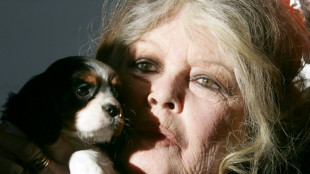 Brigitte Bardot widower slams sale of star's belongings

 Aston Villa compound Tottenham's misery despite late rally

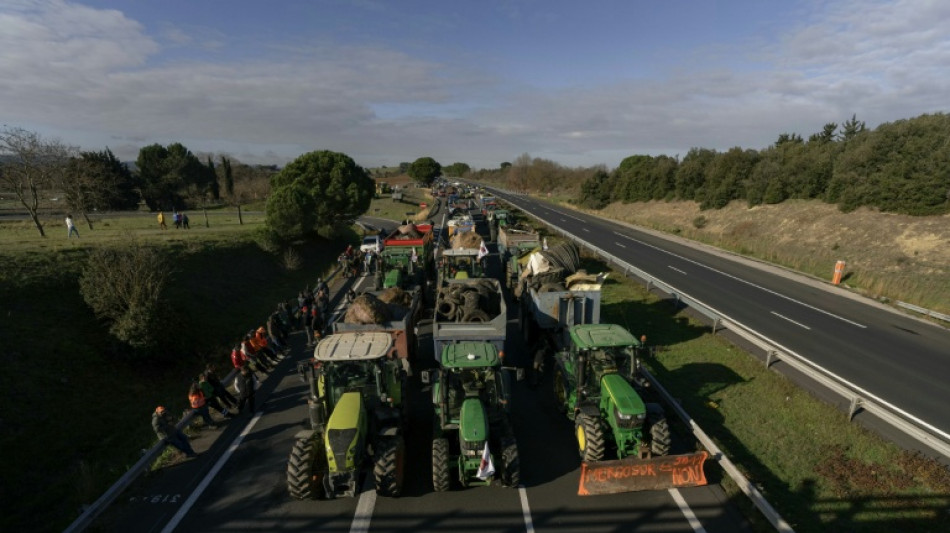
An outbreak of a highly contagious cattle disease has left France, the world's top exporter of live animals, struggling since June to prevent devastating impacts on its industry, amid growing protests by farmers.
But in 2016 several Balkan nations curtailed major epidemics of the same disease through swift action, mass vaccination and culls in about three months.
With no cases reported since 2018, Tamas Petrovic, head of virology at the Scientific Veterinary Institute in the Serbian city of Novi Sad, said the Balkans' response could offer lessons for this new outbreak.
- Early alert -
When lumpy skin disease (LSD), or nodular dermatitis, was detected in nearby Greece and Bulgaria, Serbia was placed on alert and formed a task force to monitor its spread, said Petrovic, who was involved in the response.
Although the viral disease poses no risk to humans, it severely affects milk production and fertility and can be fatal in cattle.
As the prolonged incubation of the disease made it difficult to track and contain, officials quickly turned to vaccination, the researcher said.
But with no registered vaccine in Europe at the time, imports were ordered from South Africa.
Within a week of its arrival in Serbia, the vaccine was tested, and the first cattle vaccinations began.
- Mass vaccination -
Mass vaccination was carried out in phases, with one million doses eventually administered across the country.
By first targeting large swaths of livestock in infected districts and then broadening out in three phases, the outbreak was quickly controlled, he said.
"We stopped the disease within two to three months after it entered the country," Petrovic said.
By 2018 the European Food Safety Authority (EFSA) said that more than 70 per cent of the Balkan region's cattle were vaccinated.
- Culls -
But vaccination alone did not stop the disease -- several culls were needed across the region.
"If the disease appears, the euthanasia of the entire herd is mandatory," Petrovic said.
But rapid action meant fewer than 1,000 cattle were slaughtered in Serbia, out of a total herd of close to 900,000, Petrovic said.
Insect controls across the entire region also helped prevent the spread of diseases through mosquitoes, ticks and flies.
- 'A good example' -
Petrovic said the Balkans proved to be "more than a good example" in controlling the disease.
Croatia's preventive vaccination, after EU approval, meant LSD was never reported in the country, despite outbreaks nearby in Serbia and Montenegro.
Its vaccination programme effectively stopped the disease from entering the bloc at the time, he said.
Bosnia and Herzegovina also carried out vaccination and booster campaigns between 2016 and 2018.
As of 2019, the EFSA said that the disease had not been detected in the region, and preventive vaccination programmes continued in high-risk areas.
The main lesson from that crisis was that experts must take the lead, Petrovic said.
"The state and politicians acted in line with the experts and followed what needed to be done -- and they did it," he insisted.
E.Borba--PC