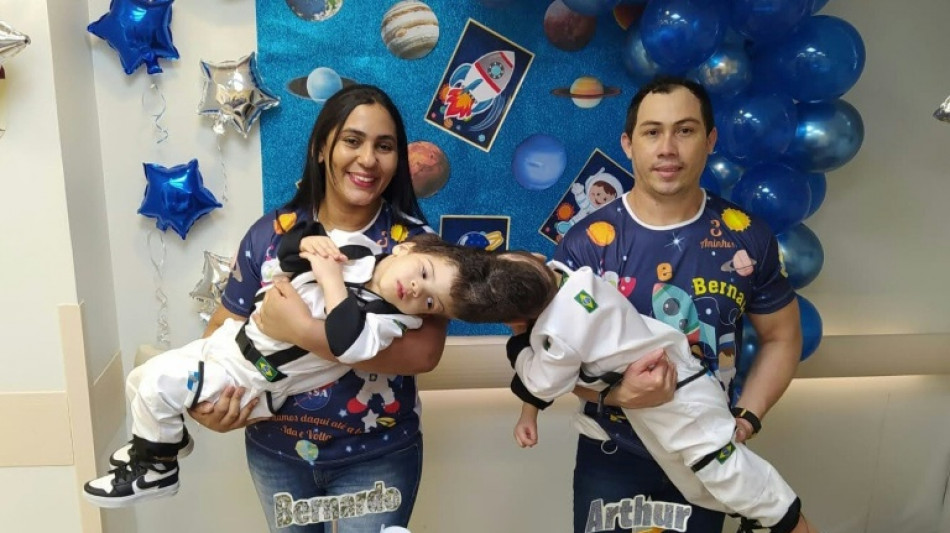
Conjoined twins separated with help of virtual reality in Brazil / Photo: Arthur PEREIRA - Fitamarela/AFP

 US warns of rapid escalation in Mideast war

 Iran 'put hearts on the court' to win Asian Games basketball bronze
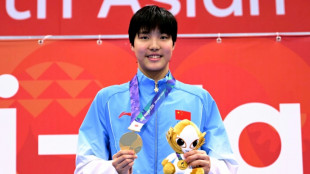
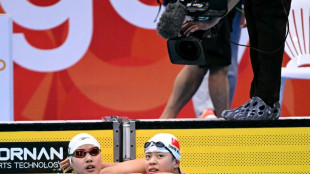 School girl Yu helps China dominate in Asian Games swimming openers

 Myanmar win first Asian Games teqball gold as Spain great Puyol watches

 China's 13-year-old Yu scorches to first major gold at Asian Games

 Russians vote on last day of parliamentary elections

 Hong Kong pays final respects to former city leader Tung

 Typhoon put people off Asian Games opening ceremony, official says

 China's 13-year-old Yu cruises as Asian Games swimming begins

 AI 'warning shots' focus Beijing on national security risks

 Philippine tribe in limbo over US-led tech hub

 Leo XIV, first US pope transcends his restrained style

 Singer Ed Sheeran says Gaza situation 'unjustifiable' following controversy

 In 'Tenzing', a Sherpa mountaineer gets his due

 Ed Sheeran set to return to stage after Palestinian controversy

 Toulouse edge Vannes, Lyon beat Pau to take Top 14 summit

 Germans arrested for Louvre stunt in Mona Lisa hall

 Saudi-led coalition says Houthis fired ballistic missile at Riyadh

 France's debt climbs to highest since 1978: ministry

 McIlroy two shots off the lead at Wentworth after eagle on 18

 Martinez brace saves Inter in Serie A top-two clash with Roma

 Rosenior abused but guides Paris FC past old club Strasbourg

 Seven-try Lyon beat Pau, climb to Top 14 summit

 Brighton defeat a 'big lesson' against complacency for Arsenal, says Arteta

 Thousands protest inaction over climate crisis in Switzerland

Conjoined twins born in Brazil with a fused head and brain have been separated in what doctors described Monday as the most complex surgery of its kind, which they prepared for using virtual reality.
Arthur and Bernardo Lima were born in 2018 in the state of Roraima in northern Brazil as craniopagus twins, an extremely rare condition in which the siblings are fused at the cranium.
Joined at the top of the head for nearly four years -- most of that spent in a Rio de Janeiro hospital outfitted with a custom bed -- the brothers are now able to look each other in the face for the first time, after a series of nine operations culminating in a marathon 27-hour surgery to separate them.
London-based medical charity Gemini Untwined, which helped carry out the procedure, described it as the "most challenging and complex separation to date," given that the boys shared several vital veins.
"The twins had the most serious and difficult version of the condition, with the highest risk of death for both," said neurosurgeon Gabriel Mufarrej of the Paulo Niemeyer State Brain Institute (IECPN) in Rio, where the procedure was performed.
"We're very satisfied with the outcome, because no one else believed in this surgery at first, but we always believed there was a chance," he said in a statement.
Members of the medical team, which included nearly 100 staff, prepared for the delicate final stages of the surgery on June 7 and 9 with the help of virtual reality, said Gemini Untwined.
Using brain scans to create a digital map of the boys' shared cranium, surgeons practiced for the procedure in a trans-Atlantic virtual-reality trial surgery.
British neurosurgeon Noor ul Owase Jeelani, the lead surgeon for Gemini Untwined, called the virtual reality prep session "space-age stuff."
"It's just wonderful, it's really great to see the anatomy and do the surgery before you actually put the children at any risk," he told British news agency PA.
"You can imagine how reassuring that is for the surgeons... To do it in virtual reality was just really man-on-Mars stuff."
Pictures and videos released by medical staff showed the boys lying side-by-side on a hospital bed post-surgery, little Arthur reaching out to touch his brother's hand.
In tears, the boys' mother, Adriely Lima, described the family's relief.
"We've been living in the hospital for nearly four years," she said.
E.Raimundo--PC