-
 Germans vote in elections threatening fresh blow to Merz
-
Russians vote on last day of parliamentary elections

-
 US fears rapid escalation in Mideast after Houthis attack Riyadh
-
Hong Kong pays final respects to former city leader Tung

-
 Japan triathlete Hojo wins first gold of Asian Games
-
Typhoon put people off Asian Games opening ceremony, official says

-
 IOC president impressed by 'beautiful' Asian Games wooden huts
-
China's 13-year-old Yu cruises as Asian Games swimming begins

-
 First Asian Games gold goes to Japan as China's 13-year-old Yu lights up pool
-
AI 'warning shots' focus Beijing on national security risks

-
 Data centre command hub keeps AI up and running
-
Philippine tribe in limbo over US-led tech hub

-
 Pope Leo in France: the issues on the table
-
Leo XIV, first US pope transcends his restrained style

-
 Packing for a pope: behind the scenes on foreign trips
-
Singer Ed Sheeran says Gaza situation 'unjustifiable' following controversy

-
 Republicans find transgender issues a powerful political weapon in midterm campaigning
-
In 'Tenzing', a Sherpa mountaineer gets his due

-
 German state elections threaten new shock waves for Merz
-
Ed Sheeran set to return to stage after Palestinian controversy

-
 Chile's Bachelet quits race to be next UN chief
-
Toulouse edge Vannes, Lyon beat Pau to take Top 14 summit

-
 Raphinha treble fires perfect Barca to win at Sevilla
-
Germans arrested for Louvre stunt in Mona Lisa hall

-
 Thiam makes winning heptathlon return at Decastar meet
-
Saudi-led coalition says Houthis fired ballistic missile at Riyadh

-
 Czechs beat USA to qualify for Davis Cup finals
-
France's debt climbs to highest since 1978: ministry

-
 Dortmund sink Stuttgart to climb to Bundesliga summit
-
McIlroy two shots off the lead at Wentworth after eagle on 18

-
 Trump says will not tolerate attempts to slow AI growth
-
Martinez brace saves Inter in Serie A top-two clash with Roma

-
 'It has to stop': runners protest women's murders in S.Africa district
-
Rosenior abused but guides Paris FC past old club Strasbourg

-
 Fire erupts near Riyadh airport as Houthis claim strikes
-
Seven-try Lyon beat Pau, climb to Top 14 summit

-
 Cuba works to restore power after another blackout
-
Brighton defeat a 'big lesson' against complacency for Arsenal, says Arteta

-
 England thrash Sri Lanka again to return to top of T20 rankings
-
Thousands protest inaction over climate crisis in Switzerland

-
 Arsenal thrashed by Brighton, sorry Spurs lose again
-
Carapaz out of cycling world championships

-
 South Korea, Austria qualify for Davis Cup finals
-
'Fragile' Tottenham beaten by Aston Villa despite late rally

-
 Seare shocks Ingebrigtsen to win world 5km gold
-
Mourinho hails Real Madrid grit before Atletico derby clash

-
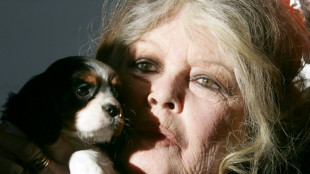 Brigitte Bardot widower slams sale of star's belongings
-
Martin wins Austrian MotoGP sprint after Acosta crash

-
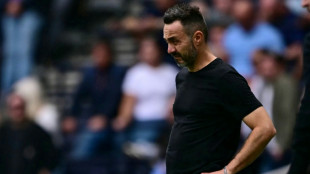 Aston Villa compound Tottenham's misery despite late rally
-
Japan edge Fiji to win Pacific Nations Cup

Ebola and hantavirus outbreaks sign of our 'dangerous' times: WHO
The deadly hantavirus and Ebola outbreaks are only the latest crises in "dangerous and divisive" times, the World Health Organization chief said Monday.
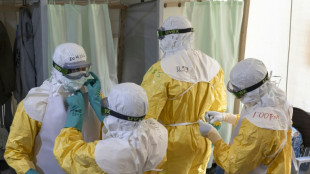
Opening the body's annual decision-making assembly in Geneva, Tedros Adhanom Ghebreyesus spoke of the new Ebola outbreak in the Democratic Republic of Congo, which he declared an international health emergency over the weekend, and the rare hantavirus outbreak on the MV Hondius cruise ship.
The two "are just the latest crises in our troubled world", he told the gathering of health ministers and high level delegates from around the world.
"From conflicts to economic crises to climate change and aid cuts, we live in difficult, dangerous and divisive times," said Tedros, who was expected to elaborate on the risks during his main address to the week-long World Health Assembly on Tuesday morning.
Spanish Prime Minister Pedro Sanchez, whose country has been hailed for allowing the stricken MV Hondius to anchor off its Canary Islands last week for the evacuation of passengers and crew, stressed that "protecting others is the best way to protect ourselves".
"No country can save itself" on its own, he said in a surprise address to the assembly, receiving a standing ovation.
Currently, "defending common sense has become a form of rebellion", he charged, lamenting an ongoing "pandemic of egoism".
Th 2026 World Health Assembly comes after a particularly difficult year for WHO, weakened by the announced US withdrawal and deep funding cuts.
"The WHO's budget has been reduced by around 21 percent, or nearly one billion dollars. Hundreds of jobs have been eliminated, programs have been reduced," Swiss Health Minister Elisabeth Baume-Schneider noted in her address.
"The WHO had to, and was able to, undergo profound reform in the midst of the emergency."
Suerie Moon, co-director of the Global Health Centre at the Geneva Graduate Institute, also suggested WHO had weathered the storm, and that the hantavirus crisis provided "a clear illustration of why the world needs an effective, trusted, impartial, reliably-funded WHO", she added.
- Sensitive issues -
On the first day of the assembly, countries refused once again to add the thorny issue of a request from Taiwan, which China claims is part of its territory, to regain the observer status it held between 2009 and 2016.
Other sensitive issues on the table include Ukraine, the Palestinian territories and Iran, which could spark heated debate.
Disagreement between wealthy and developing nations has meanwhile blocked closure on the WHO's landmark 2025 pandemic treaty.
Countries had aimed to finalise during this year's assembly a key annex to the agreement, which deals with sharing access to pathogens with pandemic potential, then sharing benefits derived from them such as vaccines, tests and treatments.
But they appeared set to grant themselves another year to finalise stalled negotiations.
- US, Argentina withdrawals -
It also remains unclear what, if anything, will be decided on the withdrawal of the United States and Argentina.
US President Donald Trump handed in a one-year notice to withdraw from WHO on his first day back in office in January 2025. Argentina soon followed suit.
The WHO, whose constitution does not include a withdrawal clause, has not confirmed either withdrawal.
The United States reserved the right to withdraw when it joined the WHO in 1948 -- on condition of giving one year's notice and meeting its financial obligations in full for that fiscal year.
While the notice period has expired, Washington has still not paid its 2024 or 2025 dues, owing around $260 million.
When WHO's executive board met in January, Israel submitted a resolution to approve Argentina's withdrawal -- something countries are expected to discuss during the assembly -- but not a word was said about the US.
Diplomats and observers indicated there was broad agreement that it would be better to maintain a grey zone around the US status.
Much of this week's discussions will centre on whether to launch a formal reform process for the so-called "global health architecture" -- a mishmash of organisations that do not always work together and often overlap.
"Six years after the last global pandemic, Covid-19, the world health architecture is changing rapidly," Ghana President John Dramani Mahama told the assembly.
"We are witnessing the end of an era. We must have the courage to build the next one."
A.Santos--PC