Dangerous livestock pest case confirmed in Texas / Photo: OLIVIER CHASSIGNOLE - AFP

 Germans vote in elections threatening fresh blow to Merz

 US fears rapid escalation in Mideast after Houthis attack Riyadh

 Japan triathlete Hojo wins first gold of Asian Games

 IOC president impressed by 'beautiful' Asian Games wooden huts

 First Asian Games gold goes to Japan as China's 13-year-old Yu lights up pool

 Data centre command hub keeps AI up and running

 Pope Leo in France: the issues on the table

 Packing for a pope: behind the scenes on foreign trips

 Republicans find transgender issues a powerful political weapon in midterm campaigning

 German state elections threaten new shock waves for Merz

 Chile's Bachelet quits race to be next UN chief

 Raphinha treble fires perfect Barca to win at Sevilla

 Thiam makes winning heptathlon return at Decastar meet

 Czechs beat USA to qualify for Davis Cup finals

 Dortmund sink Stuttgart to climb to Bundesliga summit

 Trump says will not tolerate attempts to slow AI growth

 'It has to stop': runners protest women's murders in S.Africa district

 Fire erupts near Riyadh airport as Houthis claim strikes

 Cuba works to restore power after another blackout

 England thrash Sri Lanka again to return to top of T20 rankings

 Arsenal thrashed by Brighton, sorry Spurs lose again

 South Korea, Austria qualify for Davis Cup finals

 Seare shocks Ingebrigtsen to win world 5km gold

 Brigitte Bardot widower slams sale of star's belongings

 Aston Villa compound Tottenham's misery despite late rally

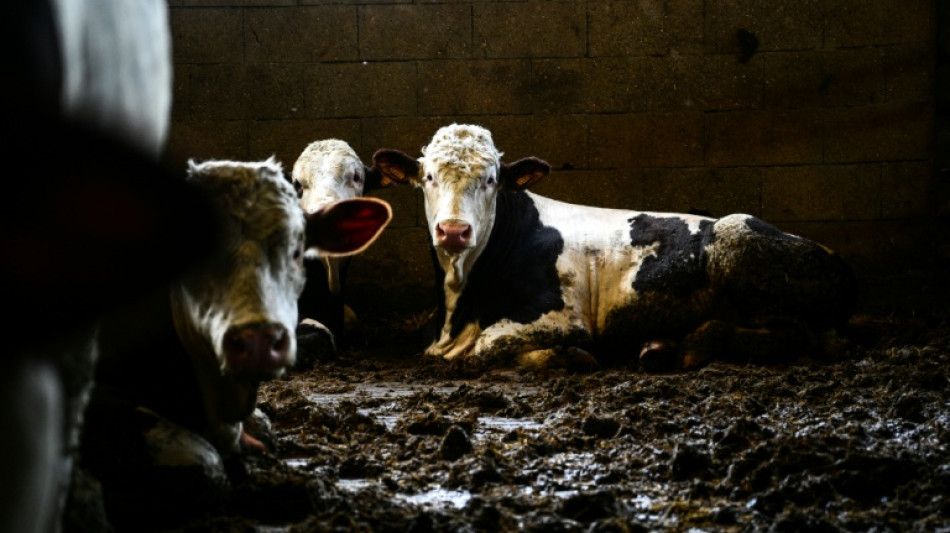
The United States said on Thursday that the New World screwworm (NWS) fly, a dangerous livestock pest whose flesh-eating larvae can kill cattle, has been detected in a calf in south Texas.
"We have a confirmed positive detection of New World screwworm in a three-week-old calf," US Agriculture Secretary Brooke Rollins said in a briefing.
She said "immediate action" to contain and eradicate the parasite that has raised fears over the beef supply was underway.
The NWS fly was eradicated in the United States in 1966.
But Florida experienced an outbreak in 2016 that primarily impacted deer, and was eliminated the following year, according to the US Department of Agriculture.
It has remained present in South America, and in recent years has moved northward, triggering alarm.
The impacted calf this time around had larvae in its umbilical area, the USDA said.
Michael Schmoyer -- the associate administrator for the country's Animal and Plant Health Inspection Service and head of the NWS Directorate -- said the infested beef calf "is not a danger to the food supply."
"The screw worm can be detected easily, and it can be treated," he told journalists.
Officials added that the calf was undergoing treatment and improving, and emphasized that the worms do not infest food sources like meat, fruit or vegetables.
The flies lay their eggs in open wounds or mucous membranes of warm-blooded animals, where they hatch into larvae and feed on flesh. Left untreated, the infestation can be deadly, and the parasites can quickly spread.
Texas has established a 12-mile (20-kilometer) quarantine zone, meaning all warm-blooded animals including pets must be inspected before leaving the zone.
- Sterilization by ground and sky -
The fly had been eradicated in the US thanks in large part by dropping millions of sterile flies to mate with wild females.
US officials said some four million sterile flies were already being released weekly from the sky, and that some four million more in the pupae stage were being deployed in ground release chambers.
Infections in humans are not common, the USDA said, but added that individuals who detect signs like suspicious lesions should immediately seek medical attention.
Jennifer Bloodgood, an assistant professor of practice and wildlife veterinarian at Cornell University, said to AFP in a statement that the detection in Texas "underscores the need for continued vigilance and collaboration among livestock, wildlife, and public health communities."
"The good news is that we have successfully eradicated New World screwworm from the United States before," Bloodgood said. "This detection should not cause panic, but it should reinforce the importance of awareness."
Feeder cattle futures at the Chicago Mercantile Exchange rose Thursday as the market feared an eventual decline in available supply.
A USDA study last year estimated a screwworm resurgence in Texas could cost the state's economy $1.8 billion.
A.Silveira--PC