WHO urges caution after dog catches monkeypox / Photo: Ernesto BENAVIDES - AFP

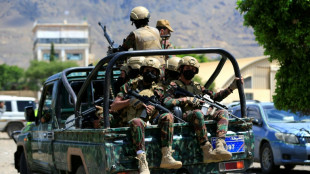 US warns of rapid escalation in Mideast war

 Iran 'put hearts on the court' to win Asian Games basketball bronze

 School girl Yu helps China dominate in Asian Games swimming openers

 Myanmar win first Asian Games teqball gold as Spain great Puyol watches

 China's 13-year-old Yu scorches to first major gold at Asian Games

 Russians vote on last day of parliamentary elections

 Hong Kong pays final respects to former city leader Tung

 Typhoon put people off Asian Games opening ceremony, official says

 China's 13-year-old Yu cruises as Asian Games swimming begins

 AI 'warning shots' focus Beijing on national security risks

 Philippine tribe in limbo over US-led tech hub

 Leo XIV, first US pope transcends his restrained style

 Singer Ed Sheeran says Gaza situation 'unjustifiable' following controversy

 In 'Tenzing', a Sherpa mountaineer gets his due

 Ed Sheeran set to return to stage after Palestinian controversy

 Toulouse edge Vannes, Lyon beat Pau to take Top 14 summit

 Germans arrested for Louvre stunt in Mona Lisa hall

 Saudi-led coalition says Houthis fired ballistic missile at Riyadh

 France's debt climbs to highest since 1978: ministry

 McIlroy two shots off the lead at Wentworth after eagle on 18

 Martinez brace saves Inter in Serie A top-two clash with Roma

 Rosenior abused but guides Paris FC past old club Strasbourg

 Seven-try Lyon beat Pau, climb to Top 14 summit

 Brighton defeat a 'big lesson' against complacency for Arsenal, says Arteta

 Thousands protest inaction over climate crisis in Switzerland

The World Health Organization called Wednesday for people infected with monkeypox to avoid exposing animals to the virus following a first reported case of human-to-dog transmission.
A first case of human-to-dog transmission of monkeypox -- between two men and their Italian greyhound living together in Paris -- was reported last week in the medical journal The Lancet.
"This is the first case reported of human-to-animal transmission... and we believe it is the first instance of a canine being infected," Rosamund Lewis, the WHO's technical lead for monkeypox, told reporters.
Experts had been aware of the theoretical risk that such a jump could happen, she said, adding that public health agencies had already been advising those suffering from the disease to "isolate from their pets".
She also said "waste management is critical" to lowering the risk of contaminating rodents and other animals outside the household.
- Species barrier -
When viruses jump the species barrier it often sparks concern that they could mutate dangerously.
Lewis stressed that so far there were no reports that was happening with monkeypox.
But she acknowledged that "as soon as the virus moves into a different setting in a different population, there is obviously a possibility that it will develop differently and mutate differently".
The main concern revolves around animals outside of the household.
"The more dangerous situation... is where a virus can move into a small mammal population with high density of animals," WHO emergencies director Michael Ryan told reporters.
"It is through the process of one animal infecting the next and the next and the next that you see rapid evolution of the virus."
He stressed though that there was little cause for concern around household pets.
"I don't expect the virus to evolve any more quickly in one single dog than in one single human," he said, adding that while "we need to remain vigilant... pets are not a risk."
Monkeypox was originally identified in monkeys kept for research in Denmark in 1958, though it is found most frequently in rodents.
The disease was first discovered in humans in 1970, with the spread since then mainly limited to certain West and Central African countries.
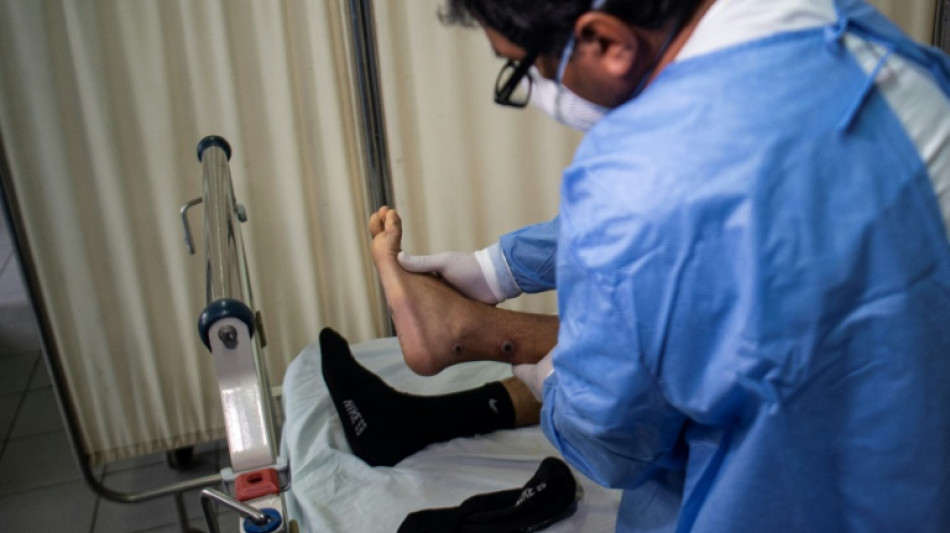
But in May, cases of the disease, which causes fever, muscular aches and large boil-like skin lesions, began spreading rapidly around the world, mainly among men who have sex with men.
Worldwide, more than 35,000 cases have been confirmed since the start of the year in 92 countries, and 12 people have died, according to the WHO, which has designated the outbreak a global health emergency.
- 'Not a silver bullet' -
With global case numbers jumping by 20 percent in the past week alone, the UN health agency is urging all countries to do more to rein in the spread, including ensuring at-risk populations have access to services and information about the dangers and how to protect themselves.
There is also a vaccine, originally developed for smallpox, but it is in short supply.
Lewis also stressed that there was still little data on the effectiveness of the vaccine in protecting against monkeypox in the current outbreak.
While no randomised control trials had been conducted yet, she said there were reports of breakthrough cases following vaccination, indicating "the vaccine is not 100 percent".
Pointing to limited studies in the 1980s suggesting that the smallpox vaccines used at the time might offer 85-percent protection against monkeypox, she said the breakthrough cases were "not really a surprise".
"But it reminds us that the vaccine is not a silver bullet," she said.
A.P.Maia--PC