Hong Kongers picnic to avoid Covid-tracing app

 Germans vote in elections threatening fresh blow to Merz
 US fears rapid escalation in Mideast after Houthis attack Riyadh
 Japan triathlete Hojo wins first gold of Asian Games

 IOC president impressed by 'beautiful' Asian Games wooden huts

 First Asian Games gold goes to Japan as China's 13-year-old Yu lights up pool
 Data centre command hub keeps AI up and running

 Pope Leo in France: the issues on the table

 Packing for a pope: behind the scenes on foreign trips

 Republicans find transgender issues a powerful political weapon in midterm campaigning

 German state elections threaten new shock waves for Merz

 Chile's Bachelet quits race to be next UN chief

 Raphinha treble fires perfect Barca to win at Sevilla

 Thiam makes winning heptathlon return at Decastar meet

 Czechs beat USA to qualify for Davis Cup finals

 Dortmund sink Stuttgart to climb to Bundesliga summit

 Trump says will not tolerate attempts to slow AI growth

 'It has to stop': runners protest women's murders in S.Africa district

 Fire erupts near Riyadh airport as Houthis claim strikes

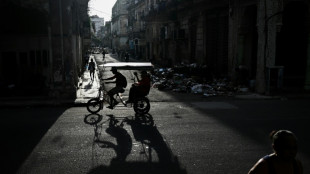 Cuba works to restore power after another blackout

 England thrash Sri Lanka again to return to top of T20 rankings

 Arsenal thrashed by Brighton, sorry Spurs lose again

 South Korea, Austria qualify for Davis Cup finals

 Seare shocks Ingebrigtsen to win world 5km gold

 Brigitte Bardot widower slams sale of star's belongings

 Aston Villa compound Tottenham's misery despite late rally

When Hong Kong made a Covid check-in app mandatory at restaurants, friends Birdy and Bu -- wary of government tracking -- decided to avoid eateries entirely and go for picnics instead.
The idea caught fire: their private social media picnic group has swelled from 50 in December to more than 6,000 members, as many look to avoid sharing data in a city where distrust of the Beijing-backed authorities runs deep.
Instead of scanning QR codes at restaurants with the government's "Leave Home Safe" app, they simply order takeaway and find spots to eat with friends.
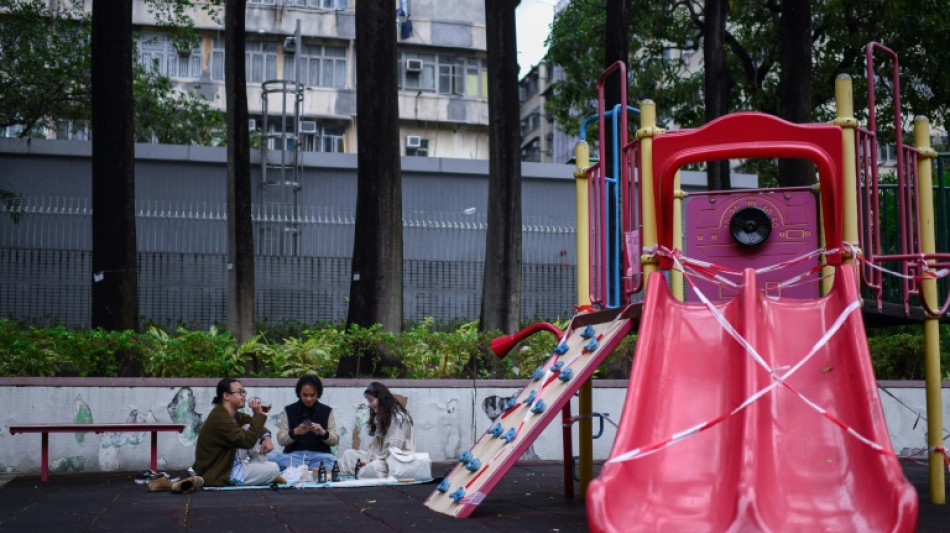
"I just don't like being forced," Birdy told AFP over a weekend picnic with Bu and another friend Dominic at a small park, their food and drinks neatly arranged on a blanket next to a playground.
Birdy and Bu -- who declined to share their full names over safety concerns -- named their picnic group "Leave Home Wild".
Hong Kong has kept the coronavirus at bay with a relatively tiny Covid caseload, thanks to some of the world's strictest border controls and social distancing requirements.
In December, the government made it compulsory for all adults under 65 to log their presence at various public venues -- including eateries, cinemas and gyms -- with the official app.
Similar apps have been deployed around the world during the pandemic.
But in Hong Kong, acceptance of the technology is unavoidably linked with the public's relationship with the authorities.
"I am so frustrated," one user wrote in the picnic group. "But I will never scan that code for eating inside a restaurant."
- A 'problematic' app -
Hong Kong is in the grip of a crackdown on dissent, with China remoulding the city in its own authoritarian image following the huge and sometimes violent democracy protests of 2019.
The clampdown has snuffed out protests but public trust in the government has plummeted to historic lows, complicating the fight against the pandemic.
This distrust was among the factors blamed for the city's sluggish take-up of Covid vaccines -- for many, not getting a shot was a way to thumb their noses at the government.
It has come into play with the Covid tracking app too -- fears have swirled about how the information it collects will be used, despite assurances about data security from the authorities.
Some are particularly concerned about how the app links with the far more intrusive tracking system in mainland China.
"I think the app is quite problematic, especially given the current political circumstances in Hong Kong," said data protection specialist Kwong Chung-ching.
"The source code... has never been open for us so there is no way for people to check where data goes and how it operates."
Currently, Leave Home Safe stores information linked to phone numbers instead of names. It does not track the users' location, instead relying on the QR code check-ins to determine where they have been.
Users are informed through the app if they were at a venue where the virus was detected.
However, those logs will be shared with Chinese authorities when people use a special Hong Kong health code to travel to the mainland.
That code requires real names, phone numbers, IDs and home addresses.
- 'Lying flat' -
Despite the privacy concerns, Hong Kong is pressing ahead with the tech.
Last month, it said the Leave Home Safe app would double as a vaccine pass, with a valid Covid inoculation record becoming a requirement for many public venues.
Failure to comply with check-in rules at locations such as restaurants can carry fines as high as HK$5,000 (US$640) for customers, and could land owners in jail for up to six months with a maximum fine of HK$50,000.
Authorities in Hong Kong have shown little tolerance for dissent, and with a "patriots only" electoral system in place, there is negligible push-back to the government in the legislature.
Those avoiding the app are keen to steer clear of the "resistance" label.
Instead of standing up to authorities, co-founder Bu said they are "lying flat" -- the first rule in their group is members should not urge others to boycott the app.
"People can neither express their concerns via elected legislators nor protest and rally on streets," he said.
"What other choice is left except for not participating?"
As the app becomes a necessity at more places, it is uncertain how long they can avoid it.
Bu and Dominic said they bought separate phones solely for the app.
But Birdy said she will avoid it for as long as she can -- a position that has meant she cannot attend her best friend's wedding reception.
"What kind of relationship do I have with the government that allows it to track me so closely?"
M.Carneiro--PC