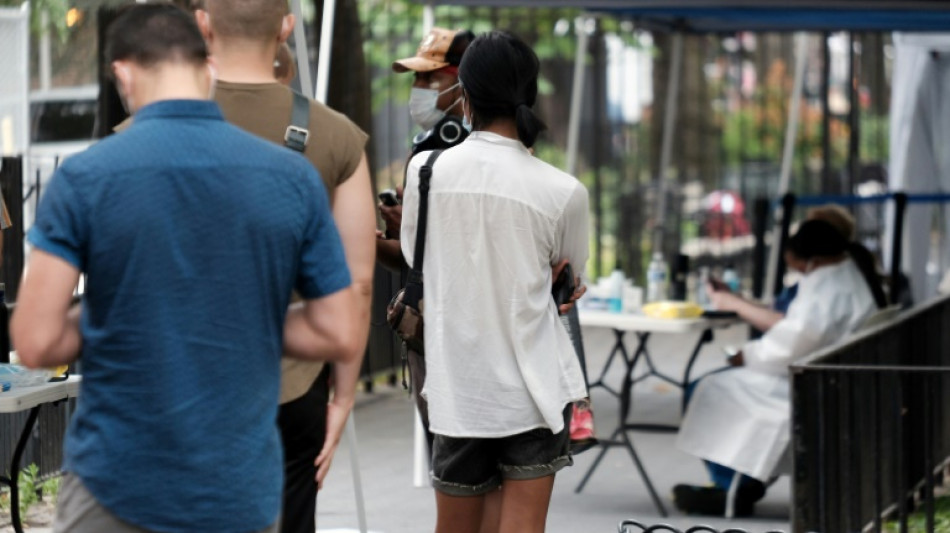
US begins clinical trial to test monkeypox vaccine / Photo: SPENCER PLATT - GETTY IMAGES NORTH AMERICA/AFP/File

 US warns of rapid escalation in Mideast war

 Iran 'put hearts on the court' to win Asian Games basketball bronze
 School girl Yu helps China dominate in Asian Games swimming openers
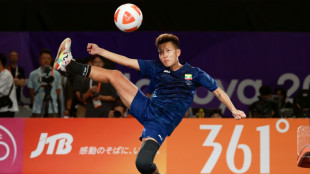 Myanmar win first Asian Games teqball gold as Spain great Puyol watches

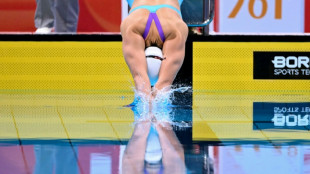 China's 13-year-old Yu scorches to first major gold at Asian Games

 Russians vote on last day of parliamentary elections

 Hong Kong pays final respects to former city leader Tung

 Typhoon put people off Asian Games opening ceremony, official says

 China's 13-year-old Yu cruises as Asian Games swimming begins

 AI 'warning shots' focus Beijing on national security risks

 Philippine tribe in limbo over US-led tech hub

 Leo XIV, first US pope transcends his restrained style

 Singer Ed Sheeran says Gaza situation 'unjustifiable' following controversy

 In 'Tenzing', a Sherpa mountaineer gets his due

 Ed Sheeran set to return to stage after Palestinian controversy

 Toulouse edge Vannes, Lyon beat Pau to take Top 14 summit

 Germans arrested for Louvre stunt in Mona Lisa hall

 Saudi-led coalition says Houthis fired ballistic missile at Riyadh

 France's debt climbs to highest since 1978: ministry

 McIlroy two shots off the lead at Wentworth after eagle on 18

 Martinez brace saves Inter in Serie A top-two clash with Roma

 Rosenior abused but guides Paris FC past old club Strasbourg

 Seven-try Lyon beat Pau, climb to Top 14 summit

 Brighton defeat a 'big lesson' against complacency for Arsenal, says Arteta

 Thousands protest inaction over climate crisis in Switzerland

US health authorities announced Thursday they would carry out a clinical trial to test different dosing strategies of the Jynneos monkeypox vaccine, amid uncertainty over its effectiveness.
The trial will enroll 200 adults aged 18-50 across the country, and is sponsored by the National Institute of Allergy and Infectious Diseases.
The Jynneos vaccine, manufactured by Denmark-based Bavarian Nordic, has been approved by the United States for the prevention of smallpox and monkeypox in people aged 18 and older.
But while the highest-risk group, men who have sex with men, are encouraged to get the vaccine, there is no clear picture of how well it works in real world settings.
The new trial isn't designed to produce an efficacy estimate, but rather measure the immune response of different dosing levels and administration methods.
"NIAID's trial of JYNNEOS will provide important information on the immunogenicity, safety, and tolerability of alternative dosing approaches that would expand the current supply of vaccine," said NIAID director Anthony Fauci in a statement.
Among the participants, one group will be injected subcutaneously -- that is, under the skin. The vaccine is based on attenuated virus that is modified so it can't replicate, and is given in two doses 28 days apart.
A second group will receive their shots intradermally, meaning between the layers of the skin. This strategy is meant to expand the availability of vaccines because it uses one-fifth of the standard dose.
A third group will also receive their shots intradermally, but at half the dosing level of the second group.
Scientists will test the peak immune responses and compare the side effects across the groups.
President Joe Biden's administration has bet heavily on the Jynneos vaccine to stem the spread of monkeypox, which has affected more than 20,000 people in the United States since May.
But the question of how well the shot prevents infection versus minimizing disease would require further study to answer.
The current global outbreak is primarily affecting gay and bisexual men.
Historically, the virus has been spread via direct contact with lesions, body fluids and respiratory droplets, and sometimes through indirect contamination via surfaces such as shared bedding.
But in this outbreak, there is preliminary evidence that sexual transmission may also play a role.
The virus causes painful skin lesions and flu-like symptoms.
Most people fully recover, but the disease can cause serious complications, including bacterial infections, brain inflammation and death.
E.Raimundo--PC