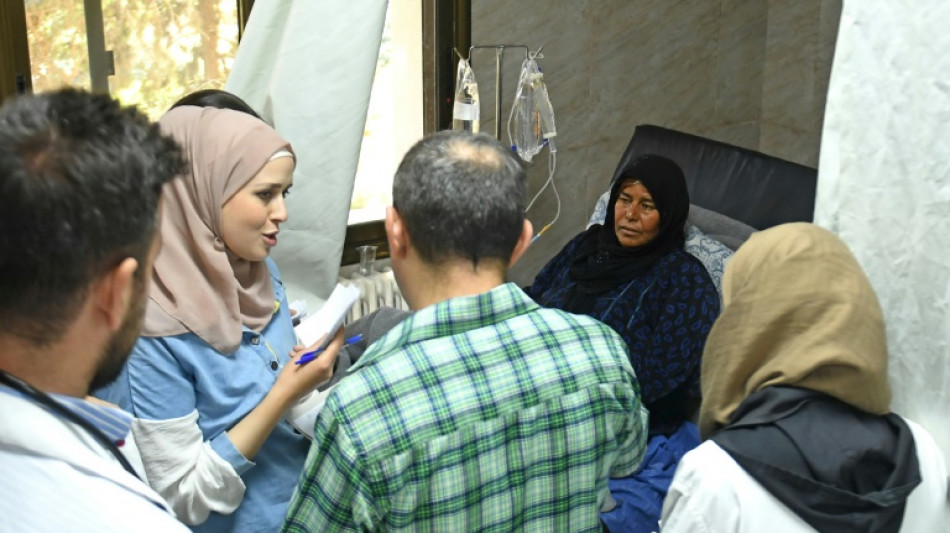
Syria cholera outbreak at risk of spreading: WHO / Photo: - - AFP

 Kospi Falls Below 5,000 as U.S. AI Regulation Fears Trigger Circuit Breaker

 Valsoft's TAG Software Group Enters the Content Operations Market with the Acquisition of Chalco

 South Korea Proposes Fourth Delay of Cryptocurrency Gains Tax to 2029

 ASIC Fines Mona Museum Owner's Company for Late Financial Report

 Business Leaders Criticize Productivity Commission Inquiry Scope

The World Health Organization warned Tuesday of a "very high" risk of cholera spreading across Syria after the country recorded its first cases since 2009.
"The risk of cholera spreading to other governorates is very high," the WHO said, after cases were recorded in at least five of the country's 14 provinces.
"The source of infection could be linked to people drinking water from untreated sources," or "food contamination due to irrigating plants with contaminated water," the WHO said in a statement.
On Monday, the Syrian health ministry reported two cholera deaths in government-held areas.
On Saturday, Kurdish authorities reported three deaths in areas of northern and eastern Syria under their control.
The WHO said the cases were the first reported in Syria since 2009, when 342 cases were confirmed in the eastern province of Deir Ezzor and the northern province of Raqa.
The disease is generally contracted from contaminated food or water, and causes diarrhoea and vomiting.
It can spread in residential areas that lack proper sewerage networks or mains drinking water.
A decade of civil war has damaged two thirds of Syria's water treatment plants, half of its pumping stations and one third of its water towers, the United Nations Children's Fund (UNICEF) has said.
Nearly half the population relies on alternative and often unsafe sources of water while at least 70 percent of sewage goes untreated, it added.
The UN issued an urgent appeal to donor countries on Monday for additional funding to battle the outbreak.
"The outbreak presents a serious threat to people in Syria and the region," the UN Resident and Humanitarian Coordinator in Syria, Imran Riza said.
"Swift and urgent action is needed to prevent further illness and death."
The UN said the source of the outbreak "is believed to be linked to people drinking unsafe water from the Euphrates River and using contaminated water to irrigate crops, resulting in food contamination."
An outbreak of cholera hit neighbouring Iraq this summer for the first time since 2015.
Worldwide, the disease affects between 1.3 million and four million people each year, killing between 21,000 and 143,000 people.
O.Gaspar--PC