The Ebola virus: profile of a dreaded killer / Photo: © AFP

 US warns of rapid escalation in Mideast war

 Iran 'put hearts on the court' to win Asian Games basketball bronze

 School girl Yu helps China dominate in Asian Games swimming openers

 Myanmar win first Asian Games teqball gold as Spain great Puyol watches

 China's 13-year-old Yu scorches to first major gold at Asian Games

 Russians vote on last day of parliamentary elections

 Hong Kong pays final respects to former city leader Tung

 Typhoon put people off Asian Games opening ceremony, official says

 China's 13-year-old Yu cruises as Asian Games swimming begins

 AI 'warning shots' focus Beijing on national security risks

 Philippine tribe in limbo over US-led tech hub

 Leo XIV, first US pope transcends his restrained style

 Singer Ed Sheeran says Gaza situation 'unjustifiable' following controversy

 In 'Tenzing', a Sherpa mountaineer gets his due

 Ed Sheeran set to return to stage after Palestinian controversy

 Toulouse edge Vannes, Lyon beat Pau to take Top 14 summit

 Germans arrested for Louvre stunt in Mona Lisa hall

 Saudi-led coalition says Houthis fired ballistic missile at Riyadh

 France's debt climbs to highest since 1978: ministry

 McIlroy two shots off the lead at Wentworth after eagle on 18

 Martinez brace saves Inter in Serie A top-two clash with Roma

 Rosenior abused but guides Paris FC past old club Strasbourg

 Seven-try Lyon beat Pau, climb to Top 14 summit

 Brighton defeat a 'big lesson' against complacency for Arsenal, says Arteta

 Thousands protest inaction over climate crisis in Switzerland

The highly contagious Ebola virus has claimed more than 15,000 lives since it was first identified in central Africa in 1976.
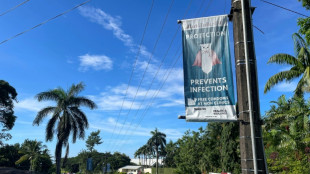
On Tuesday, Uganda announced its first Ebola fatality since 2019 in an outbreak in the central district of Mubende.
Here is a factfile on one of the world's most deadliest diseases:
- Origins -
Ebola is a viral haemorrhagic fever that was first discovered in the Democratic Republic of Congo (DR Congo).
Five of the virus species are known to cause disease in humans -- Zaire, Sudan, Bundibugyo, Reston and Tai Forest.
The first three have resulted in serious outbreaks in Africa.
The 24-year-old man whose death was announced Tuesday in Uganda tested positive for the Sudan strain.
- Transmission -
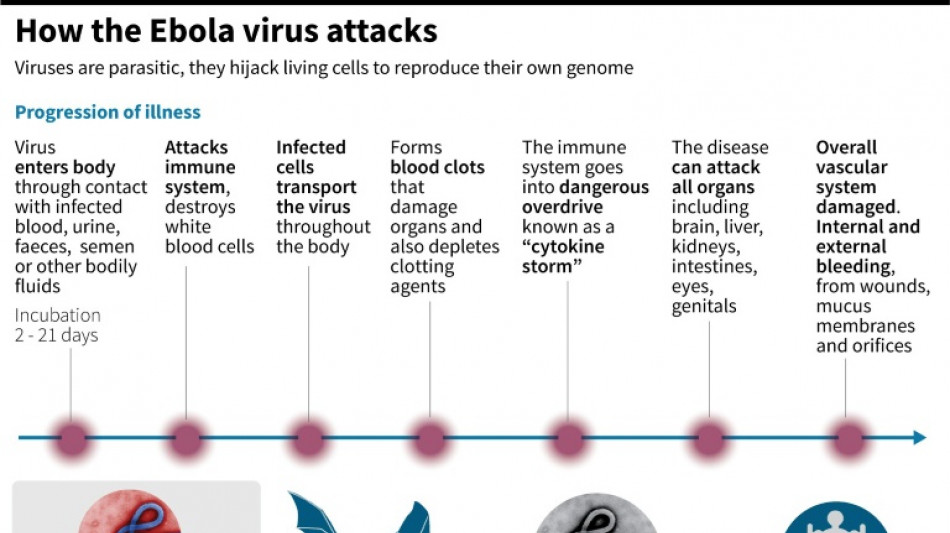
The virus' natural reservoir animal is suspected to be a species of fruit bat, which does not itself fall ill but can pass the disease on to primates, including humans. Humans become exposed to the virus if they kill or butcher infected bats for food.
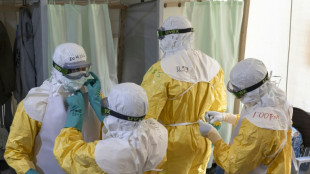
Among humans, the virus is passed on by contact with the blood, body fluids, secretions or organs of an infected or recently deceased person.
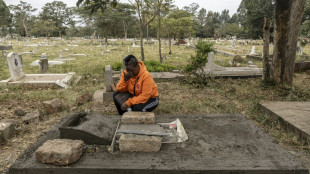
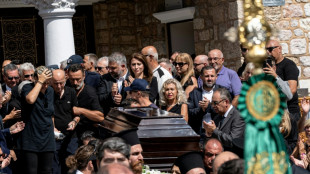
Those infected do not become contagious until symptoms appear. They become more and more contagious until just after their death, which poses great risks during funerals.
Death rates are high, at around 50 percent on average of those infected, and up to 90 percent for some epidemics, World Health Organization (WHO) data show.
- Symptoms -
Following an incubation period of between two and 21 days, Ebola develops into a high fever, weakness, intense muscle and joint pain, headaches and a sore throat.
The initial symptoms are often followed by vomiting and diarrhoea, skin eruptions, kidney and liver failure, and sometimes internal and external bleeding.
- Vaccines and treatment -
Merck's Ervebo vaccine, the first Ebola jab approved by the US Food and Drug Administration (FDA) in December 2019, has been shown to be highly effective in protecting people from the Zaire strain.
US group Johnson & Johnson has also reported promising results against the Zaire strain of its two-dose Zabdeno vaccine, which has been authorised for use in the European Union.
In terms of treatment, the WHO in August recommended two life-saving medicines, Inmazeb and Ebanga, which were successfully trialled during Ebola outbreaks.
- Worst outbreaks -
The worst-ever outbreak began in December 2013 in southern Guinea before spreading to two neighbouring West African countries, Liberia and Sierra Leone.
More than 11,300 people were killed, according to WHO estimates.
The second-deadliest took place between 2018 and 2020 in DR Congo's conflict-plagued North Kivu province and killed 2,299 people according to the WHO.
DR Congo has experienced 14 Ebola outbreaks since the 1970s.
The first person infected outside Africa was a Spanish nurse who caught the disease in 2014 after cleaning the hospital room of a Spanish missionary who was repatriated from West Africa with the virus. The missionary died but the nurse survived.
J.Pereira--PC