-
 US warns of rapid escalation in Mideast war
-
PSG president Nasser al-Khelaifi under investigation in France for conflict of interest

-
 Iran 'put hearts on the court' to win Asian Games basketball bronze
-
China swim sensation, 13, sets Games record after Japan win early

-
 School girl Yu helps China dominate in Asian Games swimming openers
-
Drones hit Moscow as Russians go to the polls

-
 Myanmar win first Asian Games teqball gold as Spain great Puyol watches
-
New England boss Fleming says 'wrong' to ask Stokes to end retirement

-
 China's 13-year-old Yu scorches to first major gold at Asian Games
-
Germans vote in elections threatening fresh blow to Merz
-
 Russians vote on last day of parliamentary elections
-
US fears rapid escalation in Mideast after Houthis attack Riyadh
-
 Hong Kong pays final respects to former city leader Tung
-
Japan triathlete Hojo wins first gold of Asian Games

-
 Typhoon put people off Asian Games opening ceremony, official says
-
IOC president impressed by 'beautiful' Asian Games wooden huts

-
 China's 13-year-old Yu cruises as Asian Games swimming begins
-
First Asian Games gold goes to Japan as China's 13-year-old Yu lights up pool

-
 AI 'warning shots' focus Beijing on national security risks
-
Data centre command hub keeps AI up and running

-
 Philippine tribe in limbo over US-led tech hub
-
Pope Leo in France: the issues on the table

-
 Leo XIV, first US pope transcends his restrained style
-
Packing for a pope: behind the scenes on foreign trips
-
 Singer Ed Sheeran says Gaza situation 'unjustifiable' following controversy
-
Republicans find transgender issues a powerful political weapon in midterm campaigning

-
 In 'Tenzing', a Sherpa mountaineer gets his due
-
German state elections threaten new shock waves for Merz
-
 Ed Sheeran set to return to stage after Palestinian controversy
-
Chile's Bachelet quits race to be next UN chief

-
 Toulouse edge Vannes, Lyon beat Pau to take Top 14 summit
-
Raphinha treble fires perfect Barca to win at Sevilla

-
 Germans arrested for Louvre stunt in Mona Lisa hall
-
Thiam makes winning heptathlon return at Decastar meet

-
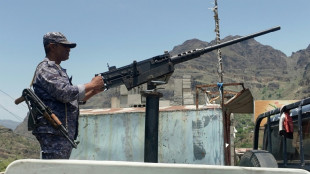 Saudi-led coalition says Houthis fired ballistic missile at Riyadh
-
Czechs beat USA to qualify for Davis Cup finals

-
 France's debt climbs to highest since 1978: ministry
-
Dortmund sink Stuttgart to climb to Bundesliga summit

-
 McIlroy two shots off the lead at Wentworth after eagle on 18
-
Trump says will not tolerate attempts to slow AI growth

-
 Martinez brace saves Inter in Serie A top-two clash with Roma
-
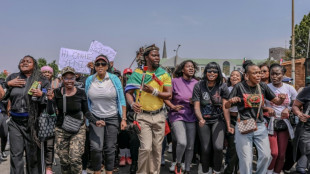
'It has to stop': runners protest women's murders in S.Africa district
-
 Rosenior abused but guides Paris FC past old club Strasbourg
-
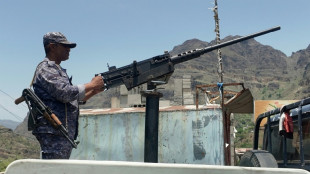
Fire erupts near Riyadh airport as Houthis claim strikes
-
 Seven-try Lyon beat Pau, climb to Top 14 summit
-
Cuba works to restore power after another blackout

-
 Brighton defeat a 'big lesson' against complacency for Arsenal, says Arteta
-
England thrash Sri Lanka again to return to top of T20 rankings

-
 Thousands protest inaction over climate crisis in Switzerland
-
Arsenal thrashed by Brighton, sorry Spurs lose again

Clock ticking to avert 'genocide' in Tigray: WHO chief
The World Health Organization chief said Wednesday time was running out to avoid "genocide" in Ethiopia's war-torn Tigray, as Human Rights Watch called for sanctions against Addis Ababa to avert civilian deaths.
"The world is not paying enough attention," Tedros Adhanom Ghebreyesus told reporters from WHO headquarters in Geneva. "There is a very narrow window now to prevent genocide in Tigray."
With the conflict nearing its second anniversary, Addis Ababa on Tuesday said it had captured three towns in Tigray, including Shire, which had a pre-war population of 100,000.
The conflict began on November 4, 2020, when Ethiopian Prime Minister Abiy Ahmed sent troops into Tigray after accusing the region's ruling Tigray People's Liberation Front (TPLF) of attacking federal army camps.
His campaign has received the support of Eritrea, with which Ethiopia was at odds until a rapprochement that earned Abiy the 2019 Nobel Peace Prize.
A truce between pro-government forces and rebels this year lasted five months before it collapsed in August.
International concern is now swelling for those caught in the crossfire. The UN this week warned the situation was spiralling out of control and inflicting an "utterly staggering" toll on civilians.
- Sanctions call -
Tedros, who himself is from the northern region and has repeatedly condemned the situation there, said he was "running out of diplomatic language for the deliberate targeting" of civilians in Tigray.
"The social fabric is being ripped apart and civilians are paying a horrific price," he said.
"Hostilities in Tigray must end now, including the immediate withdrawal and disengagement of Eritrean armed forces from Ethiopia."
"Indiscriminate attacks or attacks that deliberately target civilians or civilian objects amount to war crimes," he said.
Separately, Human Rights Watch (HRW) called for the United States, European Union and UN to apply "targeted sanctions and an arms embargo" against Ethiopia to help protect civilian lives.
"The suffering of civilians in Ethiopia should no longer be tolerated in the name of political expediency," HRW's director for the Horn of Africa, Laetitia Bader, said.
"The attacks have resulted in untold civilian casualties, including aid workers delivering food, property destruction, and large-scale displacement," she said.
Over two years, many civilians have been killed, an estimated two million people driven from their homes while millions more are in need of aid, according to UN figures.
The advance of Ethiopian and Eritrean forces through Tigray in late 2020 and early 2021 was followed by mass murder, rape and other crimes documented by UN investigators and rights groups.
- 'Weapons of war' -
Tedros said the six million people of Tigray had been "kept under siege for almost two years".
"Banking, food, electricity and healthcare are being used as weapons of war," he said.
"Even people who have money are starving because they can't access their bank for two years," he said. "Children are dying every day from malnutrition."
Tedros acknowledged that he was personally affected by the situation in Tigray.
"Most of my relatives are in the most affected areas," he said, but insisted that "my job is to draw the world's attention to crises that threaten the health of people wherever they are."
A.P.Maia--PC